
Catheter ablation
Catheter ablation - modern therapy for cardiac arrhythmias
Catheter ablation is a gentle, minimally invasive procedure for the treatment of cardiac arrhythmias. During this procedure, the doctor guides a thin, flexible catheter through the blood vessels directly to the heart. There, the heart tissue causing the arrhythmia is specifically treated.
Various ablation methods are available for treatment: Sclerotherapy using heat (radiofrequency ablation), sclerotherapy using cold (cryoablation) and sclerotherapy using electrical impulses (pulsed field ablation).
The procedure is often performed in combination with or following an electrophysiological examination (EPU). This enables the doctor to determine the exact cause and localisation of the arrhythmia - both in the atria and in the main chambers of the heart.
Catheter ablation offers state-of-the-art technology for maximum safety:
- Precise measurement of the catheter contact pressure
- Continuous monitoring of important cardiac parameters
- Direct recording of electrical signals from all areas of the heart
- Wide range of ablation catheters for different requirements
The treatment goal is clearly defined: The restoration and permanent maintenance of a healthy heart rhythm (sinus rhythm). Thanks to technological advances, catheter ablation has developed into a very safe and effective procedure.
Video:How does catheter ablation work?
This DHZC video provides an easy-to-understand overview of catheter ablation for the treatment of atrial fibrillation.
Atrial fibrillation is by far the most common cardiac arrhythmia.
When is catheter ablation useful?
In recent years, catheter ablation has become an important pillar in the treatment of cardiac arrhythmia. It is particularly suitable when patients suffer from severe symptoms, when medication is not effective enough or is not tolerated. Thanks to modern technology and experienced specialists, the procedure is now very safe and effective.
The most common cardiac arrhythmias for which catheter ablation is performed are
Atrial fibrillation
Atrial fibrillation is the most common form of cardiac arrhythmia and mainly affects older people. However, it can also occur in younger patients. Those affected usually experience an irregular and rapid heartbeat, which can be accompanied by breathlessness, dizziness and a significant reduction in performance. Successful catheter ablation can significantly alleviate the symptoms and prevent the risk of heart failure.
Atrial flutter
This arrhythmia is related to atrial fibrillation but has a more regular, albeit too fast, heartbeat. Typically, the heart beats twice as fast as normal. Catheter ablation is particularly promising in this case, as the disorder usually originates in an easily localised area in the right atrium. Success rates are over 90 per cent.
Supraventricular tachycardia (SVT)
This form of cardiac arrhythmia often occurs at a younger age and can significantly impair quality of life. The attacks usually begin and end suddenly and can last from seconds to several hours. In addition to the very noticeable palpitations, a feeling of weakness, dizziness, chest pain and anxiety can occur. In particularly severe cases, even temporary unconsciousness can occur. Catheter ablation offers a very good chance of permanent recovery.
Ventricular tachycardia
This particularly dangerous form of cardiac arrhythmia occurs in the main chambers of the heart and often occurs in people with pre-existing heart damage, for example after a heart attack or with cardiac insufficiency. A distinction is made between two forms:
- Ventricular tachycardia leads to a very fast but still regular heartbeat. The heart's pumping capacity is significantly reduced, which can lead to dizziness, loss of consciousness and, in the worst case, circulatory collapse.
- Even more dangerous is ventricular fibrillation, in which the heart only trembles and can no longer pump blood. Without immediate resuscitation measures, this leads to death. Catheter ablation can prevent the recurrence of such life-threatening arrhythmias in many patients.
When is ablation recommended?
The decision in favour of catheter ablation is made on an individual basis and depends on several factors:
- Severity and frequency of symptoms
- Type of arrhythmia
- Pre-existing conditions of the heart
- Success or tolerability of drug therapy
- Age and general condition of the patient
- Patient's desire for a permanent solution
Careful preparation with detailed diagnostics is particularly important. In addition to ECG recordings, this also includes ultrasound examinations of the heart and sometimes a prior electrophysiological examination (EPU) to localise the exact origin of the arrhythmia.
What are the arguments in favour of early ablation?
Recent studies show that early catheter ablation can be beneficial for many arrhythmias. For example, the longer atrial fibrillation persists, the more difficult it is to treat successfully. Timely ablation can also prevent subsequent damage to the heart. For younger patients with frequent symptoms, ablation can save years of medication with possible side effects.
The decision for or against catheter ablation should always be made in close consultation between the patient and the treating physician, whereby the patient's individual circumstances and wishes play an important role.
Indication
Catheter ablation is typically recommended for symptomatic cardiac arrhythmias that significantly impair quality of life. It is particularly suitable when medication is not effective enough, is not tolerated or a permanent medication-free solution is desired. The most common indications are atrial fibrillation and flutter, supraventricular tachycardia and ventricular arrhythmias. The decision in favour of ablation is based on several factors: the type and severity of the arrhythmia, the patient's level of suffering, any concomitant illnesses and the individual risk-benefit ratio. Modern studies show that early ablation can be beneficial for many patients, as it prevents subsequent damage to the heart and the chances of success are usually better than with a later procedure.
Alternative treatment methods
In addition to classic catheter ablation, innovative procedures have become established in recent years: In addition to surgical options, for example, alcohol ablation, in which specific regions in the heart muscle (e.g. via the marshal vein) are sclerosed. Another option is high-precision stereotactic radiotherapy, which can be a complementary procedure for severe arrhythmias. State-of-the-art technologies, including the use of artificial intelligence (AI), support the planning and execution of interventions and improve the chances of success. In some cases, the implantation of a pacemaker or defibrillator may also be advisable. The choice of the optimal therapy is always based on a careful analysis of the patient's individual situation.
Drug therapy
Drug therapy plays an important role in the treatment of cardiac arrhythmias and is often used as a treatment option. It is based on two basic strategies: rhythm control with antiarrhythmicdrugs, which are intended to restore and stabilise the normal heart rhythm, and rate control, in which medication keeps the heart rate within a healthy range. Atrial fibrillation also requiresanticoagulant therapy (anticoagulation) to reduce the risk of stroke. The effectiveness of drug therapy varies greatly from person to person, and it is not uncommon for side effects such as tiredness, dizziness, sensitivity to light or thyroid dysfunction to limit long-term use. Interactions with other medications can also occur, which is particularly relevant for older patients with multiple illnesses. Alternative treatment options such as catheter ablation should therefore be considered at an early stage.
Electrical cardioversion
Electrical cardioversion is a procedure that is usually performed under a short anaesthetic, in which a targeted electric shock is used to restore the normal heart rhythm. This procedure is used in particular for persistent atrial fibrillation or flutter, but must often be supplemented by other therapeutic measures such as medication or catheter ablation, as otherwise the arrhythmia often recurs.
Implantable devices (pacemaker or ICD)
- Pacemaker: In the case of certain slow or irregular heartbeats, a pacemaker can help the heart to maintain a stable rhythm.
- Implantable cardioverter defibrillator (ICD): For life-threatening arrhythmias such as ventricular tachycardia, which originates in the lower chambers of the heart, an ICD can monitor the heart and deliver a shock if needed to restore a normal rhythm.
Lifestyle changes
A healthy lifestyle with regular exercise, a balanced diet, stress reduction and the avoidance of risk factors such as excessive alcohol consumption, smoking and obesity can have a positive influence on the occurrence of cardiac arrhythmias and should therefore be taken into account during treatment.
Surgical procedures
If catheter ablation is not an option or has not been successful, a so-called Maze or Convergant operation can be considered. This involves open-heart surgery to specifically alter the electrical signal flow. This method is primarily an option for severe atrial fibrillation, often in conjunction with other heart operations, e.g. bypass.
Assessment
Each of these alternatives has advantages and disadvantages. The choice of method depends heavily on the individual situation. A detailed consultation with a doctor is crucial in order to choose the best treatment option.
In many cases, better results can be achieved with ablation treatment than with drug therapy, for example. For example, symptom relief, an improvement in quality of life and sometimes even a reduction in potentially fatal cardiovascular events are possible goals of the procedure. Many cardiac arrhythmias, e.g. AV nodal reentry tachycardia, AV reentry tachycardia or typical atrial flutter, can be cured with a single ablation treatment.
The most appropriate therapy is therefore decided on an individual basis, taking into account concomitant diseases, structural changes to the heart and the patient's level of suffering.
Preparation for the procedure
Before a catheter ablation, the patient is thoroughly prepared to ensure the safety of the procedure and minimise the risk of complications. The preparations usually include the following steps:
Preliminary examinations
- ECG and long-term ECG are performed to document and analyse cardiac arrhythmias.
- An echocardiogram is performed to assess heart function and structure.
- Blood tests are required to check kidney function, electrolytes and coagulation values.
- We use imaging techniques such as CT or MRI to visualise the heart structures more precisely, especially in complex ablation procedures.
In many cases, ablation treatment is carried out following or in combination with an electrophysiological examination (EPU). This is a special form of cardiac catheterisation in which several catheters fitted with electrodes are placed in the heart, allowing electrical signals to be directly derived from the heart.
Adjusting medication
Certain medications such as anticoagulants and antiarrhythmic drugs often need to be adjusted or discontinued before the procedure. If the patient is taking anticoagulants, it may be necessary to switch to a different form.
Information session
Before the procedure is carried out, a detailed consultation takes place between the doctor and patient at the DHZC. The doctor explains the exact procedure, possible risks and the aim of the catheter ablation. The patient has the opportunity to ask questions and must sign a declaration of consent.
Patients also have the opportunity to obtain a second opinion before the planned procedure. For example, if you receive a referral for catheter ablation from your doctor, the DHZC offers to review this case.
Venous access
On the day of the procedure, a venous line is inserted through which medication or sedatives can be administered later. Once the preparation is complete, the patient is taken to the cardiac catheterisation laboratory, where the procedure is carried out under strict sterile conditions. The duration and aftercare vary depending on the type of cardiac arrhythmia and the complexity of the procedure.
Catheter ablation procedure
Catheter ablation is a state-of-the-art, minimally invasive procedure that is performed under sedation or, in rare cases, under general anaesthetic. First, a large blood vessel is punctured - usually in the groin, more rarely below the sternum or via an artery. Through these access points, the doctor guides special catheters to the heart under X-ray control.
The first step is to determine the exact localisation of the arrhythmia. To do this, the catheters measure the electrical signals of the heart. Modern 3D mapping systems create a detailed ‘electrical map’ of the heart, which precisely indicates the origin of the arrhythmia.
After exact localisation, the actual ablation begins: depending on the individual situation, one of three procedures is used: radiofrequency ablation with heat, cryoablation with cold or innovative pulsed field ablation with electrical impulses. These forms of energy selectively obliterate the offending tissue and thus interrupt the faulty electrical signals.
The success of the treatment is checked during the procedure. If necessary, further ablations can be performed. Once the one to two-hour procedure is complete, the catheters are removed and the puncture sites are carefully treated.
In a catheter ablation procedure, probes are inserted into the heart and used to sclerose heart muscle tissue at the sites causing the cardiac arrhythmia.
(Image: DHZC)
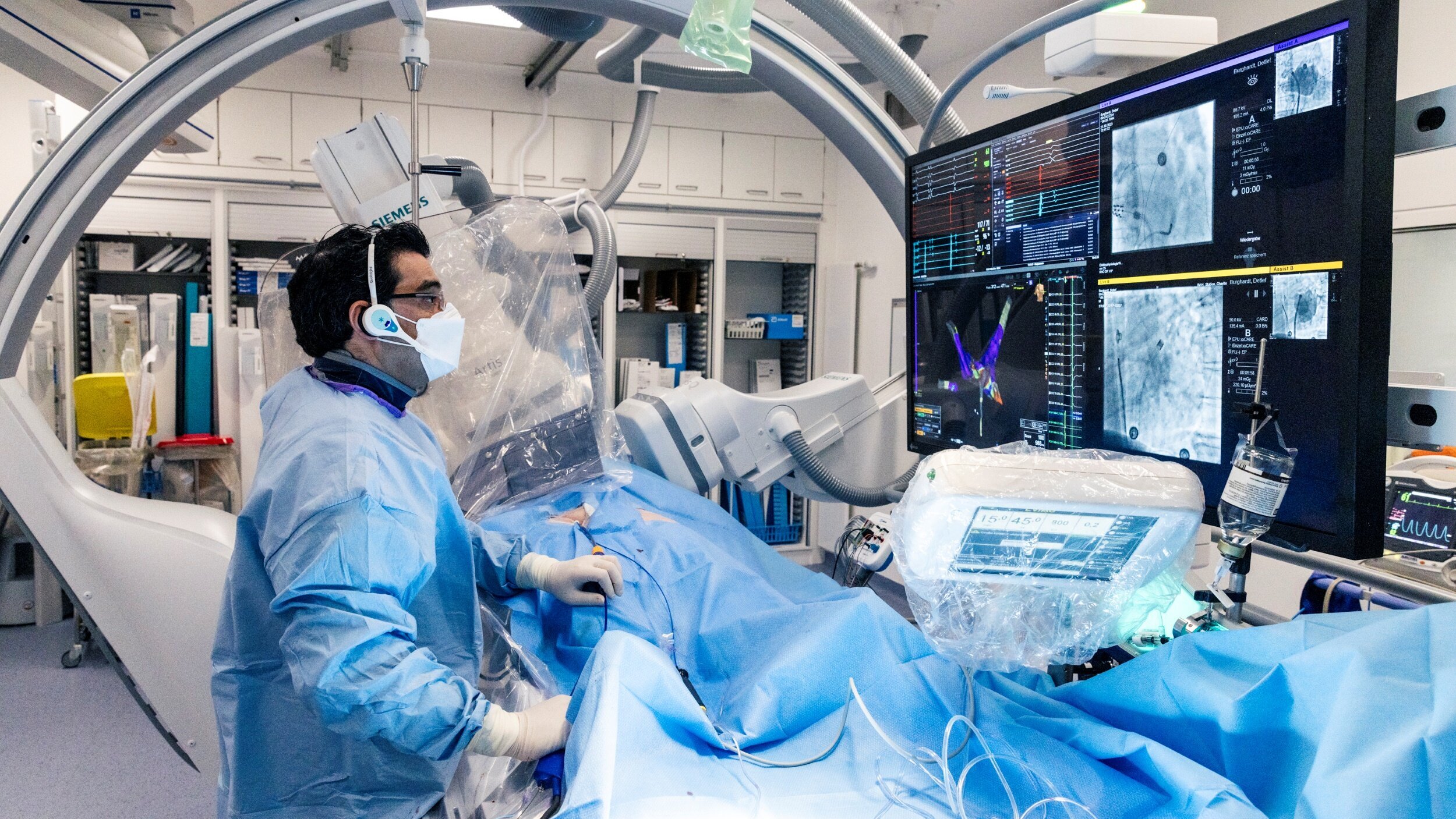
In a catheter ablation procedure, probes are inserted into the heart and used to sclerose heart muscle tissue at the sites causing the cardiac arrhythmia.
(Image: DHZC)
Advantages and risks
Catheter ablation offers several advantages for certain cardiac arrhythmias:
- High success rate: It can effectively treat cardiac arrhythmias such as atrial fibrillation, atrial flutter or certain forms of tachycardia by obliterating the offending heart muscle cells and thus blocking the faulty electrical signal.
- Minimally invasive: In contrast to open chest surgery, catheter ablation is performed via small punctures in the groin. This makes it gentler on the body, with a shorter recovery time and less pain after the procedure.
- Less medication required: After a successful ablation, many patients are able to avoid or reduce the use of medication to control their heart rhythm, which reduces the risk of side effects from medication.
- Improved quality of life: Ablation can significantly reduce or eliminate symptoms such as palpitations, fatigue and breathlessness, which improves quality of life.
- Lower risk of complications due to cardiac arrhythmia: In the case of atrial fibrillation, for example, successful ablation reduces the risk of heart failure.
- High level of safety: complications from catheter ablation are rare, and modern techniques and imaging methods make the procedure even safer.
Risks
Like any medical procedure, catheter ablation also harbours certain risks, even if these rarely occur. These include bleeding and haematomas at the puncture site, vascular injuries, blood clots and infections. Rarely, the heart can be punctured accidentally, which leads to an accumulation of fluid in the pericardium and puts a strain on the heart (pericardial effusion). Although rare, there is a risk of small blood clots forming and causing a stroke. Blood thinners are therefore often administered before and after the procedure.
Our team of experienced doctors is always prepared for these very rare complications and can react immediately. As catheter ablation is not suitable for all types of cardiac arrhythmia, despite its advantages, our doctors carefully check in advance whether the procedure is appropriate for the patient.
Ablation methods
The choice of ablation depends on the type of cardiac arrhythmia and the location of the affected tissue. The effectiveness of the available procedures, e.g. in the treatment of atrial fibrillation, and the occurrence of side effects are roughly comparable. These methods are available at the DHZC:
Radiofrequency catheter ablation (RFA)
Catheter ablation with radiofrequency current is the most commonly used form of catheter ablation. Energy is delivered point by point to the tissue at the opening of the pulmonary veins via the catheter tip. This heats and obliterates the heart tissue. The catheter can be positioned with millimetre precision using X-ray fluoroscopy and a 3D image of the treatment area. The high-frequency current and the resulting heat cause the cells to lose their electrical conductivity - the abnormal impulses can no longer be transmitted to the atrium. The heart beats regularly again.
Radiofrequency catheter ablation is suitable for treating various forms of cardiac arrhythmia. These include atrial fibrillation, atrial flutter, AV nodal reentry tachycardia (AVNRT), supraventricular tachycardia and ventricular tachycardia.
It is a medically established procedure with very precise results, a high success rate and a long-term effect for the patient.
Cryoablation (cold ablation)
In cryoablation, low temperatures are used to prevent the transmission of pathological signals to the healthy heart muscle. A balloon is usually used for this. This is pushed into the left atrium up to the junction of the pulmonary veins and deployed there. The pulmonary veins are tightly sealed with the balloon and localised cooling to -60°C is applied. This interrupts the electrical conduction from the atrial fibrillation-causing pulmonary veins.
Cryoablation is particularly suitable for patients without prior ablation with paroxysmal (seizure-like) atrial fibrillation and for certain supraventricular tachycardias such as AV nodal reentry tachycardia (AVNRT). The cold energy minimises the risk of damaging surrounding sensitive structures. At the same time, cryoablation has proven itself clinically through its many years of use and offers a safe and fast option for permanent pulmonary vein isolation.
Pulsed field ablation (PFA)
The latest technology is Pulsed Field Ablation (PFA), an innovative and very gentle form of ablation. In this novel procedure, neither heat nor cold is used to obliterate the tissue, but rather short electrical impulses. These act almost exclusively on the heart muscle cells at the source of the arrhythmia - the surrounding tissue, such as the oesophagus or nerve tissue, therefore remains intact.
Pulsed field ablation is based on the principle of so-called irreversible electroporation (IRE), in which the cell membranes are briefly opened so that the cells die. Short, high-intensity electrical pulses are delivered to the target tissue area via a catheter that is guided to the heart. These generate a high electric field strength that opens the pores in the cell membranes of the heart tissue permanently and irreversibly (‘irreversibly’). This causes the cells to die. The pulse frequency and strength are adjusted so that they effectively obliterate the heart tissue without damaging neighbouring structures such as nerves or blood vessels.
Potential advantages of pulsed field ablation
- Safety: PFA acts selectively on heart muscle cells and spares other structures such as blood vessels, nerves and the oesophagus. This is an advantage over thermal ablation procedures and is currently being investigated further in ongoing international studies.
- Speed: The pulse is applied in just a few seconds, which can shorten the procedure overall. Patients generally recover quickly from the procedure.
- Effectiveness : Initial clinical studies show a high success rate, particularly in the treatment of atrial fibrillation. The technology is currently being further developed and evaluated.
This form of ablation is only offered in a few centres in Germany. The DHZC is a pioneer in the field of pulsed field ablation and offers this treatment at its cardiology clinics in Berlin-Mitte, Berlin-Wedding and Berlin-Steglitz.
Combined procedures
In addition to electrophysiological examination and ablation via the groin vascular access, there is the option of other access routes (e.g. below the sternum) for the treatment of particularly stubborn or more complex cases in which other ablation procedures were not sufficient or whose atrial fibrillation is difficult to treat. Ablation from the outside of the heart is performed in the cardiac catheterisation laboratory under fluoroscopy or in the operating theatre through an access under the sternum. In interdisciplinary collaboration with the cardiac surgeons, special combination ablation procedures are also available. This so-called convergent procedure combines minimally invasive surgical and catheter-based ablation methods. Surgical ablation is first performed on the outer part of the heart before catheter ablation is performed on the inside of the heart.
Pulsed field ablation (PFA) is an innovative and very gentle form of ablation. Here, electrical impulses are used that act almost exclusively on the heart muscle cells at the source of the arrhythmia. The surrounding tissue, such as the oesophagus or nerve tissue, therefore remains intact.
(Image: DHZC)
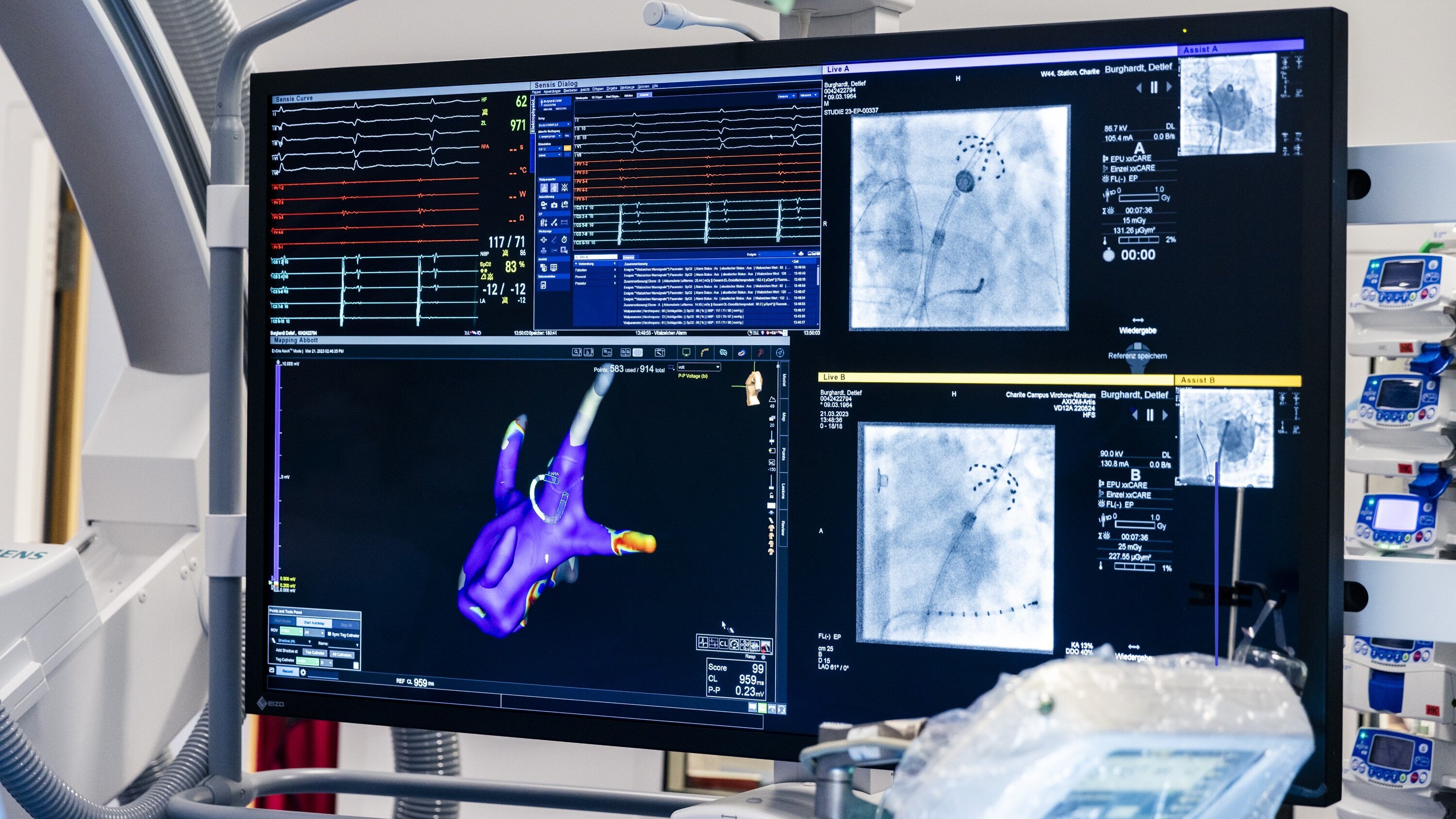
Pulsed field ablation (PFA) is an innovative and very gentle form of ablation. Here, electrical impulses are used that act almost exclusively on the heart muscle cells at the source of the arrhythmia. The surrounding tissue, such as the oesophagus or nerve tissue, therefore remains intact.
(Image: DHZC)
Aftercare
The length of hospitalisation after a catheter ablation depends on the course of the procedure and the patient's individual situation. After an uncomplicated catheter ablation, patients usually stay in hospital until the following day . This is necessary in order to recognise possible complications such as post-operative bleeding or cardiac arrhythmia at an early stage.
Immediately after the ablation, patients are usually closely monitored for several hours and should adhere to strict bed rest, in particular to protect the puncture site and prevent bleeding. Wound care is also carried out during this time. In addition, cardiac activity is regularly monitored by ECG.
A follow-up examination is also carried out before discharge to ensure that the procedure was successful and that the patient is stable. Follow-up care is also important after discharge from hospital. Patients have regular follow-up appointments with their cardiologist, where they also discuss the adjustment or adaptation of their medication. A few days after the procedure, it is advisable to ensure sufficient rest and avoid heavy physical exertion. After about a week, however, most patients are able to exercise normally again. However, intensive sporting activities should only be resumed after around four to six weeks.
Forecast
The prognosis after catheter ablation depends on various factors, including the type and duration of the cardiac arrhythmia as well as individual risk factors. Overall, catheter ablation has a very good success rate and can alleviate or eliminate the symptoms of many patients in the long term. Many patients remain symptom-free for years after successful ablation and report a significant improvement in their quality of life, less fatigue and better exercise tolerance after ablation. Successful treatment can reduce the risk of complications such as heart muscle weakness.
Overall, catheter ablation is an effective treatment option for many patients with cardiac arrhythmias and offers a good prognosis, especially with personalised aftercare and lifestyle changes.
Ablation at the DHZC
Treatment at the DHZC
The Deutsches Herzzentrum der Charité has a large team of specialists working in the field of rhythmology. We are an expert centre for ablations and electrophysiological examinations (EPU). As one of the leading centres for electrophysiological ablations, all current mapping procedures and the latest catheter technologies are available at the DHZC, including all available Pulsed Field Ablation (PFA) technologies.
Catheter ablations are performed at the DHZC at all cardiology clinics at our locations in Berlin-Steglitz, Berlin-Mitte and Berlin-Wedding. At the DHZC, we have eight electrophysiological catheter labswith state-of-the-art equipment. We carry out more than 1,400 electrophysiological examinations and catheter ablations every year. We also advise around 4,000 patients a year in the rhythm consultation for further clarification of cardiac arrhythmias.
Our services for you
As a rule, you will receive a referral from your general practitioner if you are to be treated at our clinic for a cardiac arrhythmia. For an inpatient stay, you will need a referral slip or a prescription for hospital treatment. You will receive this from your general practitioner or specialist. You can find more information about an inpatient stay at the DHZC here.
Patients are often referred to us if they have already been diagnosed with cardiac arrhythmia by their GP. Of course, we at the DHZC offer all available technologies and methods for diagnosing cardiac arrhythmias. We also offer patients the opportunity to obtain a second opinion before the planned procedure. For example, if you receive a referral for catheter ablation from your doctor, the DHZC offers to review this case.
Your first point of contact
For inpatients:
Patient management
T: +49 30 450 513 747
For outpatients:
Cardiological outpatient clinic
T: +49 30 450 513 717
For inpatients:
Patient management
T: +49 30 450 513 021
For outpatients:
Cardiological outpatient clinic
T: +49 30 450 513 150
For inpatients:
T: +49 30 450 565 400 (after the announcement: 1)
For outpatients:
T: +49 30 450 565 400 (after the announcement: 2)
For surgical or combined procedures
Patient contact for inpatient stays / referral:
T: +49 30 4593 2250
Authors




Verena Tscholl is a senior physician in the Rhythmology Department at the DHZC Department of Cardiology, Angiology and Intensive Care Medicine at Campus Charité Mitte. She is a specialist in internal medicine and cardiology with additional qualifications in cardiac pacing and as an ‘Electrophysiology Specialist I’ from the EHRA (‘European Heart Rhythm Association’).
