
Interdisciplinary treatment approach
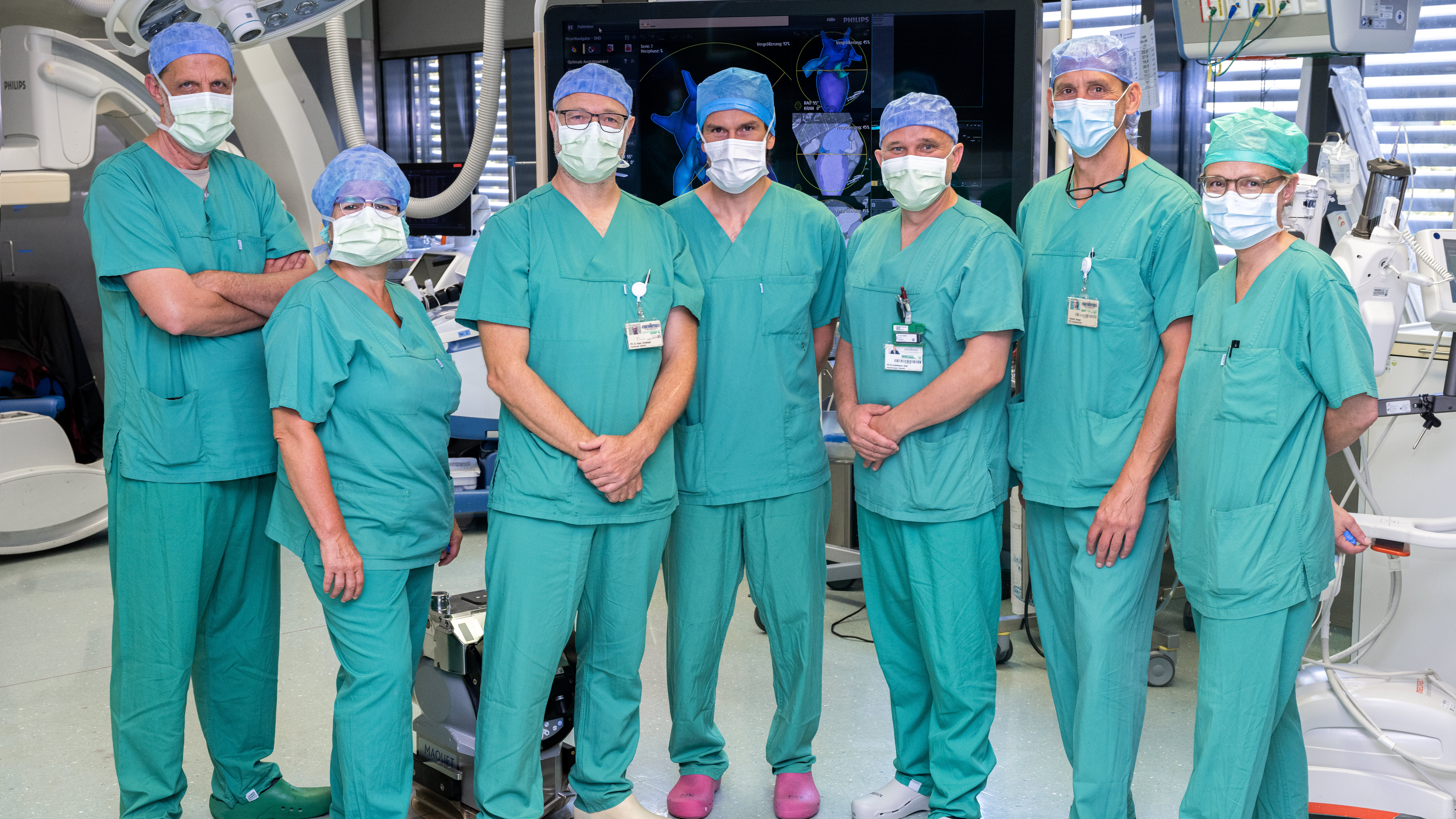
In the interdisciplinary SHIP department, we bundle the medical planning and implementation of all catheter-based treatments of heart valves in adults.
Interdisciplinary treatment approach
In the interdisciplinary SHIP department, we bundle the medical planning and implementation of all catheter-based treatments of heart valves in adults.
- We have extensive and long-standing expertise in the treatment of heart valve patients.
- Our range of services covers the entire spectrum of interventional valve therapy:
- TAVI
- valve-in-valve TAVI and TAVI-in-TAVI, including complex, sail-modifying techniques such as BASILICA
- transcatheter edge-to-edge repair (TEER, ‘clipping’) of the mitral and tricuspid valves
- percutaneous annuloplasty procedures
- transseptal and transapical transcatheter mitral valve implantation (TMVI, Tendyne and valve-in-valve, valve-in-ring and valve-in-MAC)
- tranfemoral pulmonary valve replacement (TPVI)
- transfemoral tricuspid valve replacement (TTVI)
- plug-based closure of paravalvular leaks
- We are a certified TAVI centre by the German Cardiac Society (DGK). This proves our highest quality standards of care for our patients.
- We offer all established access routes (transfemoral, transapical, transaxillary, transaortal, transcarotidal, transcaval) for our interventions.
- We use valve systems and devices from all leading manufacturers.
- We discuss each patient case in detail in our interdisciplinary cardiac team and determine a treatment plan tailored to the patient on this basis.
- We are committed to research and actively participate in scientific studies. This is how we share our knowledge with the public.
- We work closely with established partners in science and research and are well connected.
Highest quality
The DHZC is the only TAVI centre in north-east Germany to receive the highest rating in the AOK Health Navigator. The results of the IQTIG quality report also confirm the centre's outstanding quality of care.
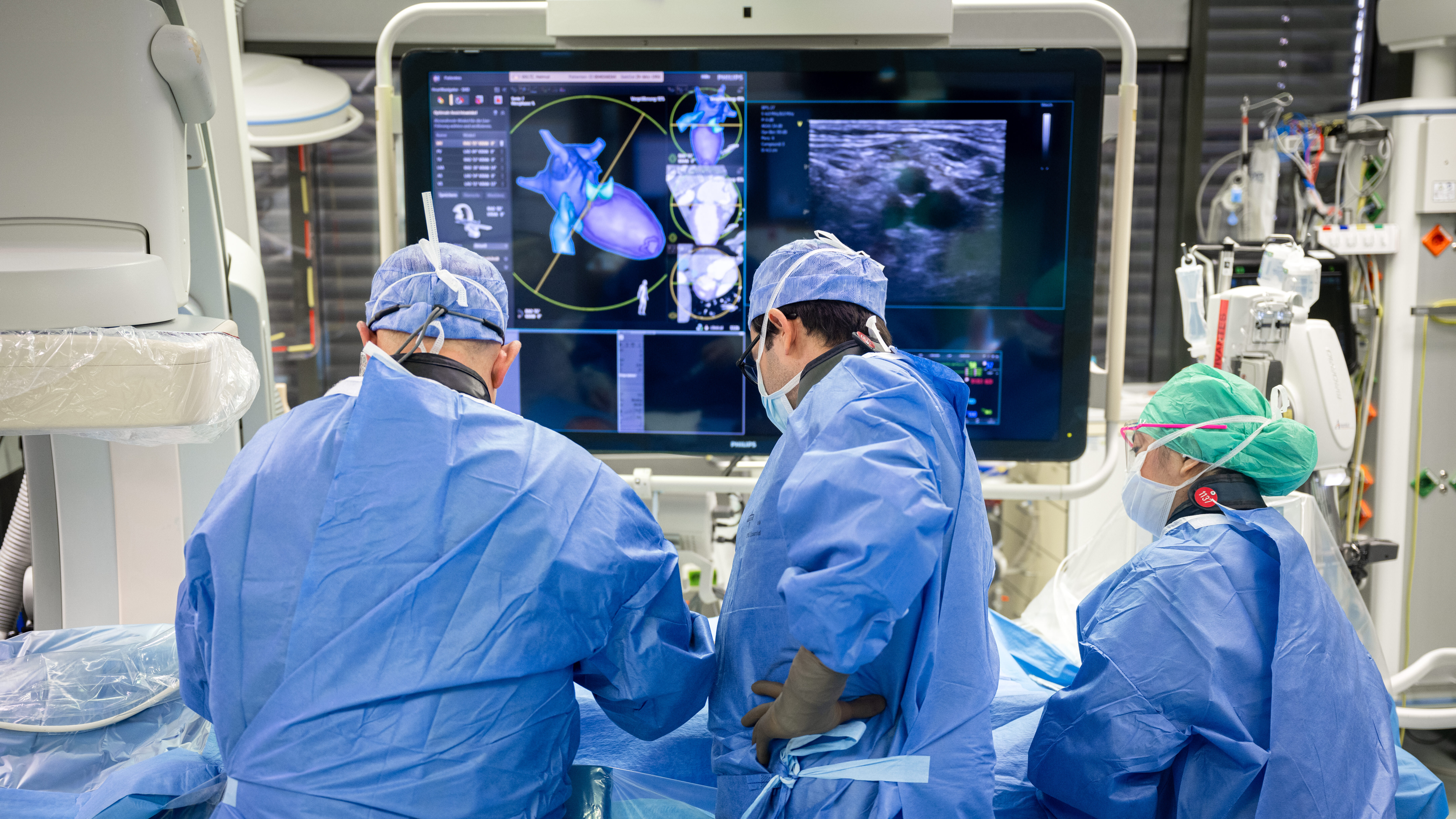
The DHZC is the only TAVI centre in north-east Germany to receive the highest rating in the AOK Health Navigator. The results of the IQTIG quality report also confirm the centre's outstanding quality of care.
Top ratings for the TAVI programme at the DHZC
Excellent results in the AOK Health Navigator and IQTIG Quality Report
The German Heart Centre Charité (DHZC) has once again been awarded the highest rating of three green trees in the AOK Health Navigator as the only TAVI centre in north-east Germany. This top rating underscores the excellent quality of treatment provided by the TAVI programme at the DHZC, which is one of the largest in Europe.
A total of 50 clinics that performed catheter-based aortic valve implantations (TAVI) on AOK-insured patients in the 2023 reporting year were evaluated. The DHZC is one of 12 clinics nationwide that achieve above-average quality in TAVI procedures (see detailed results).
Of all the clinics surveyed, the DHZC has the highest number of treatment cases: in 2023, a total of 1,303 TAVI procedures were performed at the clinic. High case numbers are proven to be one of the foundations for successful treatment.
In terms of treatment quality, the DHZC received the highest rating of three green trees, confirming the above-average quality of its TAVI programme. This means that the DHZC is among the 20 percent of clinics with a low probability of complications after the procedure.
The following quality indicators were recorded for the AOK Health Navigator:
- The mortality rate within 30 days of the procedure
- The probability of heart attacks within 30 days of the procedure
- The probability of strokes or TIAs within 30 days of the procedure
- The probability of repeat aortic valve surgery within one year of the procedure
The outstanding rating is based on a scientific procedure for quality assurance using routine data (QSR). The Scientific Institute of the AOK (WIdO) analyses anonymised billing data from AOK-insured persons in order to compare the quality of treatment in hospitals on a risk-adjusted basis. This means that differences in the severity of the diseases and other relevant factors are taken into account, enabling a fair and comparable evaluation of the clinics.
IQTIG quality report: Scientific evaluation of treatment quality
The results of the IQTIG quality report also confirm the outstanding quality of care provided by the DHZC: The mortality rate is only one percent – well below the expected average given the complex nature of the patient cases. This result underscores the excellent expertise of the team and the high quality of care.
The IQTIG Quality Report, compiled by the Institute for Quality Assurance and Transparency in Healthcare (IQTIG), is based on legally prescribed quality assurance procedures. Data is collected directly from hospitals and includes detailed information on treatment processes and outcomes.
The IQTIG report analyses various indicators:
- Process quality: Measures whether the recommended treatment steps are consistently implemented, such as the timely administration of antibiotics before surgery.
- Outcome quality: Evaluates the actual treatment outcomes, such as the mortality rate after TAVI or the frequency of complications.
- Structural quality: Assesses the availability of qualified personnel and technical equipment.
