Symptoms of a heart attack
Heart attack symptoms in women are still often described as “atypical.” The problem is that “atypical” sounds vague, less clear-cut—perhaps even less urgent.
One thing is clear: A heart attack does not have to fit the classic profile to be a medical emergency.
If you suspect a heart attack: Call 911. Do not wait.
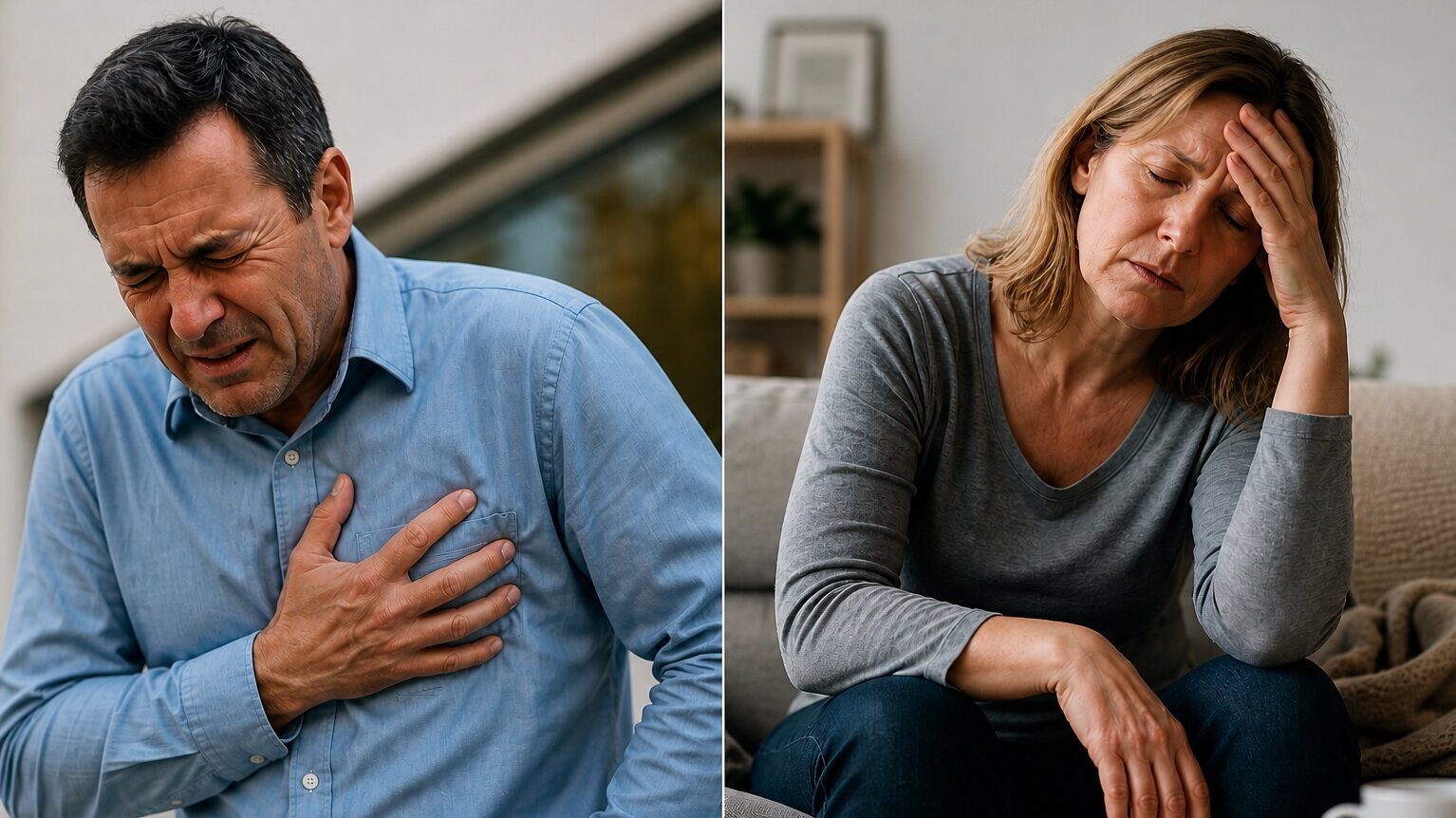
Heart attack symptoms in women are still often described as “atypical.” The problem is that “atypical” sounds vague, less clear-cut—perhaps even less urgent.
One thing is clear: A heart attack does not have to fit the classic profile to be a medical emergency.
If you suspect a heart attack: Call 911. Do not wait.
Heart attacks are often described based on a “classic” set of symptoms: chest pain, pain radiating into the left arm, and cold sweats.
This description is accurate—but not complete.
Chest pain remains the most common symptom in women as well.
However, women are more likely to report additional symptoms—or to perceive their symptoms differently.

Chest pain remains the most common symptom in women as well.
However, women are more likely to report additional symptoms—or to perceive their symptoms differently.
Women, in particular, are more likely to experience additional or differently perceived symptoms, such as shortness of breath, nausea, pain in the back, jaw, or upper abdomen, as well as severe fatigue or dizziness.
To this day, such symptoms are often described as “atypical.”
This is precisely the problem: the term can make symptoms seem less clear-cut—and thus potentially lead to delayed diagnosis.
“‘Atypical’ is a tricky term. That’s because many of these symptoms are actually quite common in women. They’re just perceived differently—and, unfortunately, sometimes recognized later.”
Dr. Julia Lueg
Cardiologist at the DHZC

“‘Atypical’ is a tricky term. That’s because many of these symptoms are actually quite common in women. They’re just perceived differently—and, unfortunately, sometimes recognized later.”
Dr. Julia Lueg
Cardiologist at the DHZC