Resuscitation: A question of gender
Women are less likely than men to receive CPR in the event of a cardiac arrest in public.
The reasons for this do not lie in the condition itself – but in uncertainty, prejudice and false assumptions.
Yet the most important rule is simple:
Don’t wait. Start chest compressions.
Women are less likely than men to receive CPR in the event of a cardiac arrest in public.
The reasons for this do not lie in the condition itself – but in uncertainty, prejudice and false assumptions.
Yet the most important rule is simple:
Don’t wait. Start chest compressions.
Less support for women
Kein medizinischer Grund
Women are less likely to receive CPR in the event of a cardiac arrest in public than men. This is shown by recent data from the European Society for Emergency Medicine and the Medical University of Innsbruck.
The causes do not lie in the condition itself. Cardiac arrest follows the same principles in women and men, as does resuscitation. Studies show instead that bystanders are more likely to hesitate when it comes to women – for example, due to uncertainty about touching them, fear of misunderstandings, or incorrect assumptions about typical risk groups. One of the key reference studies on this topic was published in the specialist journal Circulation and demonstrates the differences, particularly in public spaces.
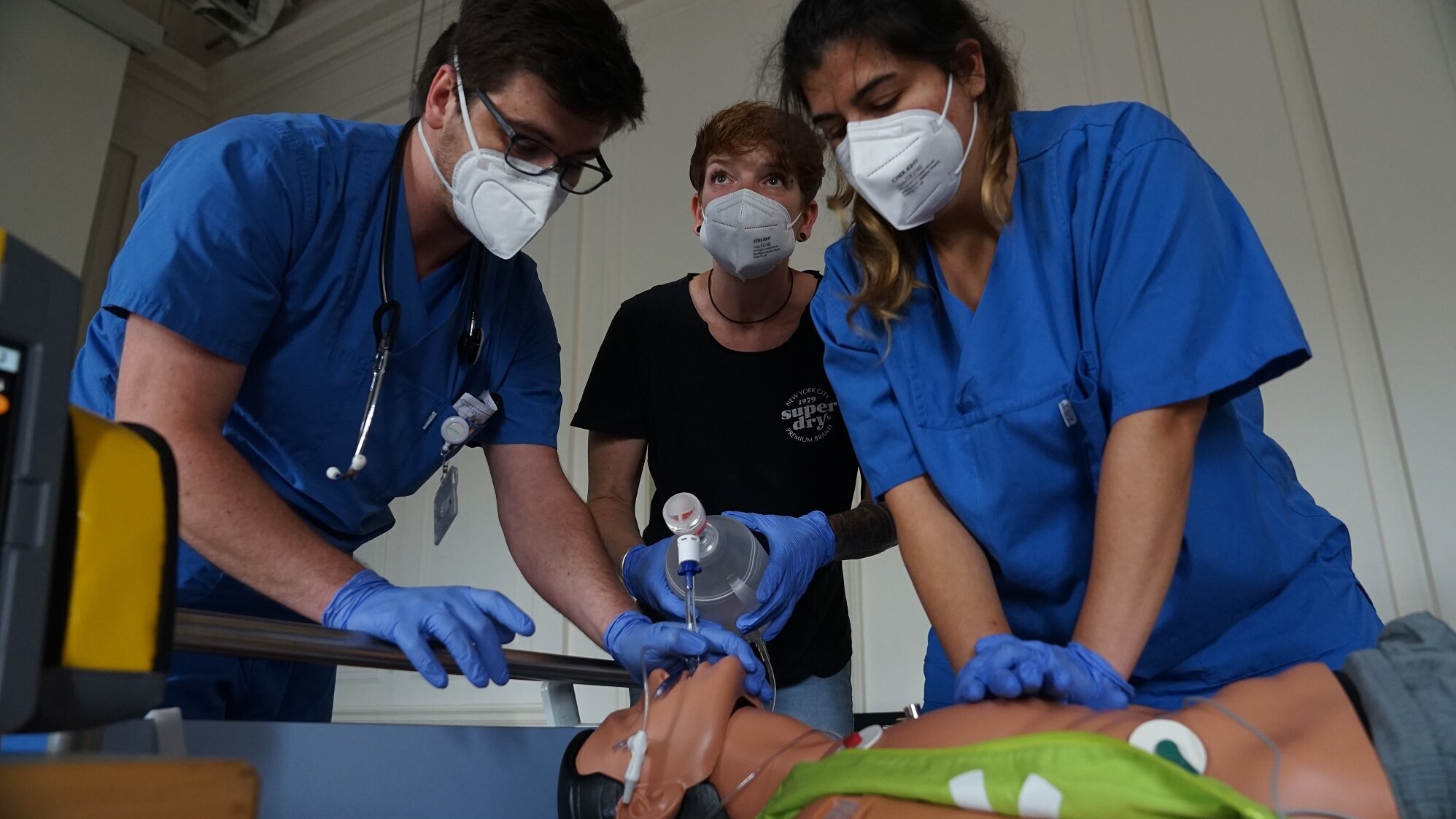
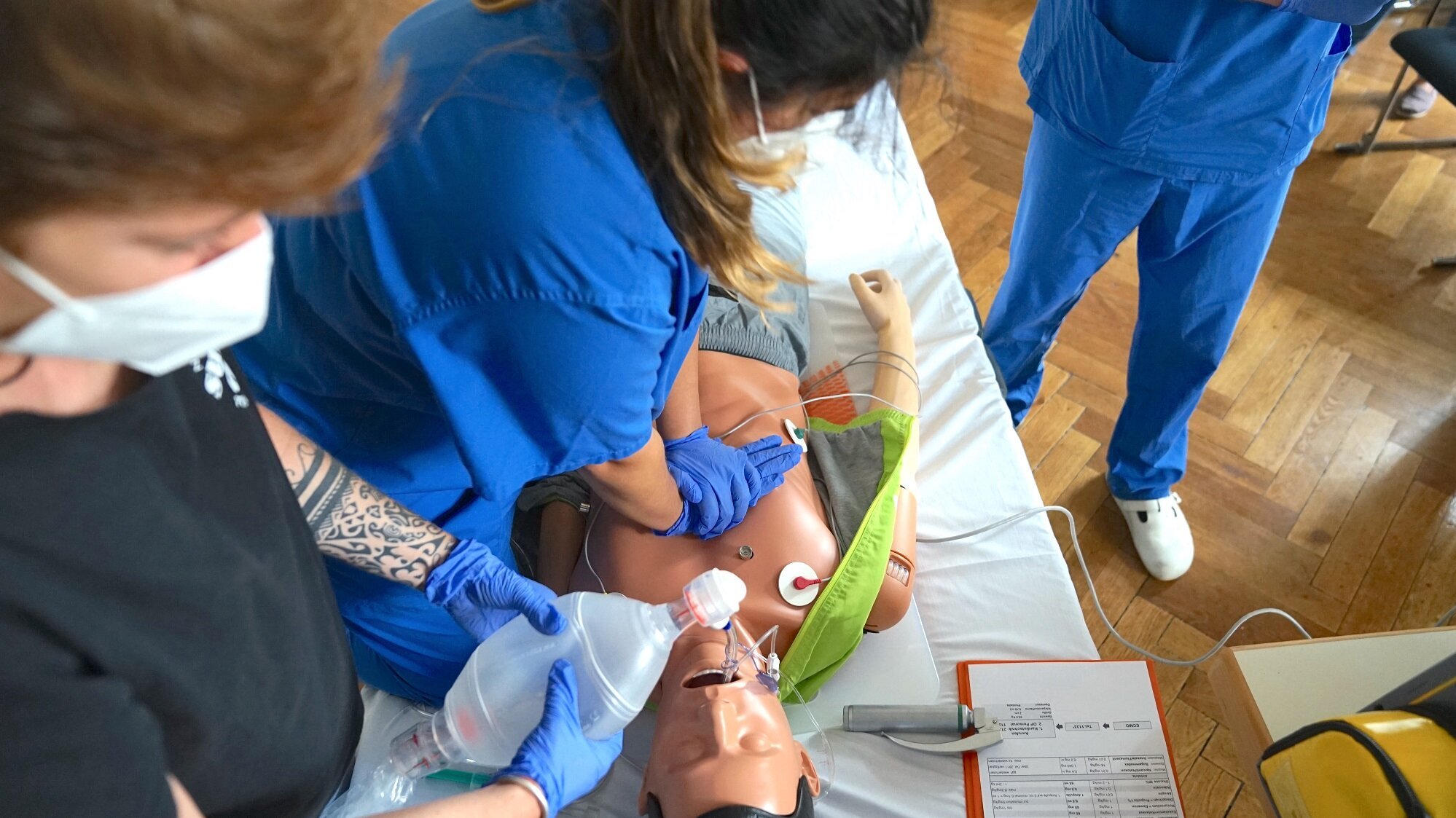
A recent study by the Medical University of Innsbruck confirms that, in a simulated cardiac arrest scenario, first aiders performed resuscitation measures less effectively on a female manikin than on a male one. The ‘gender’ of the training manikin significantly influences the quality of a simulated resuscitation. That is why the Medical University of Innsbruck is now using female training manikins.
“We can see very clearly in the latest analyses that women are less likely to receive help from bystanders in the event of a cardiac arrest in public. This has nothing to do with the condition itself, but rather with uncertainty, preconceptions and the fact that symptoms are not always recognised immediately. For those affected, this unfortunately often means that help arrives too late,” says Dr Nina Kiechl-Kohlendorfer, an emergency medicine specialist at Innsbruck University Hospital.
Consequences
These differences have a direct impact on survival chances. Early initiation of chest compressions is one of the most important factors of all. Every minute without help significantly worsens the prognosis. The findings of the European Society for Emergency Medicine show that lower resuscitation rates are associated with poorer outcomes.
What matters in an emergency
The guidelines for lay resuscitation are clear and apply to everyone:
• Call the emergency services on 112
• Start chest compressions immediately
• Press firmly and quickly into the centre of the chest
It is important to avoid wasting time. Removing clothing is not a necessary first step and must not delay resuscitation. The current guidelines of the European Resuscitation Council emphasise that early action is crucial.
A preventable difference
The fact that women are resuscitated less frequently is not a medical problem, but a social one – and therefore one that can be changed.
In plain language:
Compressions count.
Tips: How to perform Resuscitation successfully