Robot-Assisted Heart Surgery at the DHZC
Deutsches Herzzentrum der Charité (DHZC) operates one of the largest programs for robot-assisted cardiac surgery in Europe. As a result, the center plays a leading role in advancing cardiac surgery toward procedures that are even less invasive, more precise, and more patient-friendly.
Deutsches Herzzentrum der Charité (DHZC) operates one of the largest programs for robot-assisted cardiac surgery in Europe. As a result, the center plays a leading role in advancing cardiac surgery toward procedures that are even less invasive, more precise, and more patient-friendly.
While robot-assisted cardiac surgery has long been established at leading cardiac centers in the U.S., it is currently offered at only a few centers in Germany. It was introduced at the DHZC in 2025. Since then, more than 500 robot-assisted cardiac surgeries have been performed at the DHZC . This places our hospital at the forefront nationally.
Robot-assisted cardiac surgery is considered the gentlest of all minimally invasive procedures—while offering the highest precision and stability. Patients benefit from a procedure with minimal pain that allows for a quick recovery and shorter hospital stays.
Here you can learn the most important facts about the system, how it works, its advantages, and its applications at our hospital.
Go directly to the photo gallery
Go directly to the press release on the launch of the DHZC robotics program (2025)
How do robot-assisted surgeries work at the DHZC?
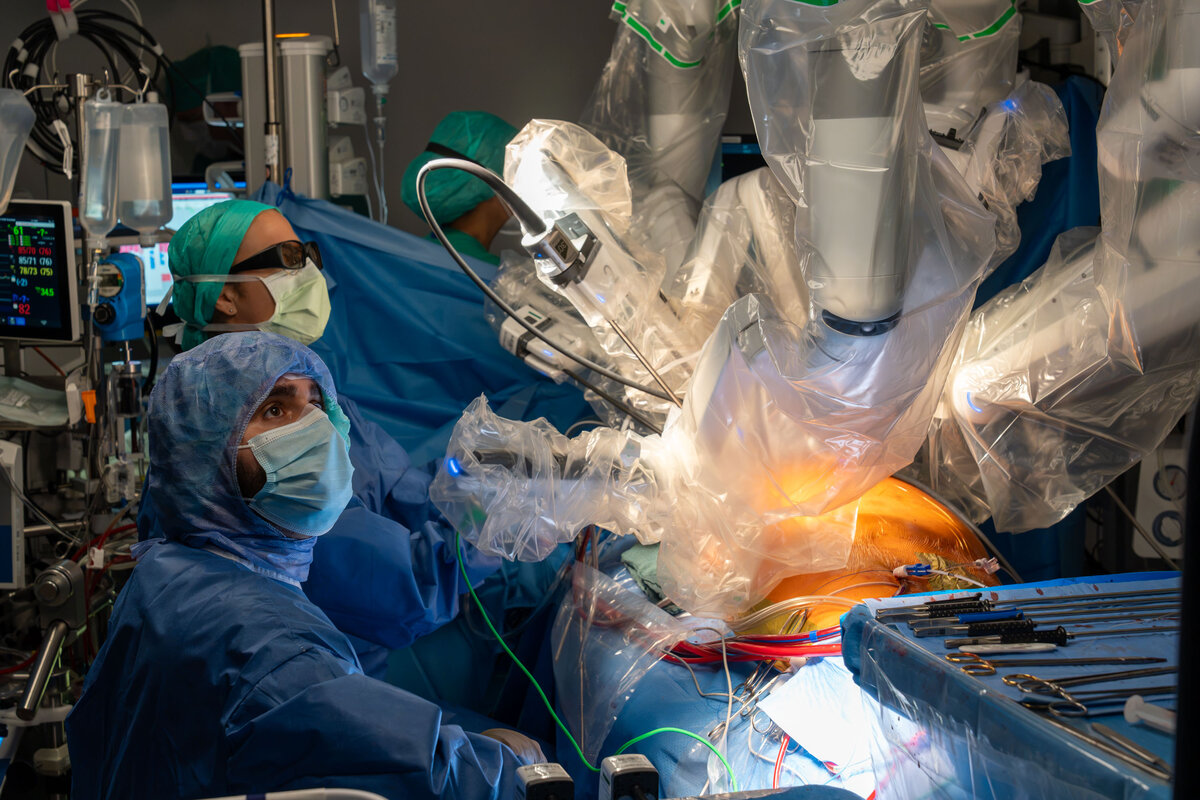
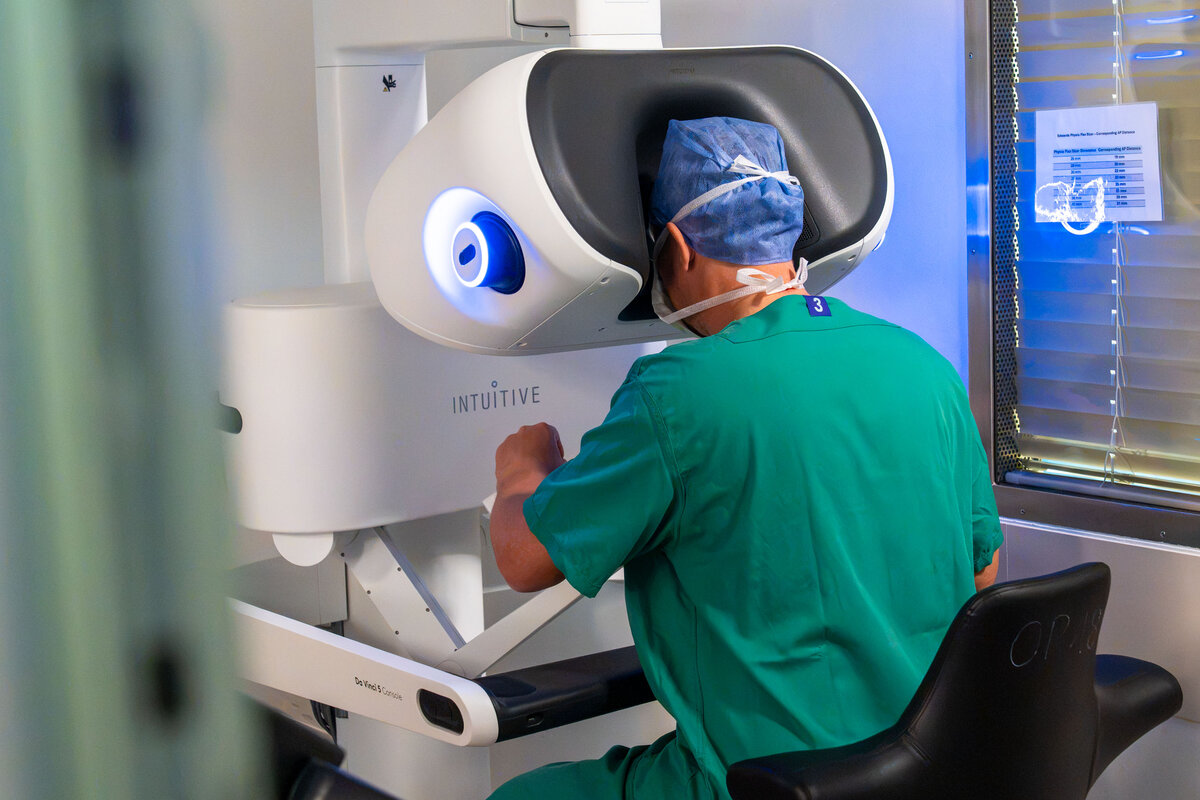
At the DHZC, we are now working with the Da Vinci 5 robotic-assisted system. It supports the surgeons but does not replace them: Control is entirely in the hands of the surgeon, who operates the system via a special cockpit and precisely controls all movements of the instruments.
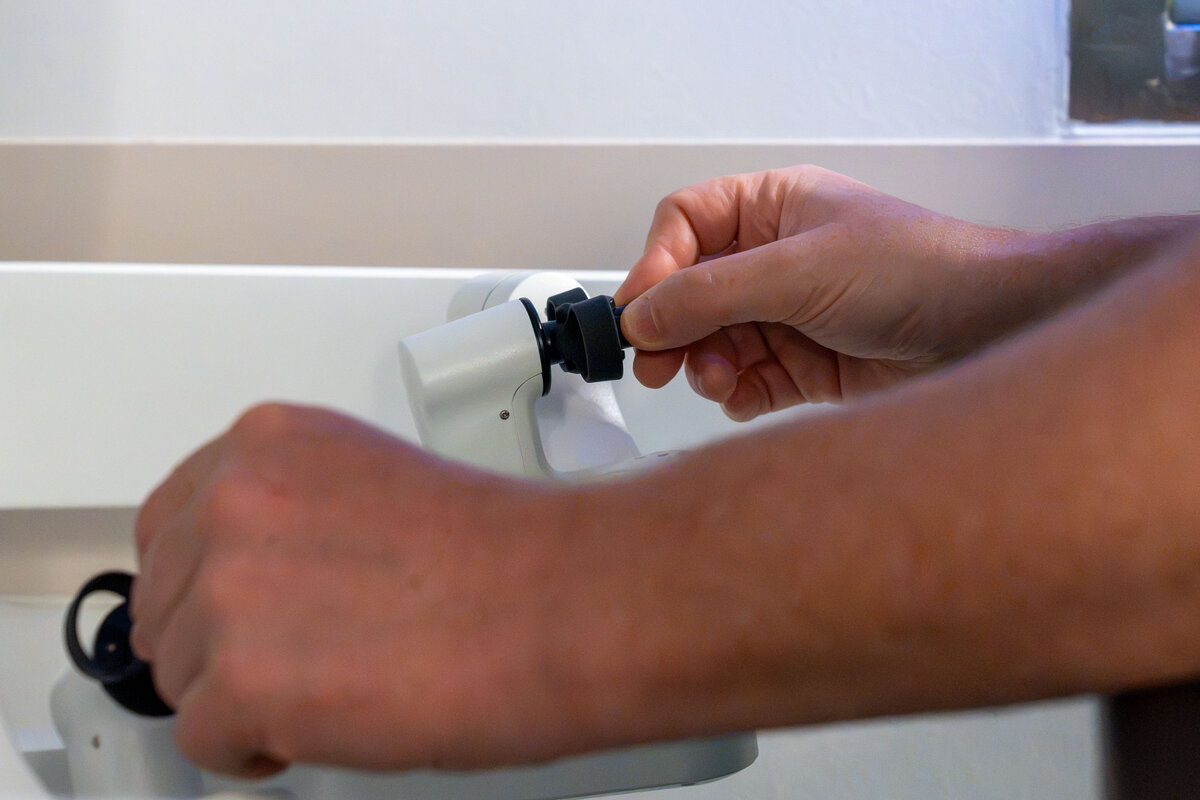
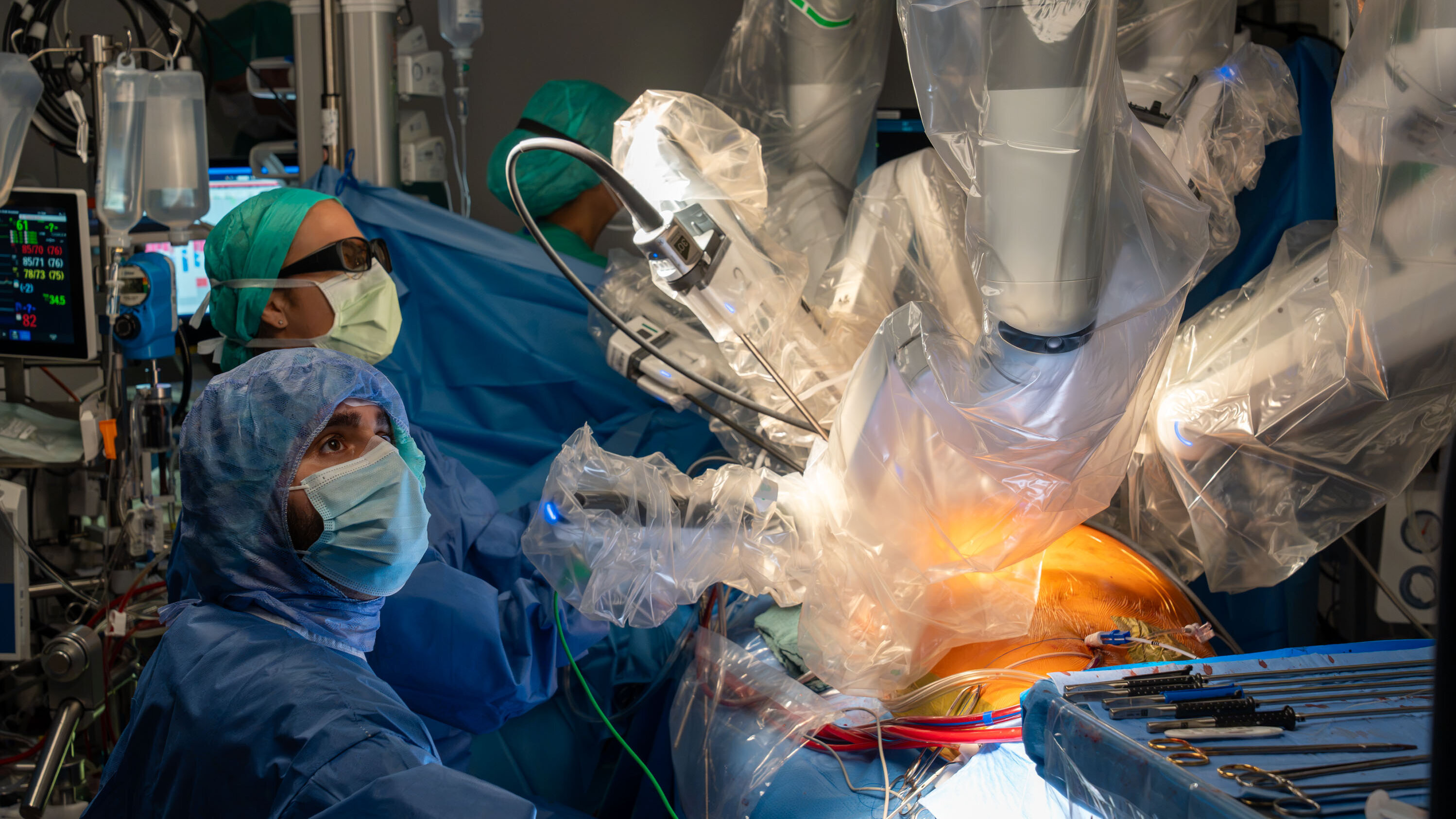
The system consists of four highly maneuverable arms positioned directly on the operating table. A high-resolution 3D camera—inserted through one of the access ports—transmits a magnified image from inside the body.
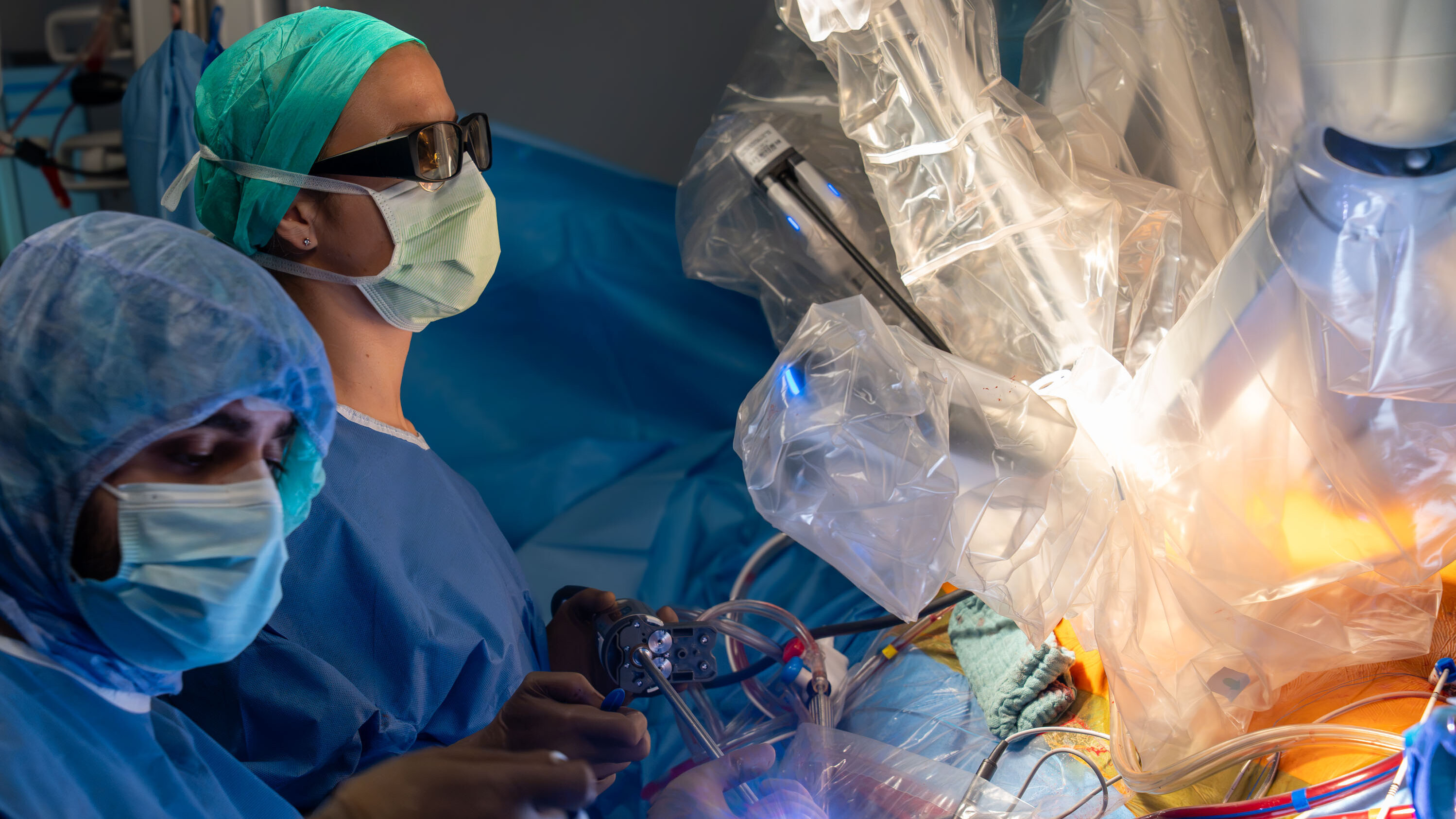
The system consists of four highly maneuverable arms positioned directly on the operating table. A high-resolution 3D camera—inserted through one of the access ports—transmits a magnified image from inside the body.
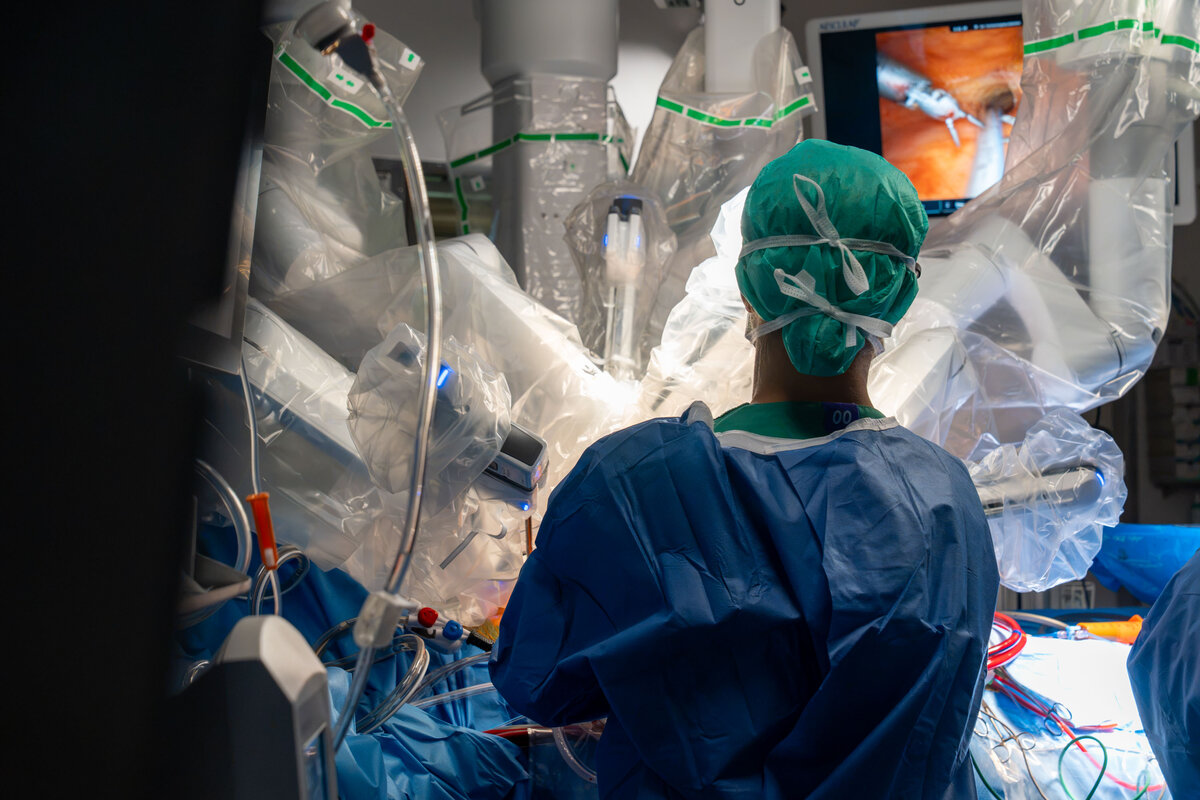
The surgeon controls the system via a special cockpit with hand and foot controls, where he or she looks directly at the surgical field through a monitor and precisely controls all movements of the instruments.
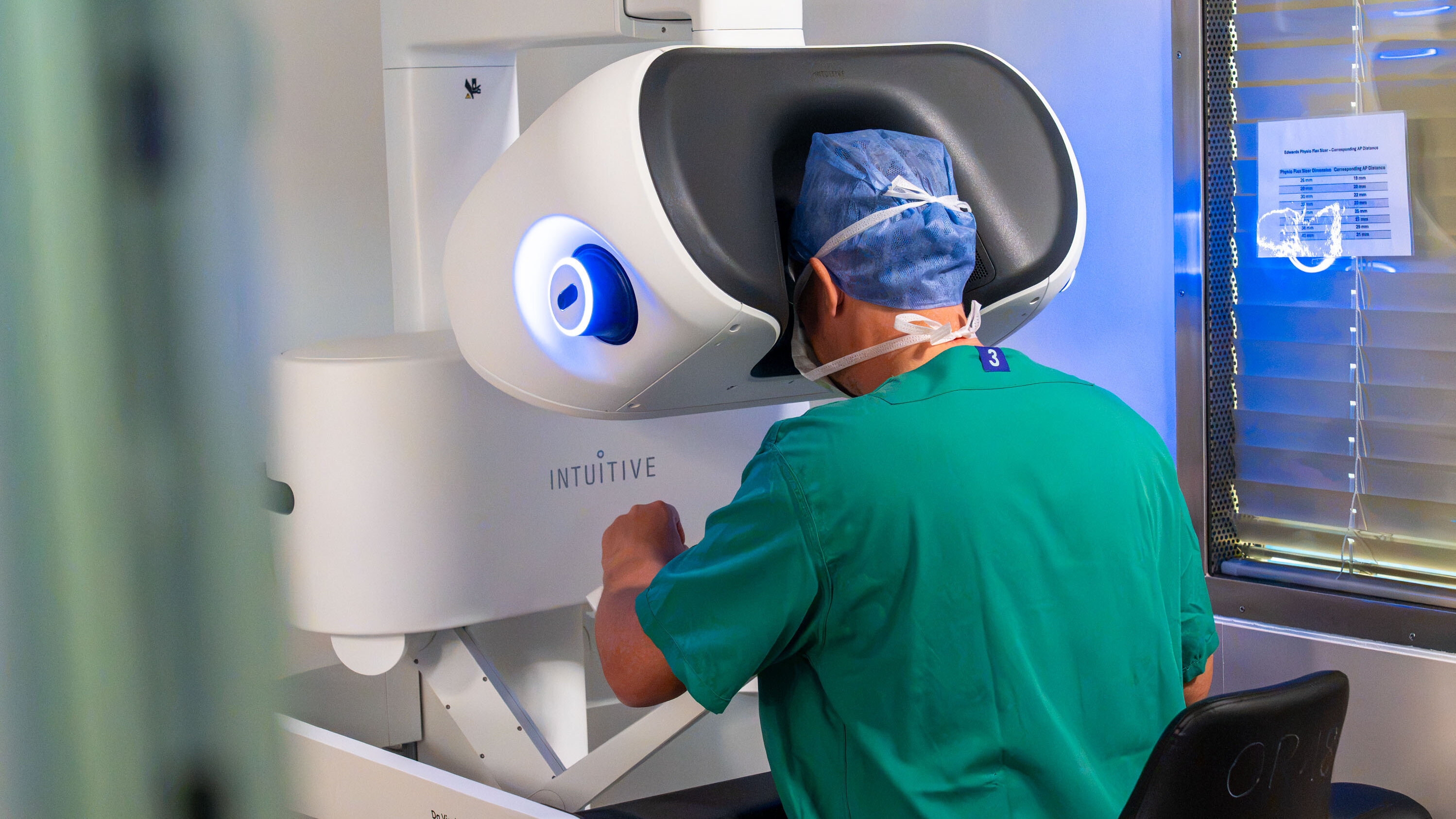
The surgeon controls the system via a special cockpit with hand and foot controls, where he or she looks directly at the surgical field through a monitor and precisely controls all movements of the instruments.
Gentle, precise, and efficient
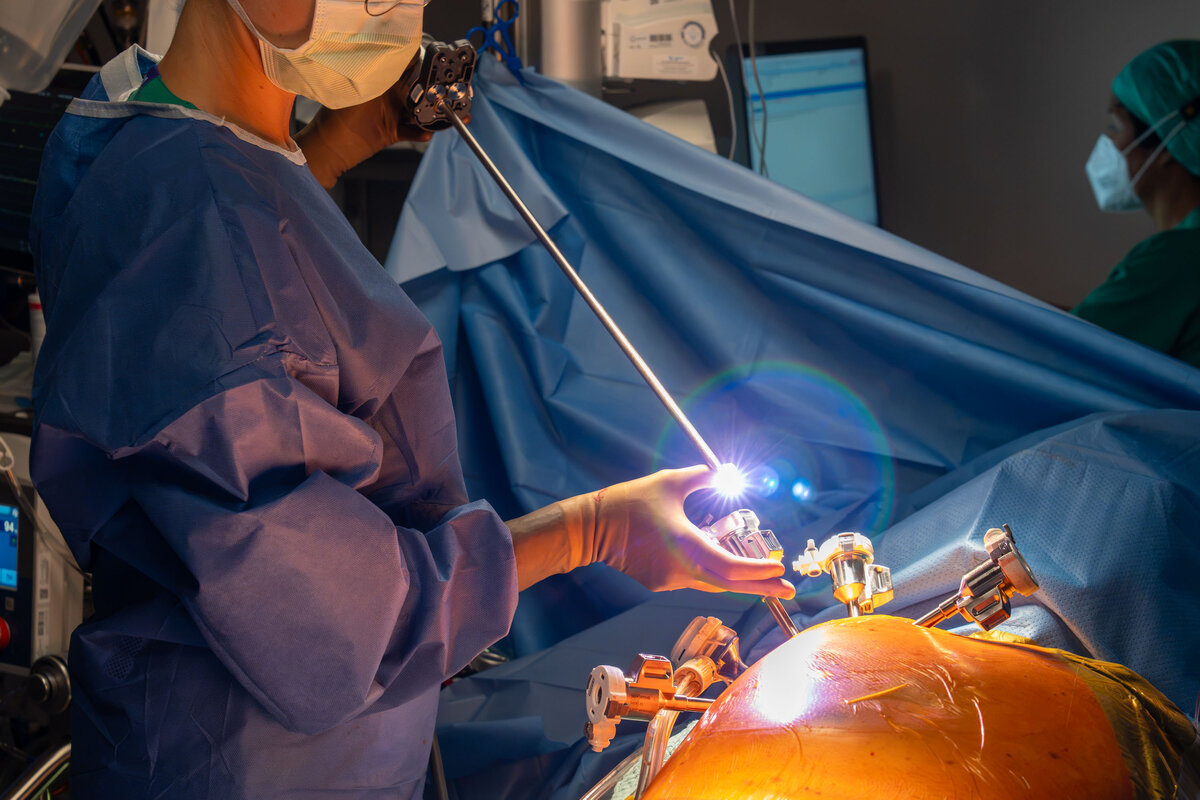
These procedures require only incisions in the chest measuring just a few millimeters to insert the instruments. Neither the sternum nor the ribs need to be cut. Robot-assisted heart surgery is thus the gentlest of all minimally invasive procedures—while offering greater range of motion and greater precision. This is because the instruments inside the body can rotate almost freely, allowing them to reach even hard-to-access areas.
This setup enables surgeries with the highest precision—while at the same time minimizing stress on patients.
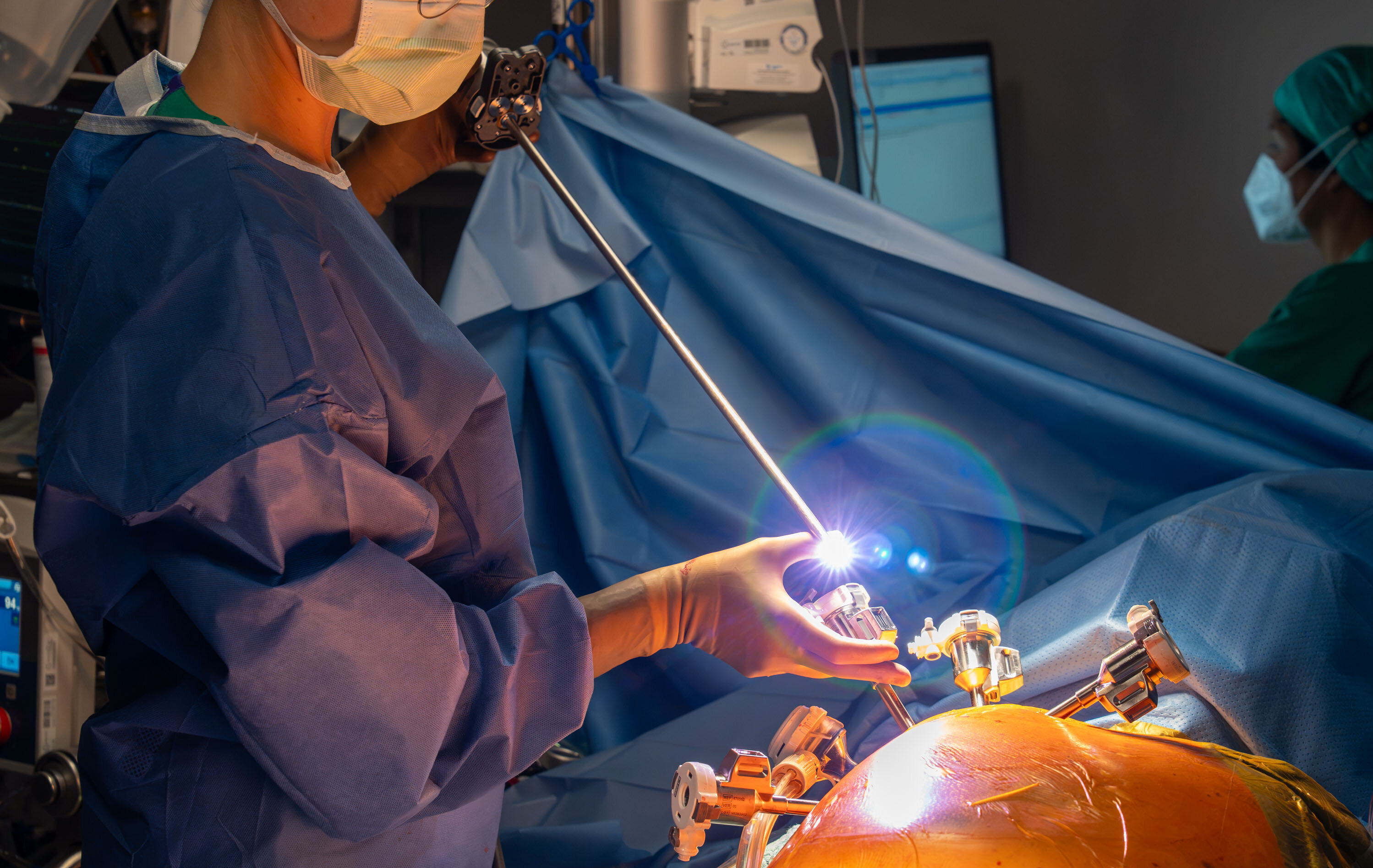
This setup enables surgeries with the highest precision—while at the same time minimizing stress on patients.
Telemedicine applications will also play a role in the future: Experienced surgeons could provide support or guidance across long distances.
Benefits for patients
- Less pain after surgery
- Very high precision while sparing vital body regions (no need to cut through the sternum or ribs)
- Shorter hospital stay (currently about two days shorter)
- Faster recovery
The latest robot-assisted surgical system Da Vinci 5, which is already in use at the DHZC, introduces technical innovations that support the surgical team: high-resolution three-dimensional visualization, precisely controllable instruments, and a new force-measuring system make it easier to control movements and the forces acting on the tissue. The goal is to perform procedures as precisely and gently on the tissue as possible.
When do we use the system at the DHZC?
This procedure is not currently an option for all heart surgeries. At the DHZC, it is currently used primarily for mitral valve reconstructions, but also for select bypass surgeries.
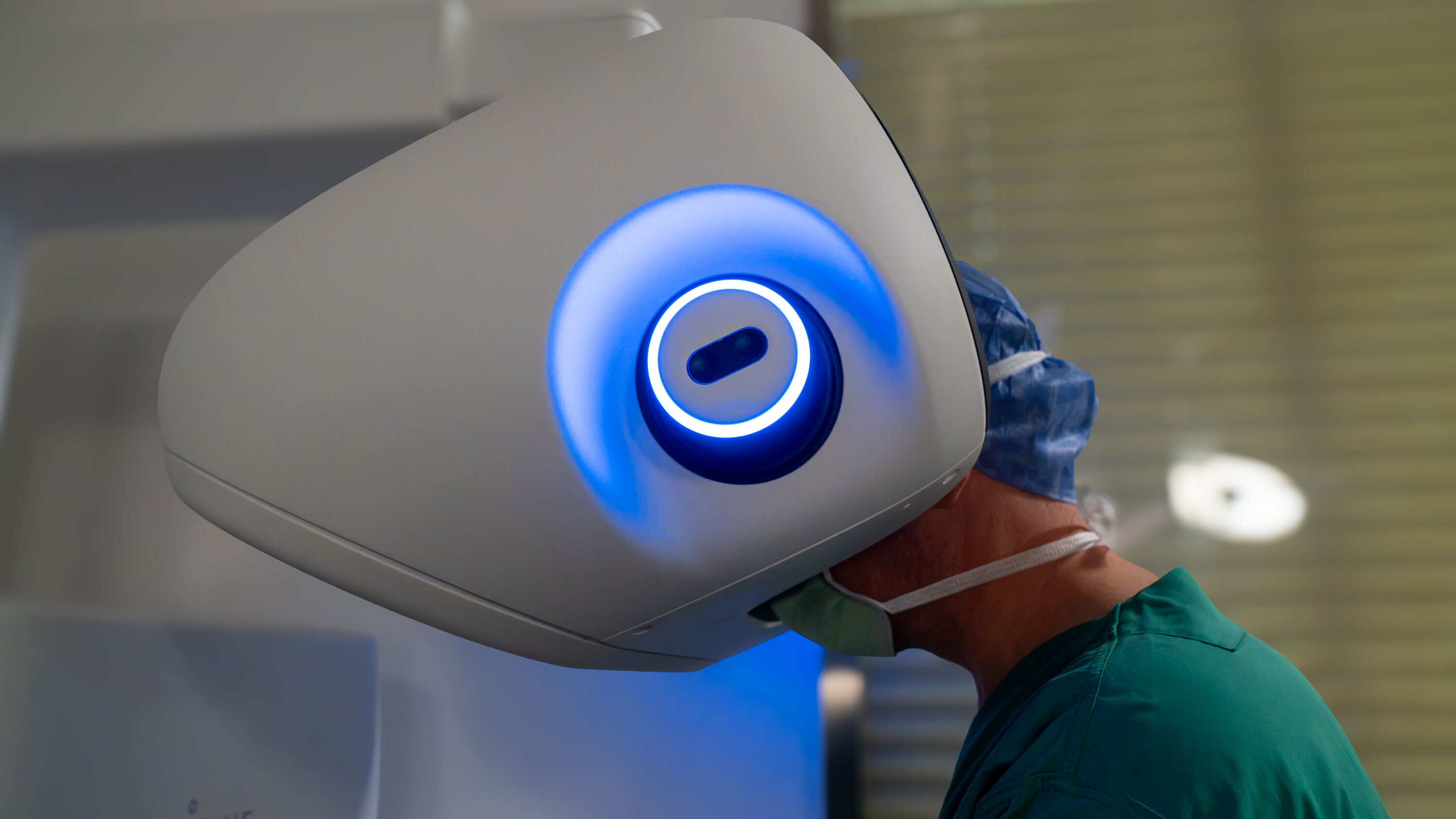
This procedure is not currently an option for all heart surgeries. At the DHZC, it is currently used primarily for mitral valve reconstructions, but also for select bypass surgeries.
A well-coordinated Team
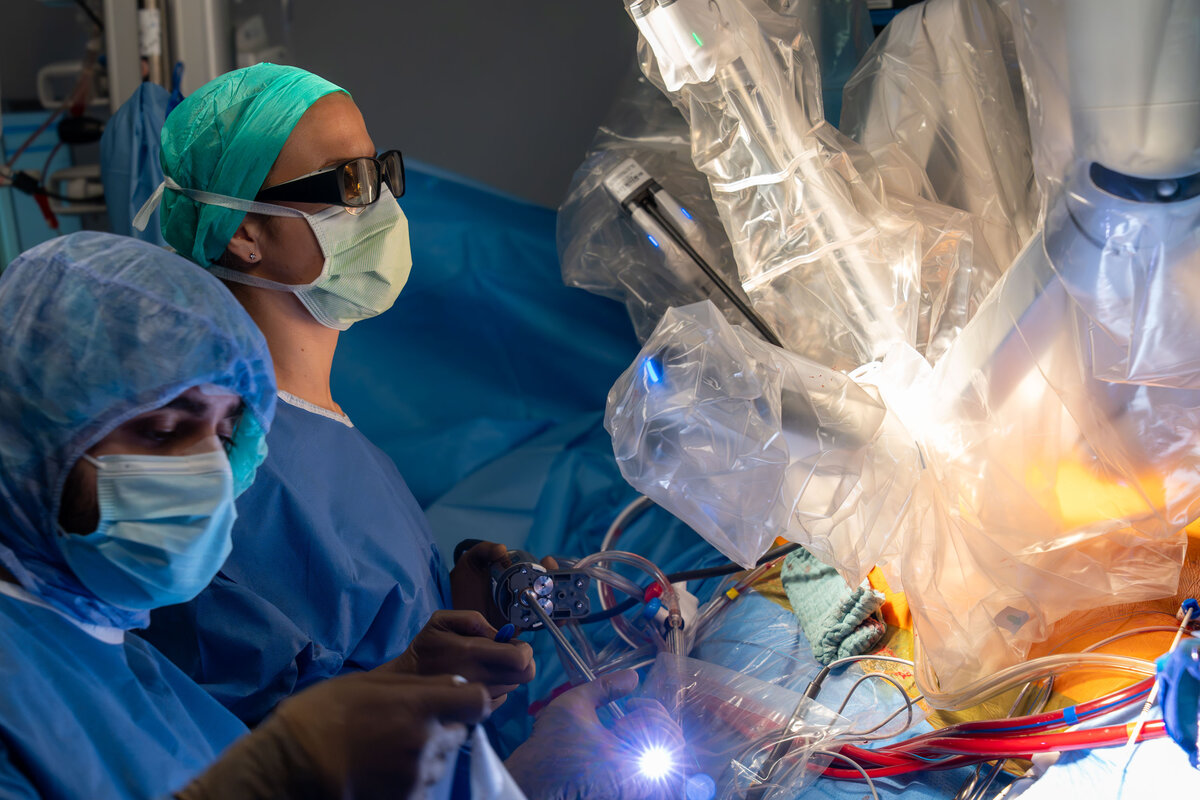
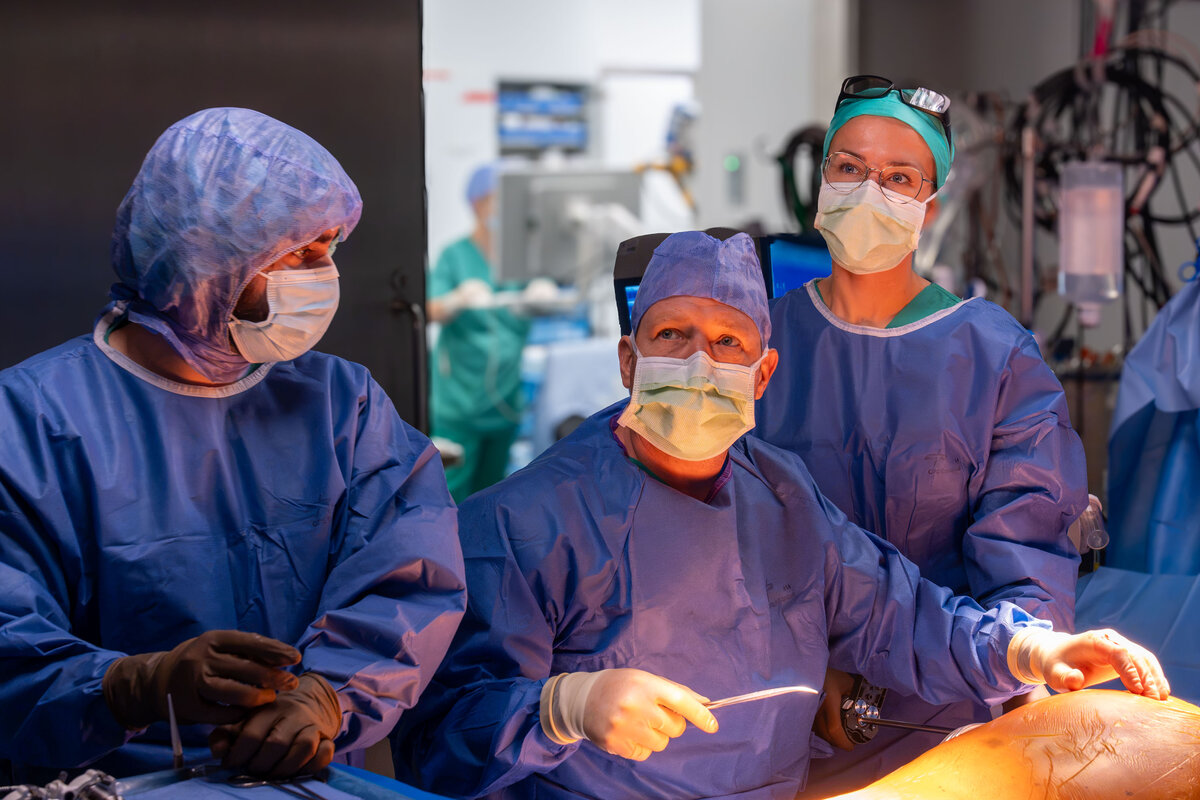
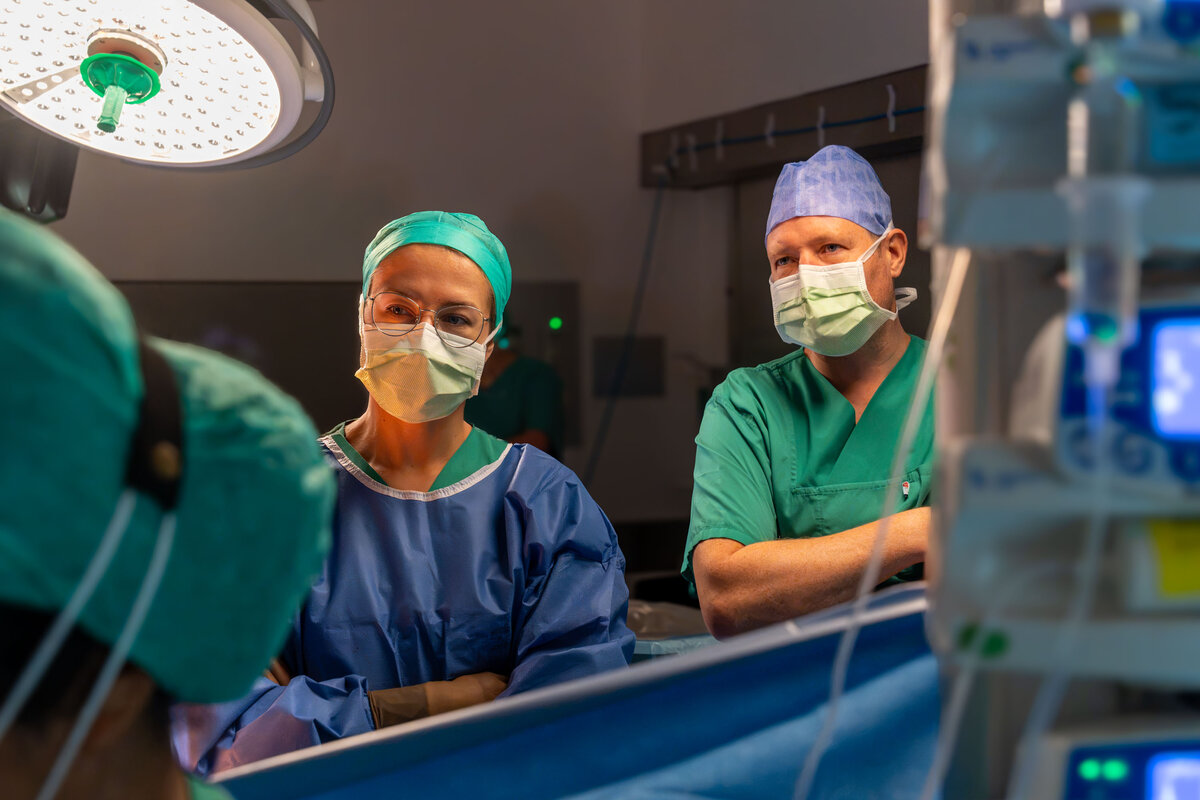
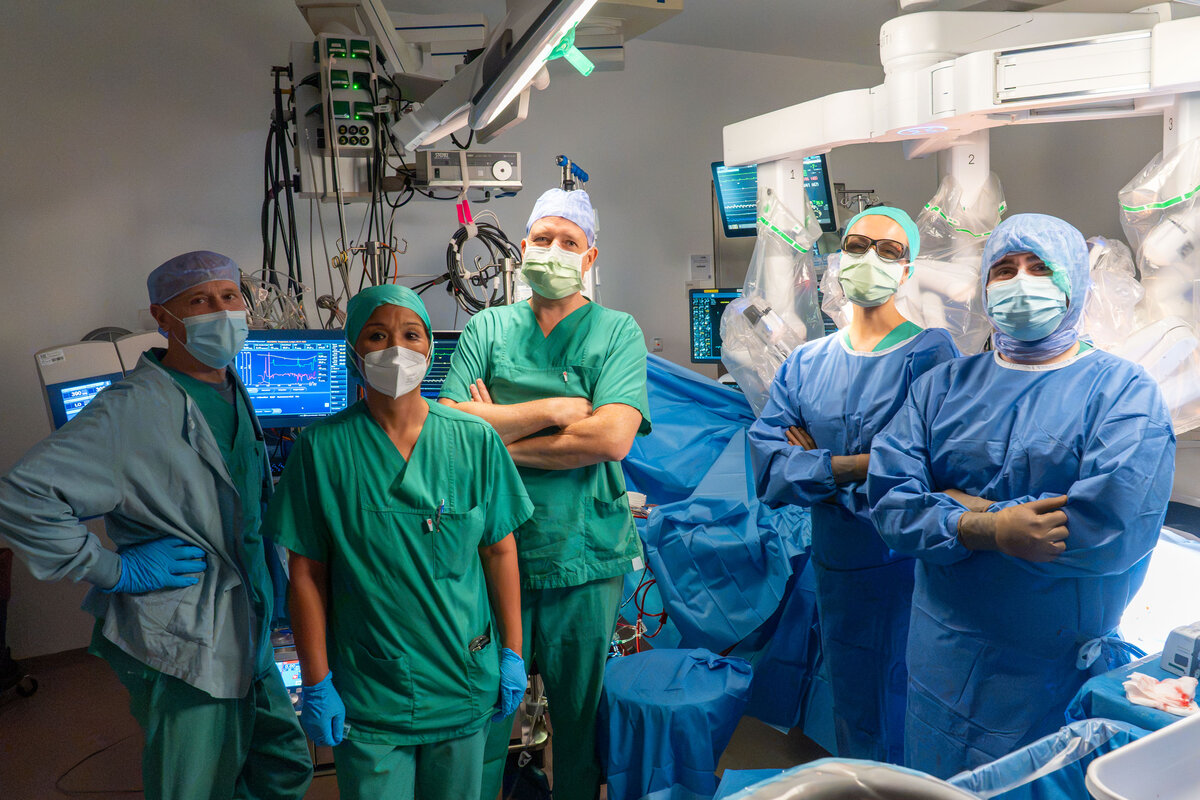
Robot-assisted heart surgery is highly team-dependent, as the surgeon in the cockpit—outside the sterile field—relies on smooth and precise collaboration with an experienced team at the operating table. That is why we work with a well-coordinated, interdisciplinary team of specialists.
The DHZC’s interdisciplinary surgical team underwent intensive training in all procedures prior to their first operation. This is because robot-assisted heart surgery is teamwork: While the surgeon sits at the control console, the use of instruments, the heart-lung machine, and communication at the operating table must all work together seamlessly.
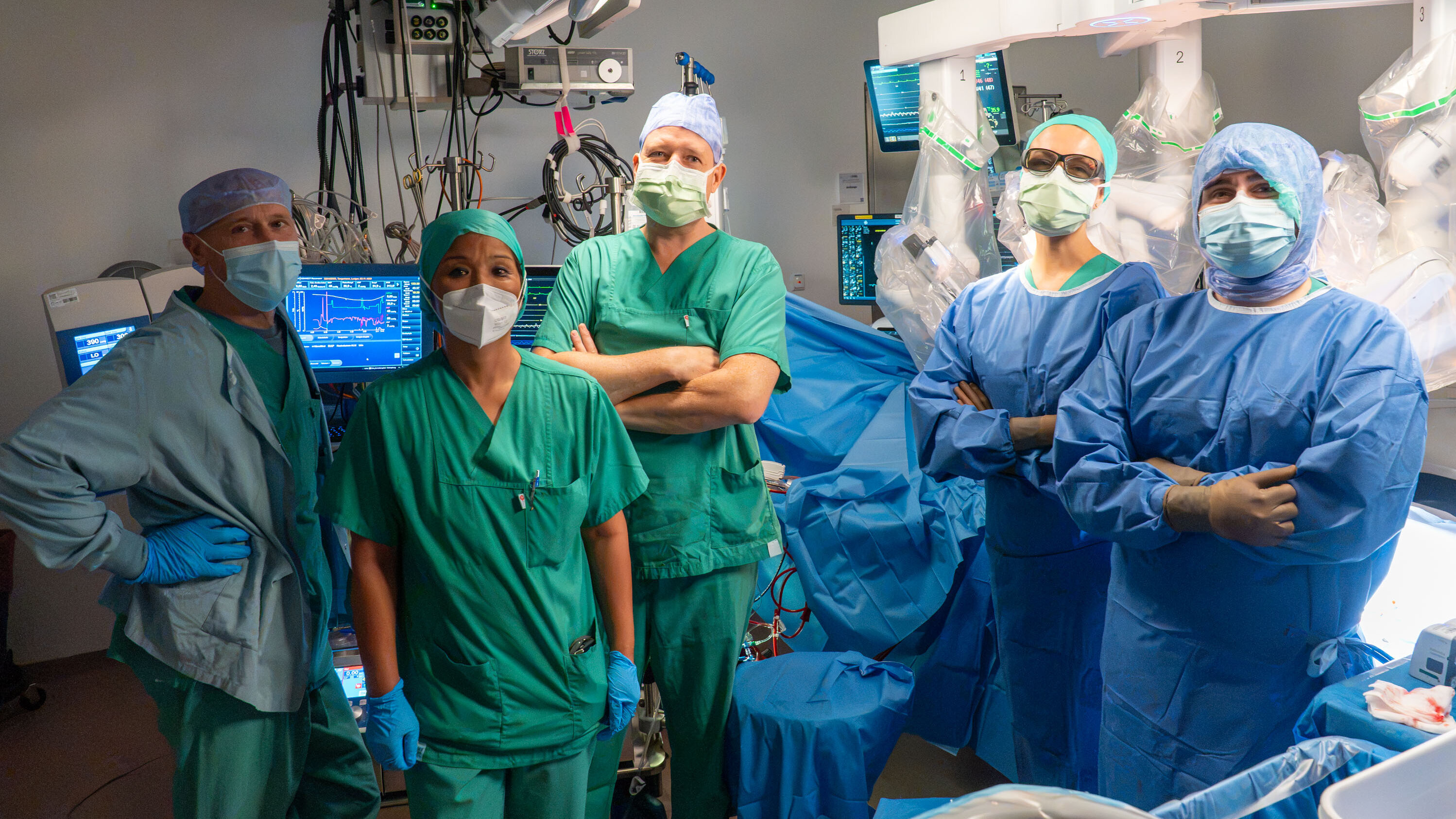
The DHZC’s interdisciplinary surgical team underwent intensive training in all procedures prior to their first operation. This is because robot-assisted heart surgery is teamwork: While the surgeon sits at the control console, the use of instruments, the heart-lung machine, and communication at the operating table must all work together seamlessly.
How Robot-Assisted Surgery Works
How exactly are robot-assisted heart surgeries performed at the DHZC? Our video shows the basic steps of the procedure (the video has German text).
Da Vinci 5: The Latest Generation in Action
With the Da Vinci 5, the DHZC is already utilizing the latest generation of robotic assistance systems. Since September 2026, the system has also been approved in Europe for certain cardiac surgical procedures in adults, such as minimally invasive bypass surgeries. This opens up new possibilities for expanding the range of applications for robot-assisted cardiac surgery.
Precision, Innovative Technology, and Digital Support
The Da Vinci 5 combines high-resolution 3D imaging with intelligent instruments and powerful computer technology. A key innovation is the so-called Force Feedback: Sensors detect the forces acting on the tissue approximately 1,000 times per second. Surgeons can feel pressure and tensile forces through the hand controls and also view them in real time on a display. This can help them use their instruments in a controlled manner that minimizes tissue damage.
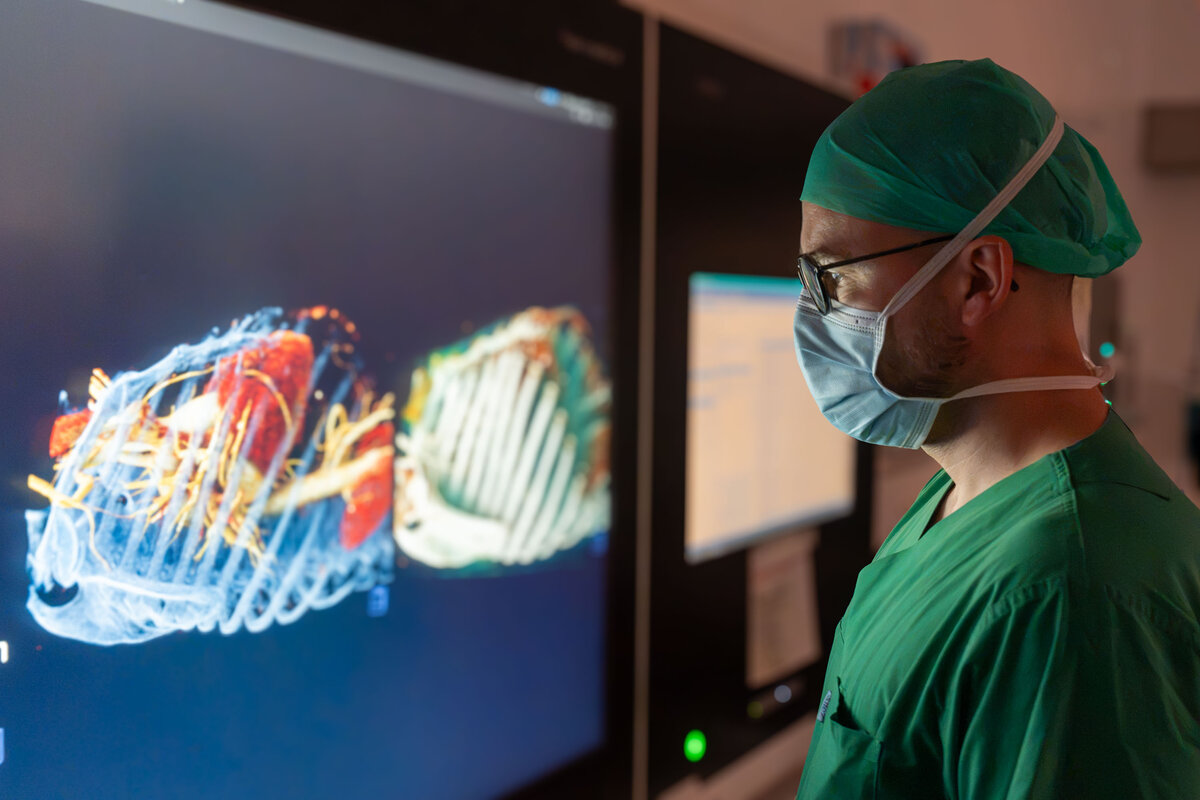
The computing power has also been increased by a factor of 10,000 compared to the predecessor system, the Da Vinci Xi. It provides the technical foundation for new digital functions and future innovations. An advanced imaging system also supports the visualization of blood vessels and tissue perfusion. The system is complemented by digital applications that support the entire treatment process—from preoperative planning to post-operative analysis. This opens up new possibilities for evaluating surgical procedures, refining surgical techniques, and making procedures even less invasive for patients.
“Experience from the U.S. clearly demonstrates the benefits of robot-assisted heart surgery for patients: less trauma, faster recovery, and shorter hospital stays. We want to continue to be pioneers in Germany and actively shape the development of this technology—for modern, safe, and minimally invasive heart surgery.”
Prof. Volkmar Falk, Medical Director of the DHZC
Support from the German Heart Center Foundation
The development of the robotics program at the DHZC was made possible by an initiative of the German Heart Center Foundation. The foundation supports projects aimed at advancing technological progress in cardiology through excellent patient care, pioneering educational programs, and technological innovation.

Photo Gallery
Copyright: DHZC / Tischer