
Rhythmology is the fastest growing field of medicine. We use gentle and innovative procedures to provide patients with cardiac arrhythmia with the best possible care. With our pacemaker therapy and treatment of atrial fibrillation, we are one of the leading centres in Germany and Europe.
We work on a cross-clinic and interdisciplinary basis and have state-of-the-art cardiac catheterisation laboratories, implantation rooms and operating theatres.
Rhythmology is the fastest growing field of medicine. We use gentle and innovative procedures to provide patients with cardiac arrhythmia with the best possible care. With our pacemaker therapy and treatment of atrial fibrillation, we are one of the leading centres in Germany and Europe.
We work on a cross-clinic and interdisciplinary basis and have state-of-the-art cardiac catheterisation laboratories, implantation rooms and operating theatres.
All the advantages for your patients
At the DHZC, we offer all interventional and surgical treatments in modern rhythmology, especially if your patient has a seldom seen cardiological disease. The most important services and treatment options are:
- We utilise all new technologies in the field of pulsed field ablation and can therefore offer the right treatment method tailored to the individual patient (News: Double premiere - treatment of atrial fibrillation).
- We are an expert centre for EPU and ablations: We offer ablations in the epicardial space and therefore fulfil the requirements for an expert centre.
- We perform left ventricular sympathetic denervation (i.e. severing of the nerve fibres) in patients with recurrent ventricular tachycardia if they have specific heart conditions.
- We are a leading centre in the implantation of probe-less pacemakers and extravascular defibrillators (News: More about our European premiere).
- We are using a new method to treat reflex syncope using ablation - Cardioneuroablation.
Multi-disciplinary
- We have specialists in interventional electrophysiology working closely with experts in cardiac surgery electrophysiology. We perform hybrid interventions together in an interdisciplinary team.
- We work together with the colleagues in radiotherapy multidisciplinary team to treat patients with ventricular tachycardia with gentle radiotherapy.
We pass on our expertise
- We train colleagues in the field of stimulation of the specific stimulus conduction system, focussing on the internationally established method of Left Bundle Branch Area Pacing
- We are happy to be approachable for colleagues who want to learn more about specific ablation technologies or certain ablation techniques (also internationally).
Contact & contact persons
Cross-campus for medical colleagues:
Rhythm Control Hotline: T: +49 30 450 665 665
rhythm-control@dhzc-charite.de
Campus-specific contacts for patients and medical colleagues:
For inpatients:
Patient management
T: +49 30 450 513 021
For outpatients:
Cardiological university outpatient clinic
T: +49 30 450 513 150
Hotline for medical colleagues:
Rhythm hotline
T: +49 30 450 513 110
For inpatients:
T: +49 30 450 565 400 (after the announcement: 1)
For outpatients:
T: +49 30 450 565 400 (after the announcement: 2)
Hotline for medical colleagues:
T: +49 30 450 665 445
Page of the outpatient clinic with consultation hours
Rhythmology for congenital heart defects
Registration & registration times:
Appointments by appointment only & if possible by email.
Available by telephone:
Mon - Fri from 8:00 - 10:00 am and
Mon - Thurs from 14:00 - 15:00
T: +49 30 450 516 054
kika-ambulanz@dhzc-charite.de
Consultation hours:
Mo - Thu from 8:00 - 14:00
Fridays from 8:00 - 11:00 am
(consultations of inpatients take place after the consultation hours)
For inpatients:
Patient management
T: +49 30 450 513 747
For outpatients:
Cardiological university outpatient clinic
T: +49 30 450 513 717
Hotline for medical colleagues:
Rhythm hotline
T: +49 30 450 513 636
Patient contact for inpatient stays / referral:
T: +49 30 4593 2250
einbestellung@dhzc-charite.de
Four years after the last update, the European practice guidelines for the management of atrial fibrillation have been updated again. In our video, Prof. Dr Gerhard Hindricks summarises the guidelines.
Diagnostic
Patients are often referred to us who have already had cardiac arrhythmias documented by their GPs. We ourselves use long-term ECG and stress ECG, as well as external (portable) and subcutaneously implanted event monitors and telemedicine to diagnose cardiac arrhythmias and syncope, also known as fainting or circulatory collapse.
Cardiac arrhythmias or syncope may require further diagnostics. We use echocardiography, blood tests including genetic testing and cardiac magnetic resonance imaging to narrow down the diagnosis and assess the risk.
Therapy
In addition to drug therapy, sclerotherapy for the treatment of cardiac arrhythmias is becoming increasingly important. Modern 3D mapping techniques enable the localisation and treatment of complex arrhythmias. As one of the leading centres for electrophysiological ablation, the DHZC has access to all current mapping procedures and the latest catheter technologies, including all available pulsed field ablation (PFA) technologies. "Pulsed Field Ablation" is a very gentle procedure, particularly for the treatment of atrial fibrillation, which acts specifically on heart muscle cells and therefore does not damage the surrounding tissue such as nerve cells and vascular cells.
In the field of device medicine, we implant modern cardiac pacemakers and defibrillators (ICDs) as well as subcutaneous ICDs and - pioneering in Berlin - innovative wireless cardiac pacemakers. In the field of pacemaker therapy, the focus is on the so-called physiological stimulation of the conduction system. This involves stimulating the conduction system in order to enable the transmission of electrical impulses and thus your physiological heartbeat.
Cardiac resynchronisation therapy and cardiac contractility modulation are used for patients with cardiac insufficiency. We also offer the Remede system, an implantable device for the treatment of sleep apnoea, in which breathing pauses or short-term respiratory arrest occur during sleep.
One of our ultra-modern hybrid operating theatres, which also offers the facilities of a cardiac catheterisation laboratory (mobile X-ray system) and the equipment of an operating theatre. In the event of complications, immediate cardiac surgery can be performed in the hybrid operating theatre.
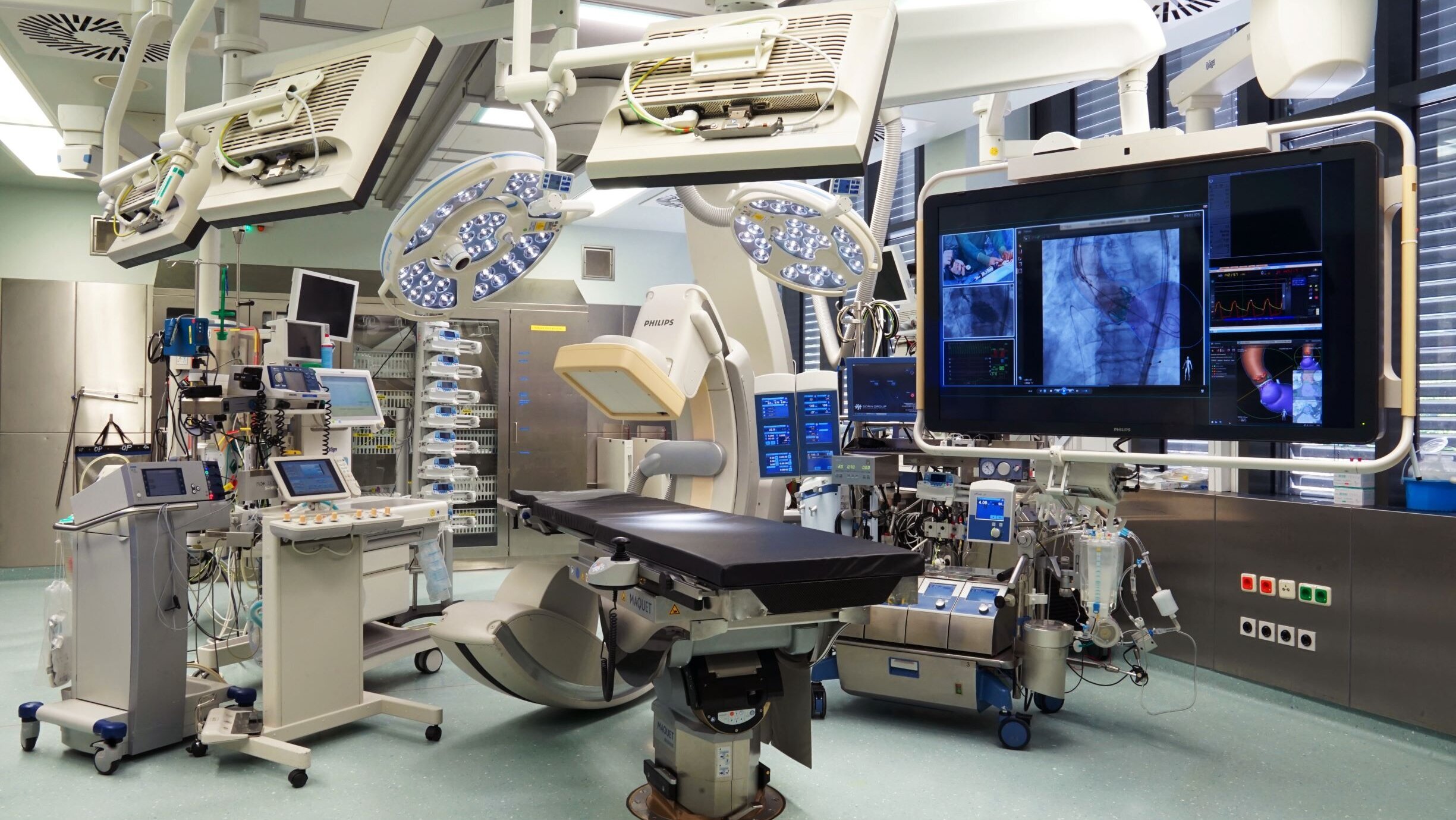
One of our ultra-modern hybrid operating theatres, which also offers the facilities of a cardiac catheterisation laboratory (mobile X-ray system) and the equipment of an operating theatre. In the event of complications, immediate cardiac surgery can be performed in the hybrid operating theatre.
Efficient
We use the most modern equipment and technologies to provide our patients with the best possible care.
We have:
- eight electrophysiological catheter labs with state-of-the-art equipment
- four implantation rooms for pacemakers, defibrillators and pacemakers for specific stimulation of the patient's own conduction system
- three hybrid operating theatres for complex procedures
Our examinations and treatments per year:
- more than 1,400 electrophysiological examinations and catheter ablations
- more than 2,000 implantations of pacemakers, defibrillators or event recorders
- around 4,000 patients in the rhythm consultation for further clarification of cardiac arrhythmias
- around 7,000 patients in the device consultation to read out the pacemaker or defibrillator
Affera System: Pulsed field ablation plus radiofrequency ablation with just one balloon.
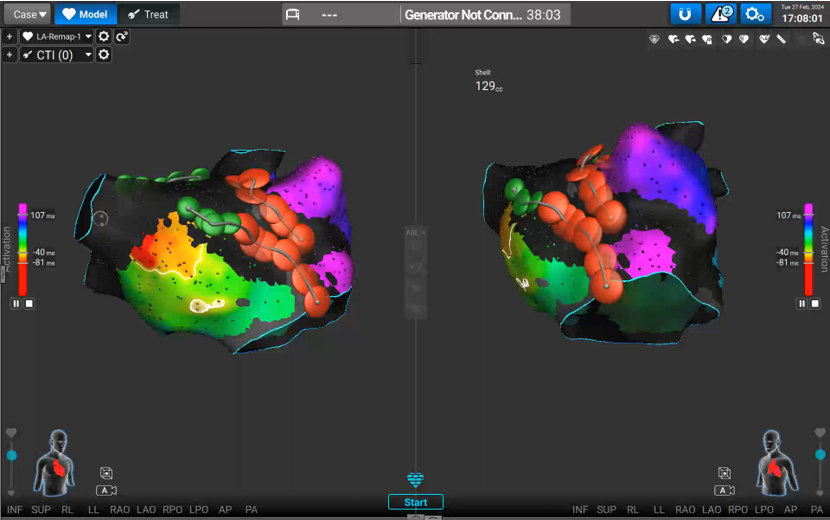
Affera System: Pulsed field ablation plus radiofrequency ablation with just one balloon.
Locations
We treat outpatients and inpatients with cardiac arrhythmias at these four DHZC clinics:
Department of Cardiology, Angiology and Intensive Care Medicine at Campus Charité Mitte
Department of Cardiology, Angiology and Intensive Care Medicine at the Benjamin Franklin Campus
Department of Cardiology, Angiology and Intensive Care Medicine at the Campus Virchow-Klinikum
Department of Cardiac, Thoracic and Vascular Surgery at the Campus Virchow-Klinikum
Certificate of the DGK
Back in 2014, the cardiology clinics at the DHZC were one of the first clinics in Germany to be awarded the seal of approval by the German Society of Cardiology (DGK) as a site for obtaining the additional qualification "Special Rhythmology".
The requirements include the regular implantation of all active cardiac rhythm implants and the regular performance of all forms of catheter ablation. This must be demonstrated with corresponding case numbers (e.g. at least 250 electrophysiological procedures, at least 100 pacemaker implantations, at least 40 ICD and 15 CRT implantations). The corresponding specialised experience of at least two medical specialists must also be documented.
Pages on the subject of rhythmology and cardiac arrhythmia
- Cardiac arrhythmias
- EPU & ablation
- Pacemaker
- Atrial fibrillation
- Electrocardiogram (ECG)
