
Cardioanaesthesia
Focus of our work
The cardioanaesthesia department treats patients from the entire spectrum of cardiac, thoracic and vascular surgery as well as interventional cardiology in nine operating theatres - three of which are hybrid operating theatres. We would like to introduce you to this and our other specialisations here.
Paediatric cardioanaesthesia
In the paediatric cardioanaesthesiology department, patients with congenital heart defects receive anaesthesiological care in two operating theatres and two cardiac catheterisation laboratories. We care for patients of all ages during operations across the entire spectrum of congenital heart surgery, including assist device implants and transplants, in close cooperation with the Department of Congenital Heart Disease - Pediatric Cardiology, the Department of Congenital Heart Surgery - Pediatric Cardiology and our colleagues in cardiotechnology.
We also carry out sedation and anaesthesia for cardiac catheter examinations and interventions.
Due to the major advances in the treatment of patients with congenital heart defects and the resulting significant improvement in survival, revision operations and adaptation procedures in adults with congenital heart defects (EMAH) are becoming increasingly important.
In addition to airway protection and arterial and venous instrumentation, the range of services offered by the Department of Cardiac Anesthesiology and Intensive Care Medicine includes all established general anaesthesia procedures including TIVA and balanced forms of anaesthesia as well as procedural sedation. For safety reasons, all central venipunctures at our clinic are performed under ultrasound guidance. Intraoperative echocardiography is performed together with colleagues from the Department of Congenital Heart Desease - Pediatric Cardiology. Special miniaturised transoesophageal probes and 3D echo probes are available for this purpose.
The Department specialises in the area of Enhanced Recovery After Cardiac Surgery. In this context, the majority of our patients are extubated in the operating theatre before being transferred to the intensive care unit. This plays an important role in the postoperative course of many corrective and palliative operations and is an established standard in our department for operations such as bidirectional Glenn anastomosis and Fontan surgery. At the Deutsches Herzzentrum der Charité, neonates and children with more complex procedures are also treated very successfully according to this principle on the basis of a coordinated interdisciplinary concept and the use of modern sedation and pain concepts.
Another focus of the Department is the perioperative monitoring of cerebral perfusion and function using near-infrared spectroscopy and EEG as well as the use of blood-sparing procedures in paediatric cardiac surgery. These have been developed and established at our clinic in such a way that neonates and infants often do not need to be transfused intraoperatively.
Contact person
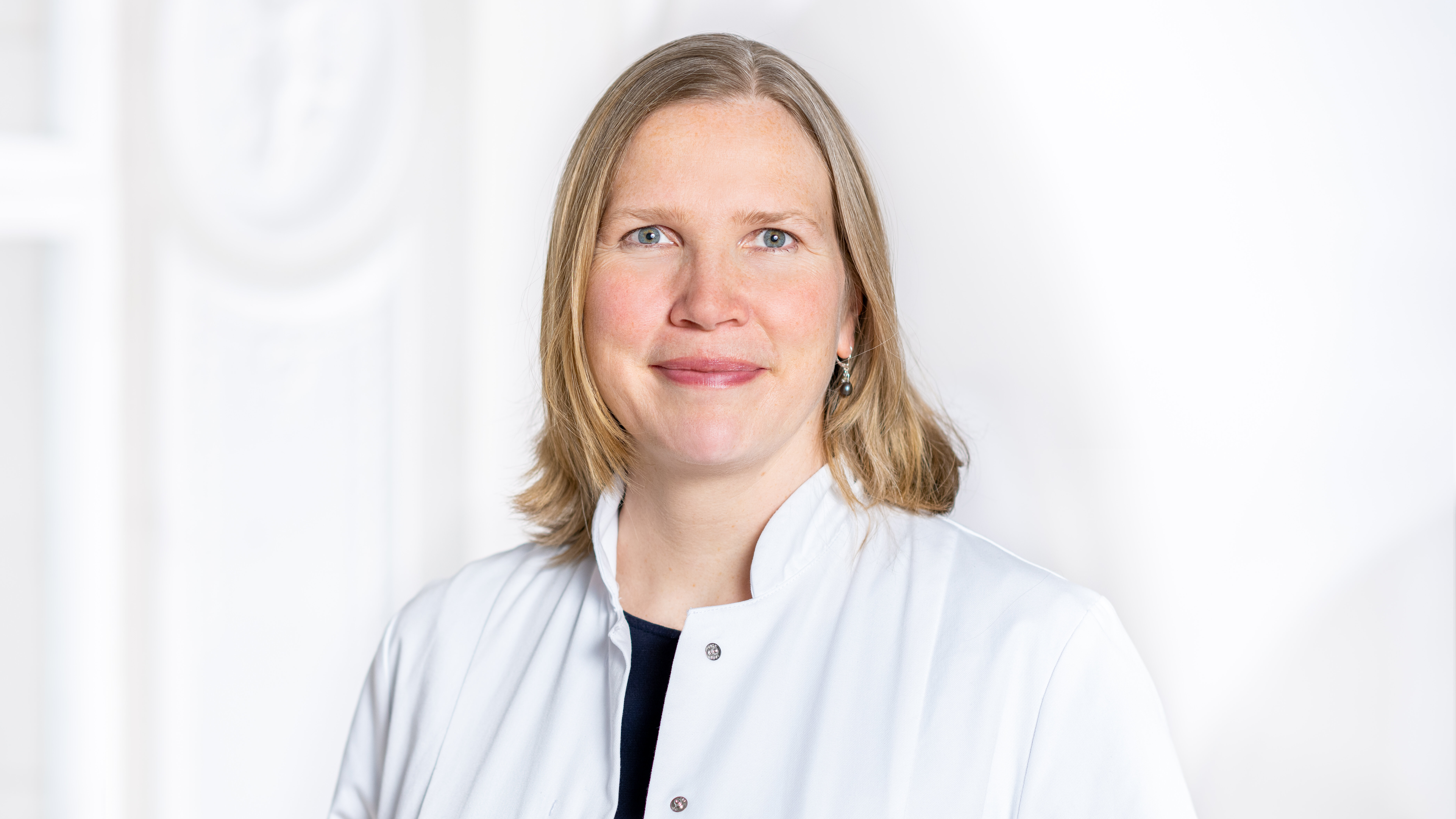
Prof Dr Maren Kleine-Brüggeney
Head Senior Physician of the Department of Cardiac Anesthesiology and Intensive Care Medicine
Contact person
Prof Dr Maren Kleine-Brüggeney
Head Senior Physician of the Department of Cardiac Anesthesiology and Intensive Care Medicine
