
Heart failure and cardiomyopathies
Heart failure, also known as cardiac insufficiency, is one of the most common cardiovascular diseases in Germany. It is estimated that around two to three million people in Germany are affected, and the number is increasing with demographic change. Heart failure occurs when the heart is no longer able to supply the body with sufficient blood, resulting in a restricted supply of oxygen and nutrients. This can lead to symptoms such as shortness of breath, fatigue, water retention and a significant reduction in physical performance. The disease can progress gradually or occur acutely and is often the result of other cardiovascular diseases.
There are various causes for the development of heart failure. The most common include coronary heart disease (Verengungen der narrowing of the coronary arteries), heart attacks, high blood pressure,heart valve defects and inflammatory diseases of the heart muscle such as myocarditis. In addition, genetic factors or cardiac arrhythmia can also lead to heart failure. In some cases, heart failure also develops as a result of a so-called cardiomyopathy, in which the heart muscle itself is diseased and weakened. Each of these causes requires a specific diagnosis and customised therapy.
At the Department of Cardiology, Angiology and Intensive Care Medicine (DHZC) at the Benjamin Franklin Campus, we offer comprehensive diagnostic and therapeutic options for every form of heart failure. Our specialised teams work with state-of-the-art medical technology and use the latest scientific findings to ensure customised treatment for each patient.
Diagnostics at our clinic include echocardiography, MRI of the heart, PET-CT, myocardial biopsy, genetic diagnostics, comprehensive laboratory diagnostics, cardiopulmonary performance diagnostics, 24-hour ECGs, 24-hour blood pressure measurement, event recorders, invasive haemodynamic measurement at rest and during exercise and vasoreactivity testing.
The treatment options at the DHZC are just as varied and range from medication to minimally invasive interventions and surgical procedures. Patients with mild to moderate heart failure often benefit from drug therapy aimed at stabilising cardiac output and alleviating symptoms. In advanced heart failure, however, more complex treatment strategies are often used. These include the use of pacemakers, defibrillators or the reconstruction of heart valves.
In addition to heart failure treatment with medication, we also offer the following invasive procedures to treat cardiomyopathies:
- Percutaneous coronary revascularisation (incl. chronic coronary occlusions CTO)
- Transcoronary ablation of septal hypertrophy (TASH) for HOCM
- Interventional closure of intracardiac shunts (ASD, VSD)
- Mitral valve valvuloplasty
- Percutaneous therapy of mitral valve insufficiency (MitraClip)
- Minimally invasive aortic valve replacement using catheter technology (TAVI)
- Ablation therapy for all ventricular and supraventricular arrhythmias
- Implantation of systems for cardiac resynchronisation therapy (CRT)
- Implantation of all common pacemaker and defibrillator systems
- Implantation of subcutaneous defibrillator systems (S-ICD)
- Prescription of LifeVest®, defibrillator waistcoat
- Cardiac contraction modulation (CCM)
The DHZC also offers all mechanical circulatory support therapy (‘artificial heart therapy’) procedures for patients with terminal heart failure. Patients for whom other treatments are no longer sufficient also have the option of a heart transplant.
Depending on the current symptoms, treatment is offered either in our specialised outpatient clinic for heart failure, cardiomyopathy and myocarditis or, in the event of severe impairment of performance due to cardiac decompensation, as an inpatient on our special heart failure ward.
Our primary goal at the DHZC is to offer each patient individualised and holistic treatment that is tailored to their specific needs and the severity of their condition. With a wide range of treatment options, from early diagnosis to heart transplantation, we are committed to improving the quality of life and long-term survival prognosis of our patients.
Heart failure outpatient clinic at the CBF
Patients with heart failure can be treated at the Benjamin Franklin Campus in the outpatient clinic for heart failure, cardiomyopathy and myocarditis. In addition to state-of-the-art procedures for diagnosis and drug treatment, the team also offers various invasive procedures to treat cardiomyopathies. In addition, patients with terminal heart failure are offered all methods of mechanical circulatory support therapy (‘artificial heart therapy’), including preparation for heart transplantation (HTX).
Transsectoral heart failure network
In the Transsectoral Heart Failure Network Berlin Southwest Brandenburg, patients with chronic heart failure receive comprehensive care together with specialist cardiological practices and GPs in the region and receive valuable information on how to manage their condition independently in everyday life through free training courses.
The network was founded in 2017 by the Department of Cardiology, Angiology and Intensive Care Medicine at CBF together with specialist cardiological practices, GP practices and the Sport-Gesundheitspark Berlin.
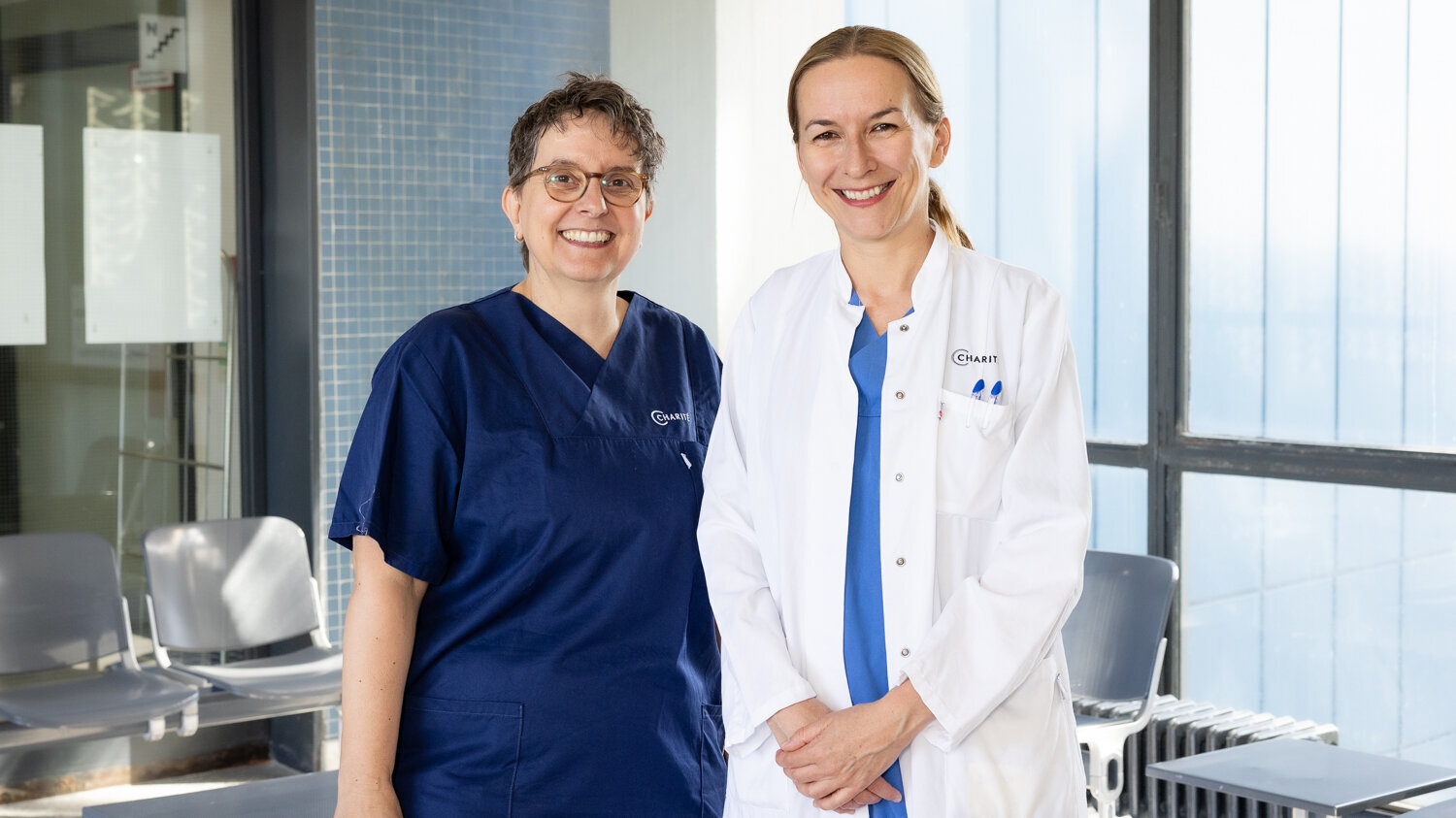
Contact persons for further information on the network are the certified heart failure nurse Daniela Hinrichs (left in the picture) and Prof Dr Bettina Heidecker (senior physician and head of the heart failure and cardiomyopathy consultation hours at the Benjamin Franklin Campus; right in the picture).
Contact persons for further information on the network are the certified heart failure nurse Daniela Hinrichs (left in the picture) and Prof Dr Bettina Heidecker (senior physician and head of the heart failure and cardiomyopathy consultation hours at the Benjamin Franklin Campus; right in the picture).
