
Cardiotechnology at the DHZC
The Deutsches Herzzentrum der Charité offers the full range of modern cardiac, thoracic and vascular surgery for all age groups. The demands on the team of cardiac technicians are correspondingly high in terms of training, medical knowledge and technical expertise. Close interdisciplinary cooperation with surgeons, anaesthetists and surgical and anaesthetic nursing staff is an essential prerequisite for the successful performance of operations. This applies in particular to complex procedures.
The team of cardiotechnicians at the DHZC is continuously researching the further development of treatment concepts, participating in numerous multicentre studies and regularly attending specialist conferences.
Cardiotechnicians support the treatment of acutely ill patients in all areas of cardiac medicine and at the Deutsches Herzzentrum der Charité, for example, they work in the cardiac surgery operating theatre, in the intensive care unit and in other inpatient areas.

Cardiotechnicians support the treatment of acutely ill patients in all areas of cardiac medicine and at the Deutsches Herzzentrum der Charité, for example, they work in the cardiac surgery operating theatre, in the intensive care unit and in other inpatient areas.
Development of cardiotechnology
Without the introduction of heart-lung machines in the early 1950s, the development of modern heart surgery would not have been possible. To this day, despite the constant further development of minimally invasive surgical techniques, many open-heart procedures are not possible without stopping the heart and maintaining the patient's circulation with a heart-lung machine.
As more and more heart surgery procedures were performed, it became necessary to train specialists to perform this so-called machine-based ‘extracorporeal circulation’. This is how the relatively new job description of a perfusionist and corresponding courses of study came about.
The tasks of cardio-technology have since expanded considerably. In addition to controlling the heart-lung machine, cardio-technicians now also work with systems for medium- to long-term circulatory support, with pacemakers and defibrillators.
Cardiopulmonary bypass tasks
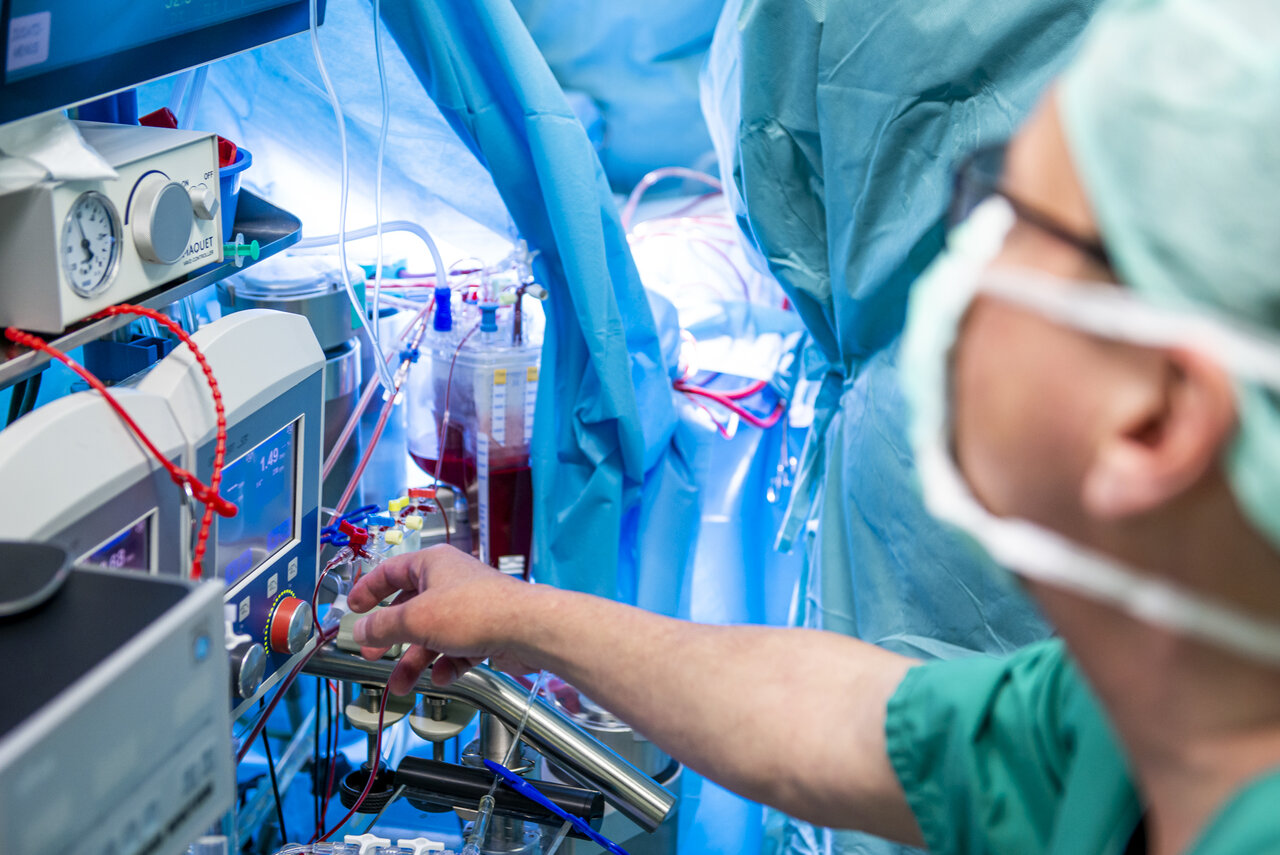
Many operations on the heart and large blood vessels close to the heart – such as the aorta – can only be performed on a stationary heart. This means that the lungs are also shut down. At the beginning of the operation, the blood vessels to and from the heart are therefore connected to the heart-lung machine via cannulas and tubes.
Cardiotechnicians monitor the function of the heart-lung machine during the operation. This includes continuously checking and regulating values such as the oxygen content, temperature and pH of the blood. A thorough understanding of physiology and medical technology is essential for this.
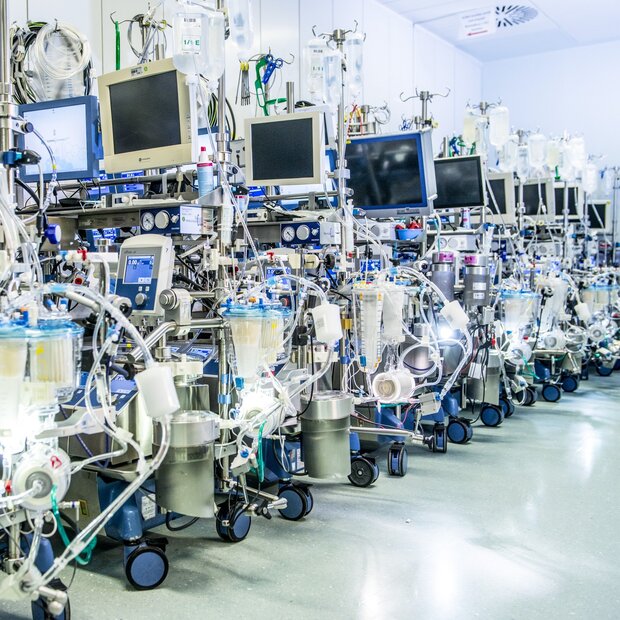
At the Deutsches Herzzentrum der Charité, there are twelve modern heart-lung machines available, three of which are specifically for infants and small children.
Extracorporeal membrane oxygenation (ECMO) works similarly to a heart-lung machine. However, ECMO systems are considerably smaller than heart-lung machines. This is why an ECMO can also be used outside the operating theatre for patients with cardiovascular failure.
A special coating on the ECMO prevents blood clotting, allowing the ECMO to be used for a period of four weeks. perfusionists monitor the operation of the system.
The DHZC operates one of the largest ECMO programmes in Europe. Twelve of the most modern systems are available to care for patients – from acute emergencies to medium-term treatment. Three ECMO systems are specifically designed for children.
The tasks of the perfusionists at the DHZC also include the transport of ECMO patients for further care at the DHZC – sometimes even across continents. Four mobile systems are available for this purpose.
If the heart does not recover – even with the use of an ECMO system – or if recovery takes longer, pumps can be used directly on the patient's heart. These so-called artificial heart systems provide long-term support for the patient's circulation. The Deutsches Herzzentrum der Charité operates the largest artificial heart programme in the world. The task of the perfusionists in the operating room is to check and prepare the systems before implantation.
The team of cardiotechnicians also checks the settings and controls of the devices during surgical implantation of pacemakers and defibrillators. Accordingly, detailed medical and technical knowledge is essential for this work.
Heart-lung machines for children and babies: expertise that is unrivalled worldwide
In the case of severe congenital heart defects, newborns or even premature infants must undergo surgery shortly after birth; only in this way can they survive. The very low blood volume of these smallest patients is in a particularly unfavourable ratio to the fluid volume with which a heart-lung machine must be filled before the start of the procedure. At the same time, the use of blood products poses a particular risk here.
After years of close collaboration with manufacturers, surgeons, paediatric cardiologists and anaesthetists at DHZC, the cardiotechnicians at DHZC were able to develop special heart-lung machines for newborns and premature infants with a birth weight of less than 2,000 grams. These mini heart-lung machines enable routine, allogeneic blood-free surgery in premature and newborn babies. This surgical technique has been shown to lead to better recovery in the young patients and is unique worldwide.
Degree in Cardiovascular Perfusion
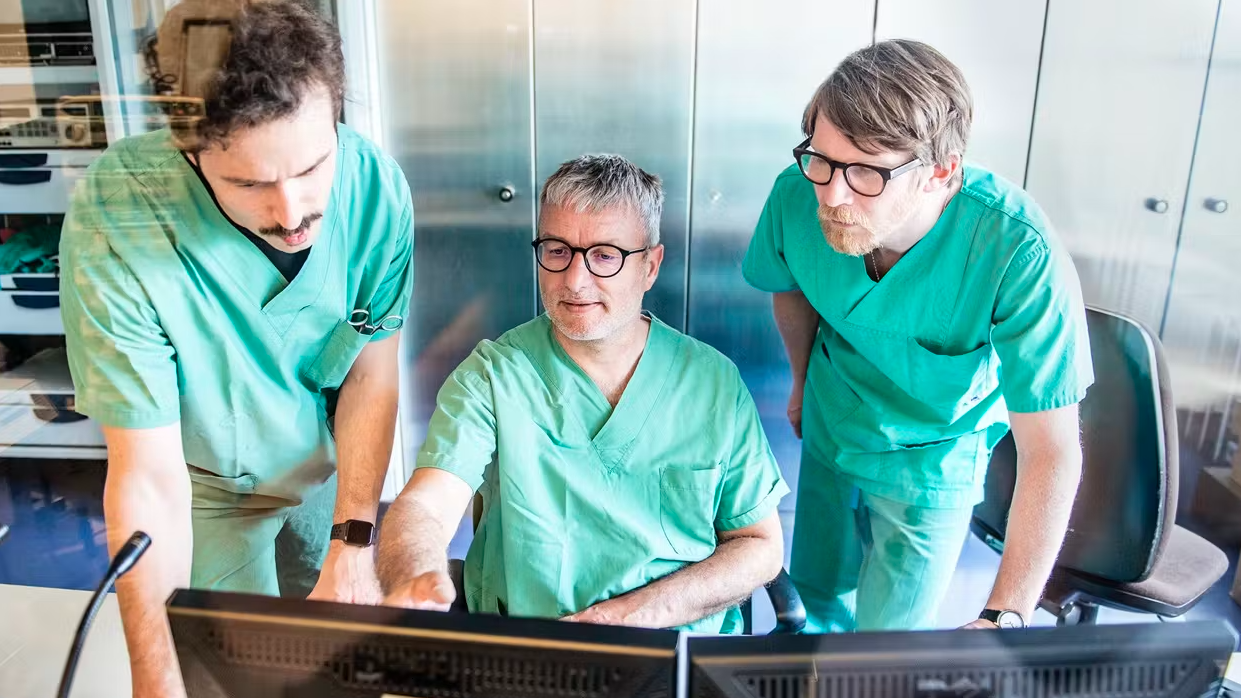
Clinical perfusionists and cardiac technicians are highly trained medical professionals who can work in many specialist areas.
The DHZB Academy offers a cardiovascular perfusion course of study. It is aimed at nurses, surgical assistants and anaesthesia assistants who wish to qualify as cardiac technicians.
Clinical perfusionists and cardiac technicians are highly trained medical professionals who can work in many specialist areas.
The DHZB Academy offers a cardiovascular perfusion course of study. It is aimed at nurses, surgical assistants and anaesthesia assistants who wish to qualify as cardiac technicians.
Heart-lung machine, ECMO and cardiopulmonary bypass
What is an ECMO, how does it work and what is the difference to a heart-lung machine? In our video, Andreas Matschke, head of surgical cardiopulmonary bypass at the DHZC, answers these questions. He explains the responsibility that perfusionists take on in their job, what is special about it and how to become a perfusionist.
