
Fellowship in Advanced Cardi Anaesthesia
Cardioanaesthesiology and intensive care is dedicated to the pre-, intra- and postoperative care of patients undergoing cardiac, vascular and intrathoracic surgery, as well as interventional and diagnostic cardiovascular procedures. The majority of the clinical training involves the care of patients in the operating theatre, including hybrid operating rooms, at decentralised anaesthesia workstations and in the intensive care unit.
At the DHZC, anaesthesiological care is provided for over 7,200 anaesthetised patients a year, covering the entire spectrum of adult and paediatric heart surgery. For intensive care, 59 adult intensive care beds are available on three wards. In addition, there are six beds in the Peri Anesthesia Care Unit (PACU).
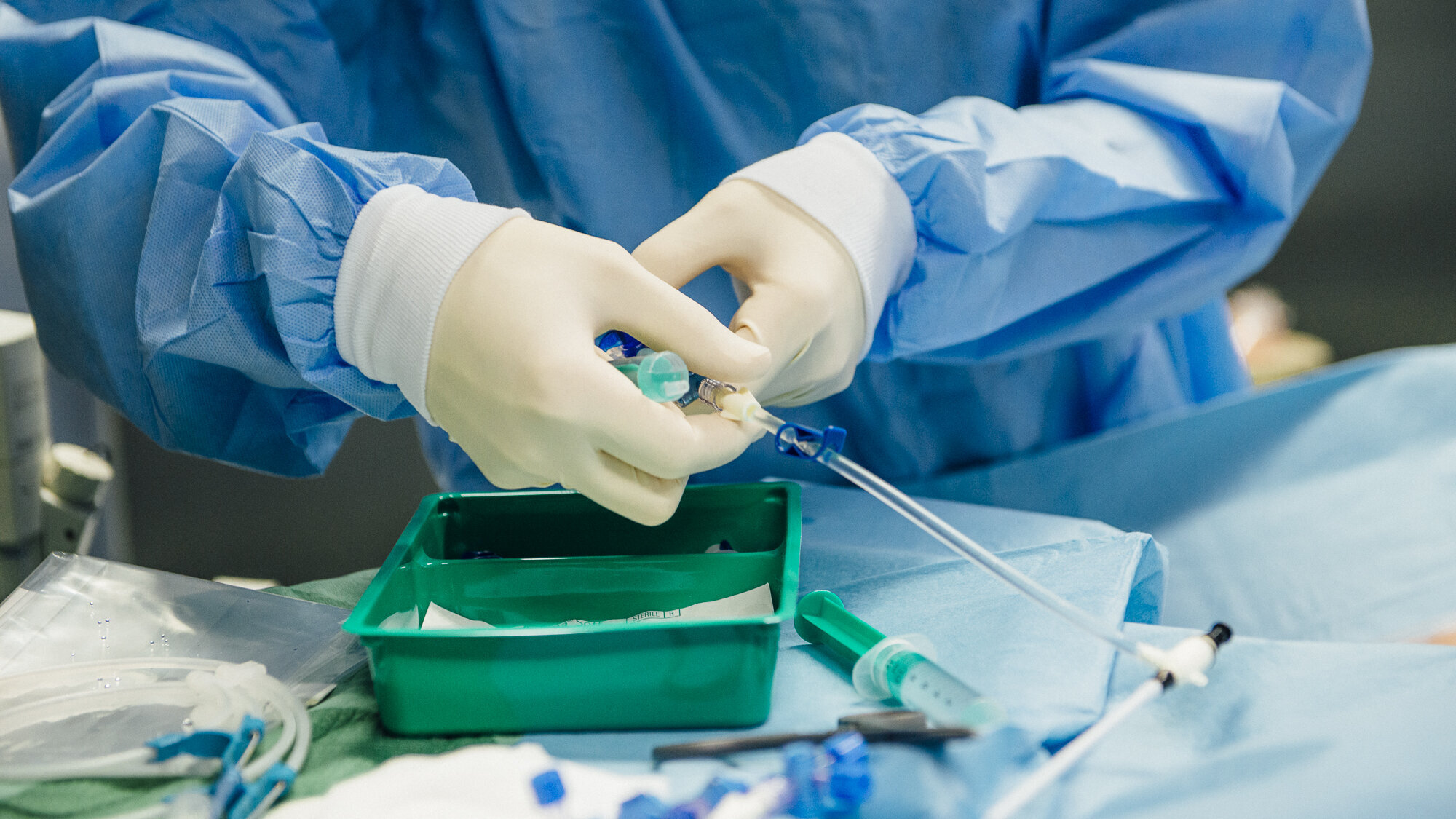
At the DHZC, anaesthesiological care is provided for over 7,200 anaesthetised patients a year, covering the entire spectrum of adult and paediatric heart surgery. For intensive care, 59 adult intensive care beds are available on three wards. In addition, there are six beds in the Peri Anesthesia Care Unit (PACU).
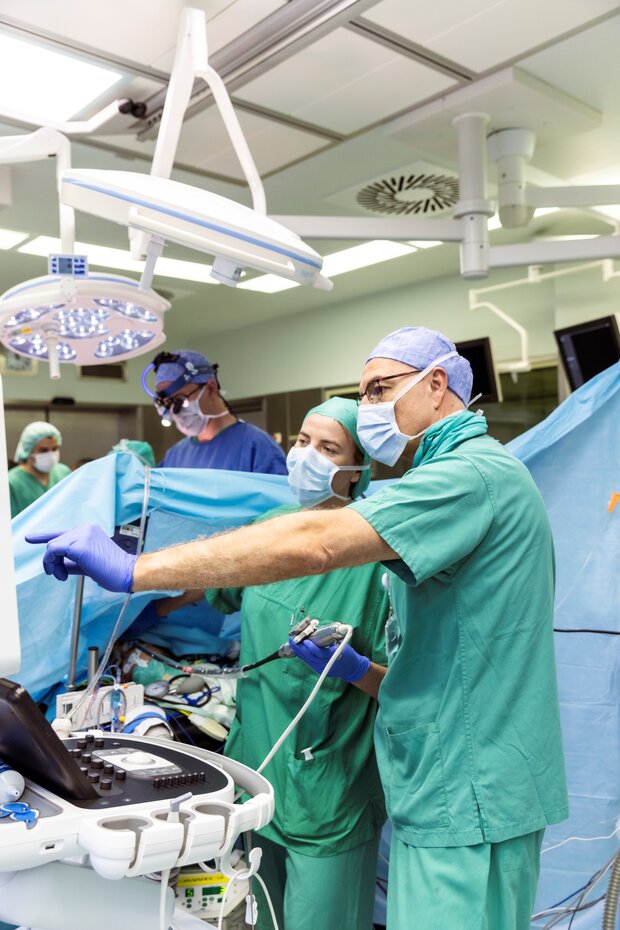
Advantages of the fellowship
The Department of Cardiac Anesthesiology and Intensive Care Medicine offers colleagues the opportunity to gain the skills, knowledge and routine to independently and autonomously provide anesthetic and intensive care services to patients in the subspecialties of cardiac, thoracic and vascular surgery as part of a two-year
fellowship.
- During this time, they can also
- acquire the additional qualification in intensive care medicine,
- learn transthoracic and transesophageal echocardiography, including the relevant certifications (EACVI / EACTAIC, DGAI and EDEC), and furthermore, to achieve a proven expertise in perioperative/-interventional echocardiography,
- fulfil all the criteria for qualification as an ‘anaesthetist experienced in cardioanaesthesia’ according to the recommendations of the DGAI1 / GBA2,
- working in a multidisciplinary team with a flat hierarchy,
- being involved in the clinical routine of the operating theatre, PACU and intensive care unit from the outset,
- the opportunity for further development at a hospital with all the academic options of university medicine,
- the chance to work at a modern hospital with an excellent infrastructure,
- the opportunity to work at a heart centre with a national centre function, including for the implantation of mechanical ventricular assist devices (VAD), for the treatment of acute aortic syndrome, for the treatment of congenital heart disease in adults and for thoracic transplantation.
Alternatively, a combined intensive care/anaesthesiology curriculum with the option of acquiring the additional qualification in intensive care medicine is implemented in the modular fellowship in cardioanaesthesiology and intensive care medicine.
The requirements for application are
- acquisition of the specialist qualification in anaesthesia within the last 3 years,
- CME certificates of continuous further training corresponding to the duration of work as a specialist,
- completed or ongoing doctorate,
- command of German at C1 level and
- command of English at B2 level.
The DHZC is an equal opportunities employer that champions equality and diversity and has fully committed itself to these ideals by signing the Diversity Charter.
The Fellowship in Advanced Cardioanaesthesiology is designed as on-the-job training. Supplemented by curricular teaching units, the training content relevant for cardioanaesthesiologists is taught in a clinical context. The fellow works full-time. Payment is based on the collective agreement for specialist physicians (Ä2). After adequate training, the fellow will be expected to participate in on-call and emergency services with the support of the Senior physicians in the Department.
During the intensive care training, the specifics of cardiovascular and thoracic surgical intensive care are taught in addition to the necessary content according to the intensive care training regulations of the Berlin Medical Association.
At the beginning of the training, based on the Fellows' previous experience, they will receive training in the operating room with a focus on advanced hemodynamic monitoring and management. This central training content runs like a red thread through the entire two-year fellowship. From the very beginning, the Fellows are involved in the instrumentation, application and interpretation of these measures in everyday surgical practice and learn these skills in a didactically sound and constantly supervised environment.
In the first few months, the focus is on the preoperative evaluation and optimisation of cardiac surgery patients as well as anaesthesiological care in the context of standard procedures in the cardiovascular spectrum. In addition, there is a focus on early post-anaesthesiological care and pain therapy of uncomplicated and, in particular, fast-track surgical procedures in the PACU, which is connected to the operating theatre.
Risk assessment, prevention and treatment of postoperative delirium and postoperative cognitive deficits (POCD) are particularly emphasised training components in this context.
Participation in an ACLS provider training course according to AHA guidelines and in a GCP basic course is supported by the clinic and is a requirement to be met by the end of the fellowship.
During the first year of the fellowship, the fellow will receive comprehensive theoretical and practical training in transesophageal echocardiography by participating in the clinic's echocardiography course (PFE modules 3 and 4), in regular internal echocardiography reviews, as well as through simulator training on the department's own simulator and, above all, through daily hands-on training in the operating room. The case numbers required for certification in transesophageal echocardiography according to the criteria of the EACTAIC / EACVI and the DGAI are easily reached by the fellows during the first year of training. It goes without saying that the fellows receive extensive training in the correct acquisition, manipulation and interpretation of echocardiographic 3D data sets.
The time-critical coagulation management of cardiac surgery patients, including the appropriate and situation-specific application of available point-of-care diagnostics in daily practice, is taught and implemented. This also includes acquiring the expertise for the perioperative care of patients with HIT II, antiphospholipid syndrome and other acquired and congenital coagulation disorders.
From the fourth month of training in the operating theatre, there is a gradual transition to individualised, focused supervision. The Fellow works increasingly independently and autonomously in their clinical practice. Echo examinations in the sense of a ‘comprehensive exam’ according to the guidelines of the American Society of Echocardiography (ASE) are independently acquired and evaluated by the Fellows with decreasing support from Senior physicians, and electronically reported with supervision.
The performance and learning progress of the fellows are continuously evaluated and accompanied in a motivating way. In addition, a formal evaluation meeting with one of the programme directors takes place after six months, with an additional opportunity for mutual feedback. After six months of echo training, the echo competence acquired so far is assessed in a clinical assessment in order to be able to make adjustments as necessary in the further course and to identify training content that requires particular support.
After completing the first year, the Fellow will be supervised in increasingly demanding and complex procedures, such as thoracic transplantations, thoracoabdominal aortic procedures with neuromonitoring and spinal pressure monitoring, or pulmonary thrombendarteriectomies in deep hypothermia. In addition, the challenges posed by the patient's risk profile are continuously adapted to the increasing level of experience and knowledge when planning the fellows' assignments.
In addition to the basic curriculum, we offer our fellows an ‘elective focus’ as part of the second year of training, where the fellow should have the opportunity to gain particularly intensive experience of certain aspects of cardioanaesthesia. In this area, the fellow receives disproportionate case exposure and specific supervision.
Possible ‘elective foci’ are:
- Catheter-based interventional therapies for structural heart disease
- Mechanical circulatory support, assist devices
- Aortic surgery including neuromonitoring
- Perioperative care, fast track, ERACS in the PACU
- Minimally invasive surgical procedures
The academic curriculum is covered by weekly internal training events, echo reviews, interdepartmental case conferences and one-on-one teaching in everyday clinical practice. The topics and scope of the theoretical study programme are based, among other things, on the recommendations of the DGAI for the teaching content of cardioanaesthesia. The fellow is encouraged to participate by giving their own presentations as part of the journal club, case presentations and by supporting the teaching staff at the Academy for Cardiotechnology associated with the DHZC.
During the two-year training programme, fellows will, of course, be given the opportunity to actively or passively participate in scientific conferences on cardioanaesthesiology and echocardiography topics. Participation in quality management projects and in the creation and maintenance of internal treatment guidelines (SOPs) is expected. Participation in scientific research, publication of case reports, and other academic projects are explicitly supported and encouraged.
Month 1
Familiarisation: IT infrastructure, local standards, SOPs, instructions according to MPG
Month 2
Continuation of familiarisation: rotation in cardiac surgery, familiarisation PACU, start of active participation in internal training, intensification of integration into patient care
Month 3
Coronary surgery (CABG, OPCAB), intensification of TEE training, start of participation in shift/on-call duties
Month 4
Aortic valve surgery (SAVR, TAVI)
Month 5
Interventional and non-thoracic aortic procedures (TEVAR, EVAR, BAA)
Month 6
Mitral/tricuspid valve surgery (MKR/E, TKR/R), ascending and aortic arch surgery
Month 7: minimally invasive heart surgery (MIC-MKR/TKR/AKE, MIDCAB) incl. SVC cannulation, retrograde transjugular cardioplegia, endoclamping
Month 8
CIED procedures (implantation, system explantations, probe extractions/revisions) and interventional catheter procedures (e.g. Angiovac)
Months 9, 10
Mechanical support procedures (VAD, ECMO, Impella), complex redo and multi-valve surgery
Months 11, 12
Complex aortic and thoracoabdominal aortic surgery incl. neuromonitoring (spinal catheter, evoked potentials, TCD)
Months 13-24
thoracic transplantations, echo-guided catheter-interventional procedures (MitraClip®, ViV procedures, PVL occlusions, etc.), pulmonary thrombendarterectomies
Fellows also assist with thoracic surgery procedures throughout the two-year training period. This includes, among other things, single-lung ventilation in the context of minimally invasive surgery, thoracoabdominal aortic surgery, lateral pericardectomy, thoracic transplantation and, as a rule, complications surgery (hernias, decortication, resection).
| Klinikdirektor | Prof. Dr. Benjamin O‘Brien |
| Stellvertretender Klinikdirektor | Dr. Matthias Hommel, MBA |
| Fellowship Direktor, Kardioanästhesie | Dr. Dirk Eggert-Doktor, DESA |
| Fellowship Direktorin, Intensivmedizin | Dr. Michele Ocken |
| Fellowship Direktor, Echokardiographie | Dr. Alexander Mladenow |
| Fellowship Faculty / Trainer | Oberärztinnen und -ärzte der Klinik |
All of the clinic's senior physicians meet the DGAI criteria as anaesthetists with particular experience in cardioanaesthesia and hold certificates in transesophageal echocardiography, at least from the EACTAIC / EACVI and / or the NBE, and sometimes additionally from the DGAI. Prof. O'Brien has 36 months of training authorisation in anaesthesiology and 24 months in intensive care medicine. At least one member of the fellowship faculty is available 24/7. The fellowship directors devote a significant portion of their clinical and non-clinical activities to the practical and theoretical training of the fellows, as well as to the maintenance and further development of the fellowship programme.
