
Transplant care at the DHZC
Wir versorgen Transplantationspatient:innen – rund um die Uhr
For more than 30 years, heart, lung and combined heart-lung transplants have been performed at the DHZC.
We care for patients before and after a heart or lung transplant on our transplant and heart failure ward WD3U/WD3I .
- We care for freshly transplanted patients in the first phase after the operation This intensive care requires close interdisciplinary collaboration with the transplant surgeons and other specialist departments.
- We also care for long-term transplant patients who have to be hospitalised as part of routine examinations, infection therapies or rejection treatments.
- We also admit patients to the ward as part of list examinations for transplantation.
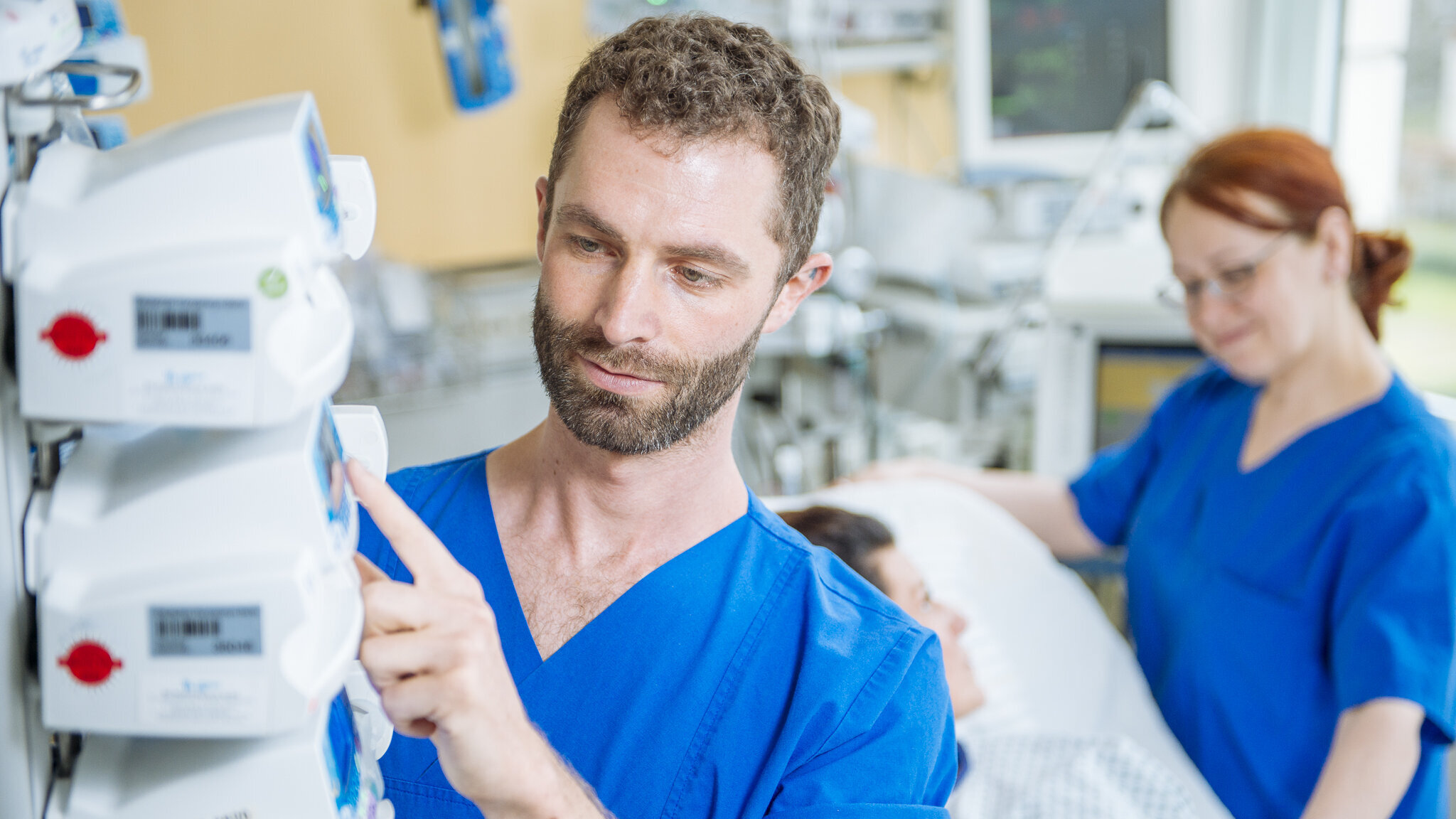
- In addition, we treat surgical cardiac patients requiring monitoring on WD3, patients with circulatory support systems (artificial hearts) and decompensatedheart failure, where their body is too weak to compensate for the limited pumping capacity of the heart.
As a supra-regional centre, we care for patients with severe heart or lung diseases from all over Germany. Our transplant centre and our transplant outpatient clinic play a key role in this.
As a supra-regional centre, we care for patients with severe heart or lung diseases from all over Germany. Our transplant centre and our transplant outpatient clinic play a key role in this.
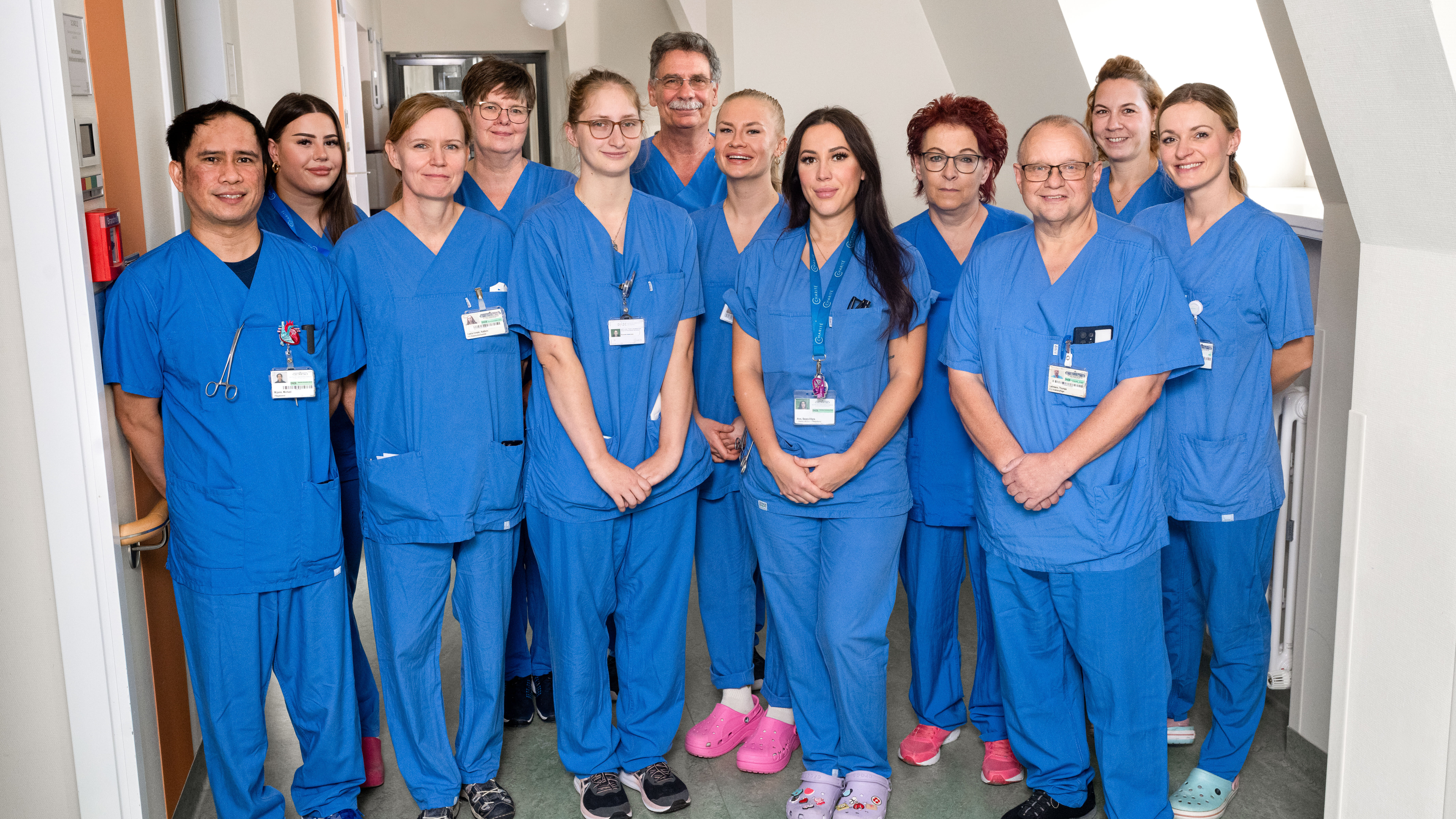
Our team includes practice instructors, heart failure nurses, transplant nurses, a two-person management team and a ward assistant. Our ward team is characterised by a high degree of interdisciplinary cooperation. A pleasant working atmosphere and extensive opportunities for further training are particularly important to us. We also take a lot of time to ensure a good start in our team: new colleagues receive at least eight weeks of induction training.
Open jobs
Carer (d/w/m)
Intensive care medicine DHZC
Carer (d/w/m)
Intensive care medicine DHZC
The DHZC is a certified heart failure centre
The DHZC is the supra-regional heart failure centre in Berlin. We organise regular information events with modular training courses for outpatients with heart failure as well as individual training courses for inpatients. As part of the certified heart failure centre, the WD3 ward has a high level of expertise through experience and training and is part of the heart failure core team at the DHZC.
Interview
25 carers work at WD3 on a full or part-time basis. These include Chiara Pfeffer, Ramona Spangenberg and Stefan Heimann.
Stefan is head of nursing on the ward and a trained heart failure nurse. He has worked at the DHZC for more than 30 years and on WD3 for more than 20 years.
Ramona is Stefan's deputy. The trained heart failure nurse has been working at the DHZC for almost 15 years, including 14 years at WD3.
Chiara has been part of the team for around three years. A four-week practical assignment during her training at our nursing school was the deciding factor in her application.
How well are you prepared for the requirements of WD3 as a young professional?
Chiara: Not at all! (All three laugh.) Seriously, I found the training at the DHZ nursing school to be intensive and comprehensive. But the job here is simply very specialised: the medication, non-invasive ventilation, the hygiene regulations for immunosuppressed patients, the nutritional rules - something like that is only briefly touched on at school. So in many respects you start "from scratch". But I realised that after the practical assignment.
Stefan: We are very proud of our special expertise here. But that's not meant arrogantly, because we are happy to pass this knowledge on. And because even after 20 years of WD3, I still have to be ready to learn every day.
Ramona: The minimum familiarisation period for us is four weeks. New starters are definitely never responsible for patients on their own during this time. We have a 45-page ward handbook and an extensive checklist. We also have ventilation training. I have to say: we really make an effort with the induction training...
Chiara: ...right!...
Ramona:....but we also expect you to be proactive. Because after the four weeks, we also need to be able to trust our new colleagues.
Apart from medical and nursing expertise: What makes working with heart or lung transplant patients special for you?
Ramona: The patients come to us from the intensive care unit. They receive 24 hours of intensive care there. With us, they can and must find peace and quiet again. They learn to be alone, to be independent and resilient again, to gain confidence in their new organ, their body and themselves. We support them in this process.
Stefan: "A person had to die so that I could live" - many of our patients don't find it easy to come to terms with this thought. We have a great psychocardiology department at the DHZC, which provides very professional support when needed. But we carers also have to be able to deal with this on a daily basis.
Chiara: Cystic fibrosis patients who need a donor lung are usually under thirty. Often not much older than me. That certainly helps to build a close and trusting relationship. At the same time, however, it is sometimes all the more difficult to set yourself apart to a certain extent.
Is that necessary?
Ramona: Absolutely. Almost all of our patients have been through a lot. But that doesn't necessarily mean that everyone is equally likeable. We are rightly expected to work in a highly professional manner. Personal feelings have to be kept out of it to some extent. For better or for worse.
And that works?
Ramona: It has to. Lung transplant patients in particular often stay with us for a long time after the transplant. Or come back with complications.
Chiara: Everyone has to find their own personal balance between distance and empathy. Otherwise you can't do the job here. You'll realise that very quickly here.
Stefan: The vast majority of patients make it. But some don't. That's very difficult to cope with emotionally. Again and again. And you can't get used to it. Nor should you, in my opinion.
Ramona: Our colleagues in the transplant outpatient clinic are in contact with hundreds of patients who are doing really well and only come in for routine check-ups. Wedding, birth and holiday cards hang in the office. However, people only come back to us as inpatients if there are complications. Sometimes that's not easy emotionally.
Do you sometimes doubt whether WD3 is the right centre for you?
Ramona: Never. A heart or lung transplant is a chance for terminally ill people. It can only succeed with a large team. And we are an essential part of it.
Stefan: The medical teams, respiratory and physiotherapists, psychologists, we nurses - there is a common goal for every patient. Of course, this is the case in every department and every clinic. But it's particularly intense here. And that connects us.
Chiara: That's true. Of course, I was also attracted by the special nursing requirements here. But the main reason for my WD3 application was quite clear: the team!
Training - the direct route to us
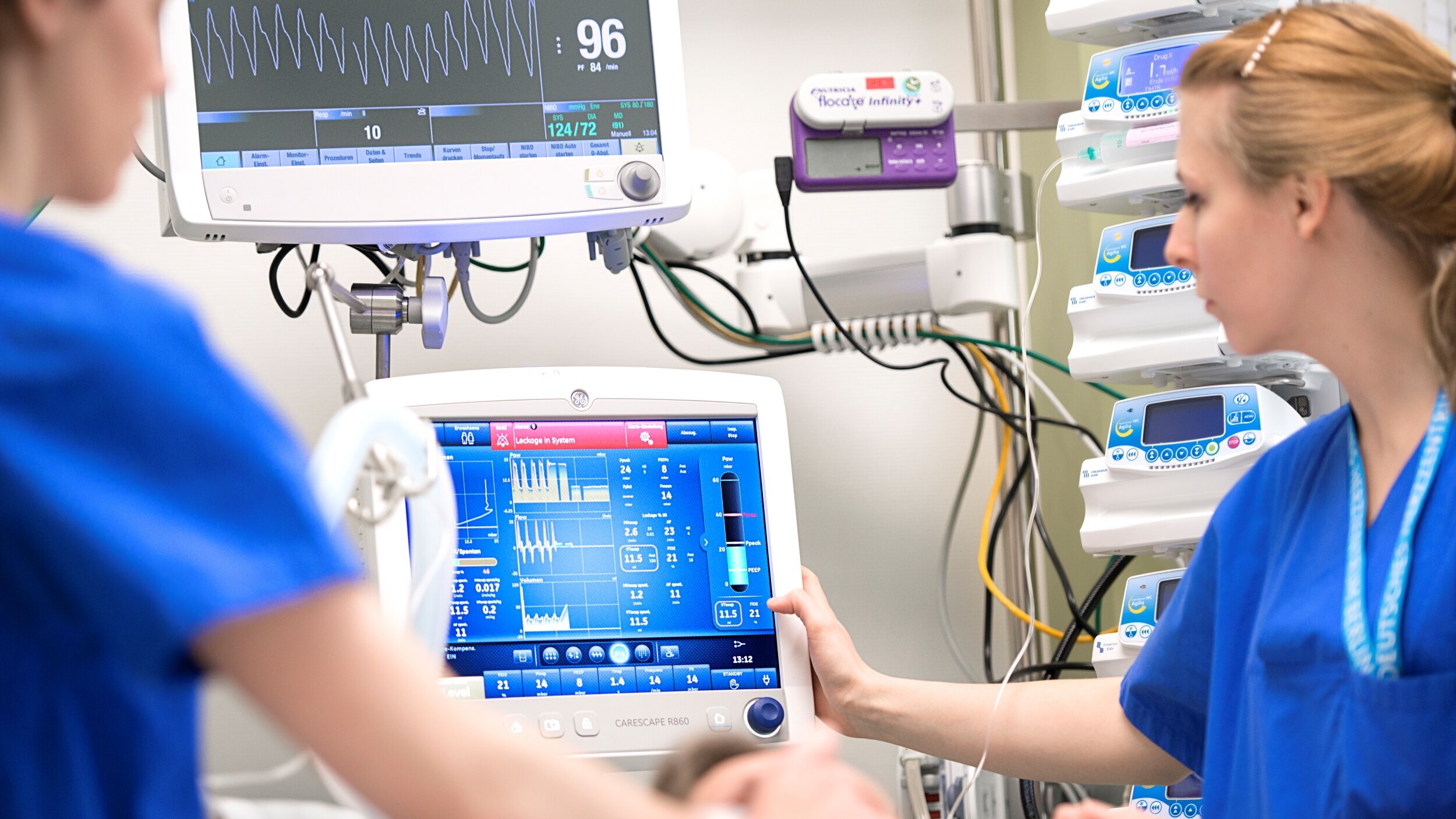
Interested parties can complete a generalist nursing training programme at the DHZB Academy. The training programme lasts three years and allows you to gain a lot of practical experience on the nursing wards at the DHZC. Previous knowledge and personal development opportunities are taken into account on an individual basis.
Interested parties can complete a generalist nursing training programme at the DHZB Academy. The training programme lasts three years and allows you to gain a lot of practical experience on the nursing wards at the DHZC. Previous knowledge and personal development opportunities are taken into account on an individual basis.
Documentary "Gift of Life"
The 25-minute documentary shows the story of our patient Franziska Bleis, who suffered from life-threatening myocarditis and received a donor organ at the DHZC. We were able to follow her on camera over a period of three and a half years as she made her way back to life.
Contact persons and how to apply
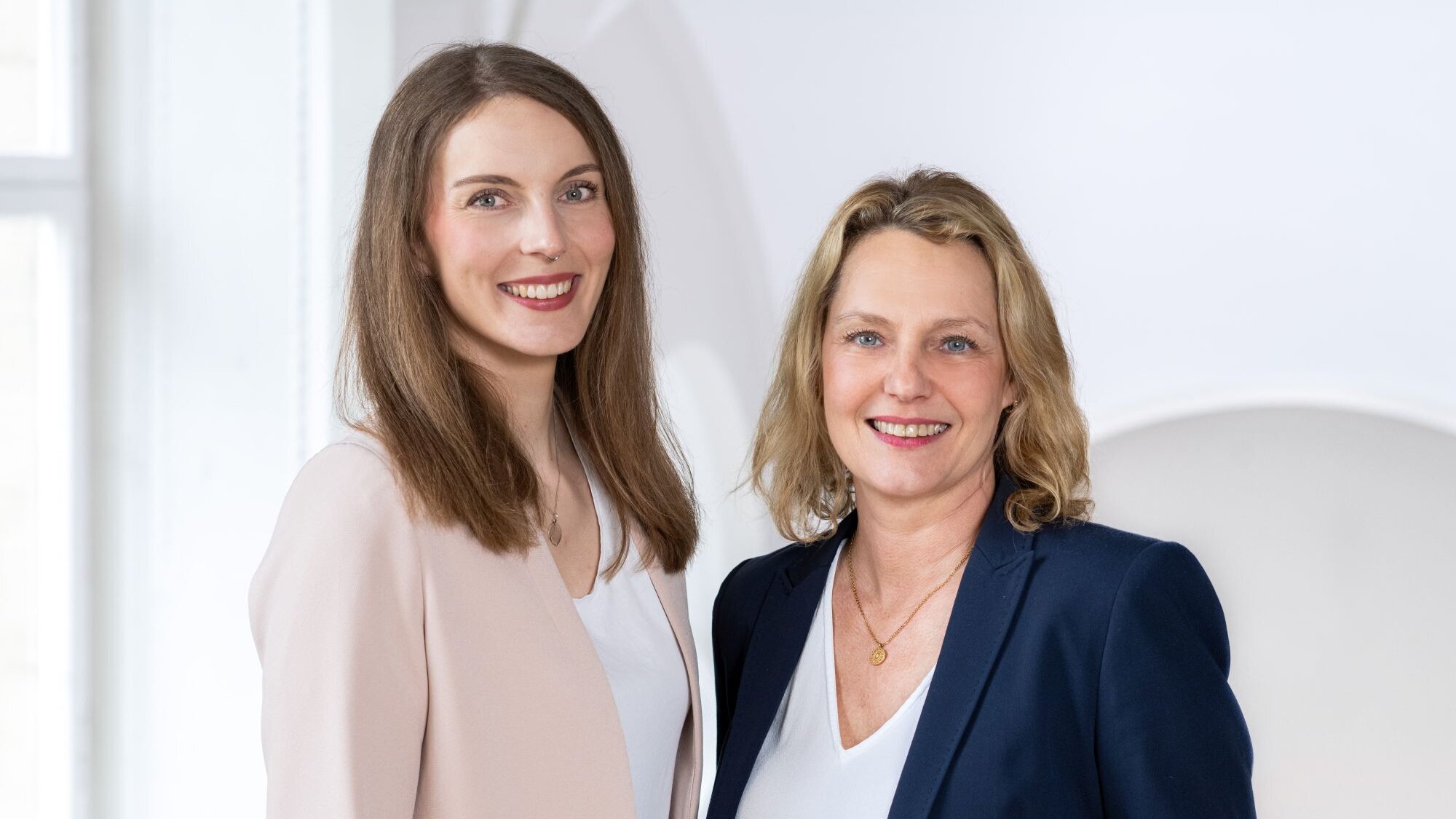
Interested? Then apply now via our online portal or send your application documents by email to our recruitment team, Kim Grahl and Antje Großmann (bewerbung@charite.de).
We look forward to meeting you and shaping the future of cardiac medicine together with you!
Interested? Then apply now via our online portal or send your application documents by email to our recruitment team, Kim Grahl and Antje Großmann (bewerbung@charite.de).
We look forward to meeting you and shaping the future of cardiac medicine together with you!
