Causes
It is not uncommon for blood to accumulate in the veins over the years due to certain activities that require prolonged standing and sitting, and these veins then begin to expand. In many cases, a family history is also a favouring factor. Particularly in the warmer seasons, the blood then accumulates in the veins of the legs and many small veins form, so-called spider veins, and/or the larger superficial veins dilate so that the venous valves no longer function properly and the blood continues to pool in the legs.
In some cases, inflammation, particularly in the legs, can also cause the venous valves to change and become non-functional.
Diagnosis
The diagnosis of CVI is usually made on the basis of the patient's medical history, physical examination and, if necessary, imaging procedures.
- Colour-coded compression ultrasonography (FKDS): Using ultrasound and certain manoeuvres (compression, breathing manoeuvres, Valsalva), the blood flow in the veins can be measured and the venous valve function assessed. Thrombosis in the region is also always ruled out in the same step.
- Functional examination: Both light-based methods are used here and, if a therapy should be considered, a so-called phlebodynamometry. In the latter, a small injection cannula is inserted into the affected vein and the vein function is assessed in more detail. Here, we work closely with our dermatology colleagues in-house and liaise closely with each other. This interdisciplinary collaboration enables us to initiate the best possible treatment for our patients.
- Occasionally, further imaging procedures such as venography or magnetic resonance venography (MRV) can be carried out in order to obtain more detailed images of the veins.
Therapy
It is important to recognise and treat CVI early to avoid complications such as open wounds, bleeding or infection and to improve quality of life. If you notice symptoms of CVI, it is best to talk to your doctor, who will be able to advise you on the appropriate diagnosis and treatment options and will be happy to refer you to us.
Compression therapy
Wearing compression stockings or bandages can support blood flow in the veins and reduce swelling. This is advised for every patient, even if the affected varicose veins are to be removed or sclerosed, as otherwise other small vessels will quickly become abnormal.
Lifestyle changes
These include elevating the legs, regular exercise (e.g. walking, cycling), weight management and avoiding prolonged standing or sitting.
Medication
Depending on the severity of the CVI, medication may be prescribed to reduce swelling, control inflammation or thin the blood.
Interventional procedures
In some cases, minimally invasive procedures such as sclerotherapy, endovenous ablation or vein stripping can be performed to treat or remove abnormal veins. Here we work closely with our colleagues in dermatology and vascular surgery, who perform these procedures at our clinic.
Authors

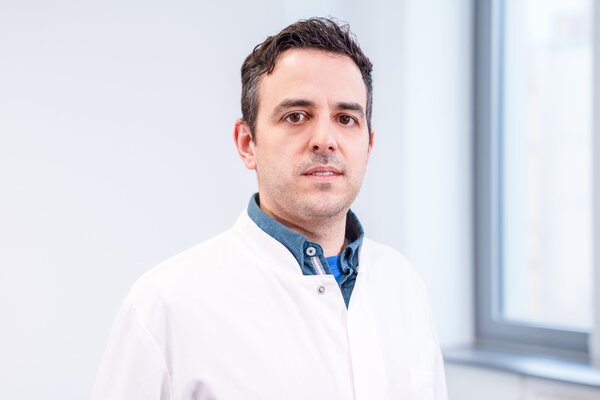
Dr Surath Perera is a specialist in internal medicine and cardiology and head of angiological functional diagnostics at the Department of Cardiology, Angiology and Intensive Care Medicine at the Deutsches Herzzentrum der Charité (DHZC).