Transcatheter aortic valve implantation TAVI
What is a TAVI?
TAVI stands for Transcatheter Aortic Valve Implantation and is a minimally invasive procedure for the treatment of aortic valve stenosis. The new aortic valve is inserted via a catheter in a gentle and low-risk procedure. This method is generally used for patients who are not eligible for open heart surgery due to an increased risk of complications.
The TAVI procedure makes it possible to implant a new heart valve without having to open the chest. The use of a heart-lung machine is also not necessary. The TAVI programme at the DHZC is one of the largest in the world. More than 1,300 TAVI procedures are performed at our clinic every year.
The most important and most frequently performed catheter-based heart valve procedure today is transcatheter aortic valve implantation (TAVI). This involves replacing the aortic valve with a prosthesis that is guided to the heart via a vessel - usually the inguinal artery.
(Image: Edwards Lifesciences LLC)
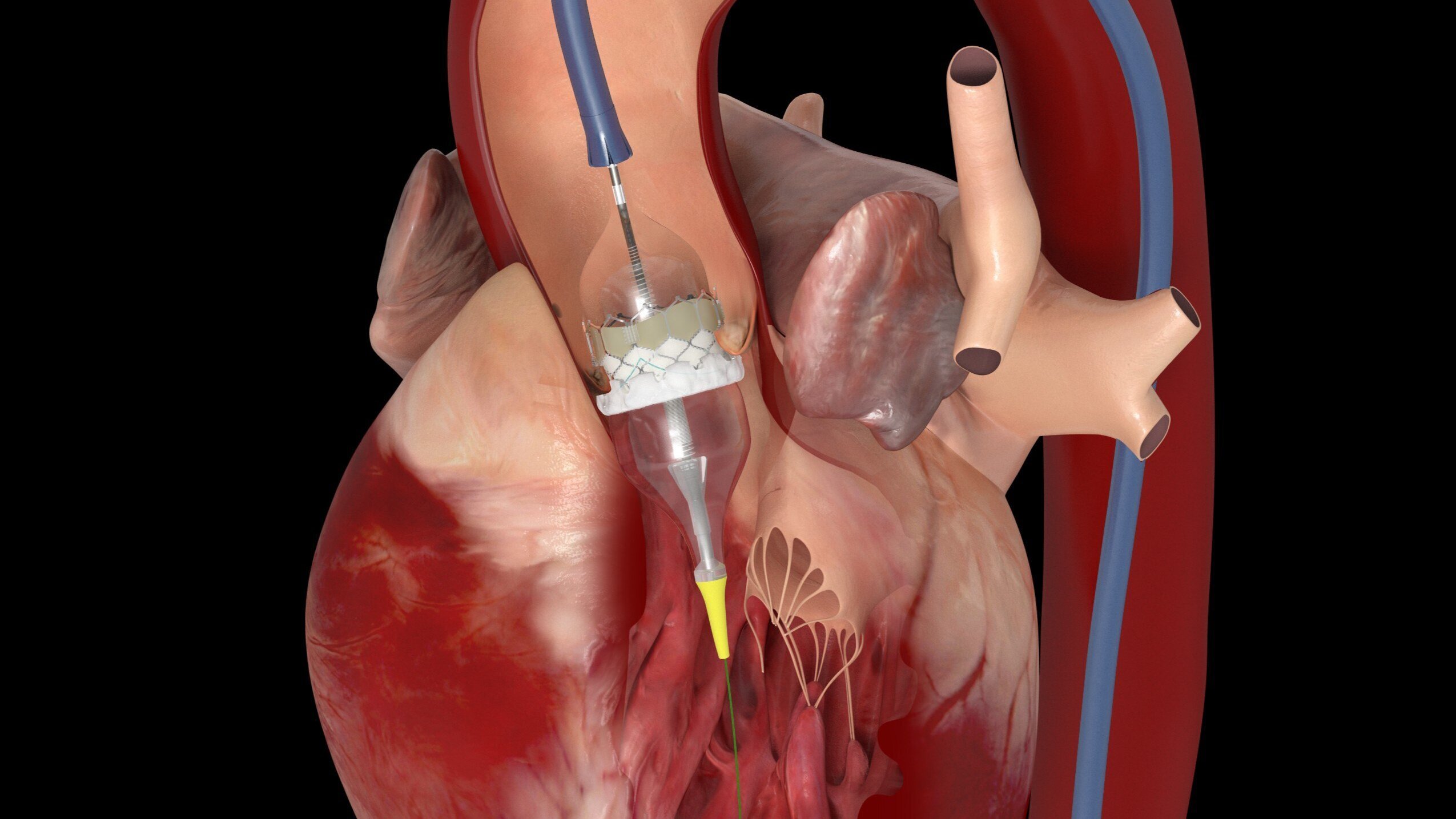
The most important and most frequently performed catheter-based heart valve procedure today is transcatheter aortic valve implantation (TAVI). This involves replacing the aortic valve with a prosthesis that is guided to the heart via a vessel - usually the inguinal artery.
(Image: Edwards Lifesciences LLC)
When is a TAVI performed?
Patients with a narrowed aortic valve that obstructs the flow of blood from the heart (aortic valve stenosis) must have the aortic valve replaced. This condition cannot be treated with medication.
The aortic valve can be replaced either surgically or by catheter-based TAVI. TAVI is suitable in these cases:
- In older patients: TAVI is often performed on patients over the age of 75, as they have a higher risk of complications from open chest surgery.
- In patients with pre-existing conditions: TAVI is performed on people with chronic diseases such as COPD, kidney failure or diabetes because these diseases increase the risk of surgery.
- For patients with reduced life expectancy: TAVI is recommended if conventional surgery is considered too stressful.
Comparison with surgical aortic valve replacement
Open-heart surgery with cleavage of the sternum remains the standard for younger, healthier patients, as biological heart valve prostheses sometimes have to be replaced after around ten to 15 years. Surgical aortic valve replacement can be performed either via a complete sternal opening or minimally invasively via a partial sternal opening or a lateral approach to the anterior right chest. The heart-lung machine is used for this method. The diseased heart valve and calcifications are carefully removed and a heart valve prosthesis is then sutured into place.
Procedure of a TAVI
Preparation:
A comprehensive examination is carried out before the procedure, including cardiac ultrasound (echocardiography), CT scans and cardiac catheterisation.
Procedure:
Using a cardiac catheter, the doctor first expands the diseased valve with a balloon.
A folded biological heart valve is then placed - also via the catheter - in place of the old valve.
The old heart valve is pressed into the wall of the aorta and the new valve stretches open after the catheter is withdrawn. It is anchored in a wire frame that hooks into the correct position when it is stretched open.
Possible access points:
The catheter is usually advanced through a small incision in the groin via the inguinal artery and aorta into the heart (transfemoral). If the inguinal arteries are too small or the main arteries are heavily calcified, the valve is inserted via other vessels (e.g. subclavian artery, carotid artery) or via the apex of the heart (transapical).
Duration:
The procedure usually takes less than an hour and is usually performed under local anaesthetic.
The abbreviation TAVI stands for a fascinating method of modern cardiac medicine: the replacement of a diseased aortic valve via a catheter, i.e. without open heart surgery.
After the procedure: recovery and aftercare
- Monitoring: After a TAVI, patients are monitored in the monitoring ward for a short time.
- Mobilisation: After just one day, most patients are able to get up and perform light physical activities.
- Rehabilitation: Cardiac rehabilitation is often recommended to strengthen heart function and promote recovery.
- Long-term monitoring: Regular examinations are necessary to monitor the function of the new heart valve and to recognise possible complications at an early stage.
Advantages of a TAVI
- Minimally invasive procedure: the patient's chest does not need to be opened, which is less risky overall and leads to a faster recovery. In addition, no general anaesthetic is required.
- Shorter hospital stays: Patients can often be discharged from hospital a few days after the procedure.
- Faster recovery: Rehabilitation after TAVI is usually faster than after surgery.
- Fewer complications: The risk of bleeding, vascular injuries and infections is reduced. Older patients in particular benefit from this. However, bleeding can still occur under certain circumstances when the catheter is inserted via the arteries.
Compared to surgical aortic valve replacement, transcatheter aortic valve implantation (TAVI) is less risky and gentler for certain patient groups. Patients generally recover quickly after the procedure and can often leave the hospital after just a few days.
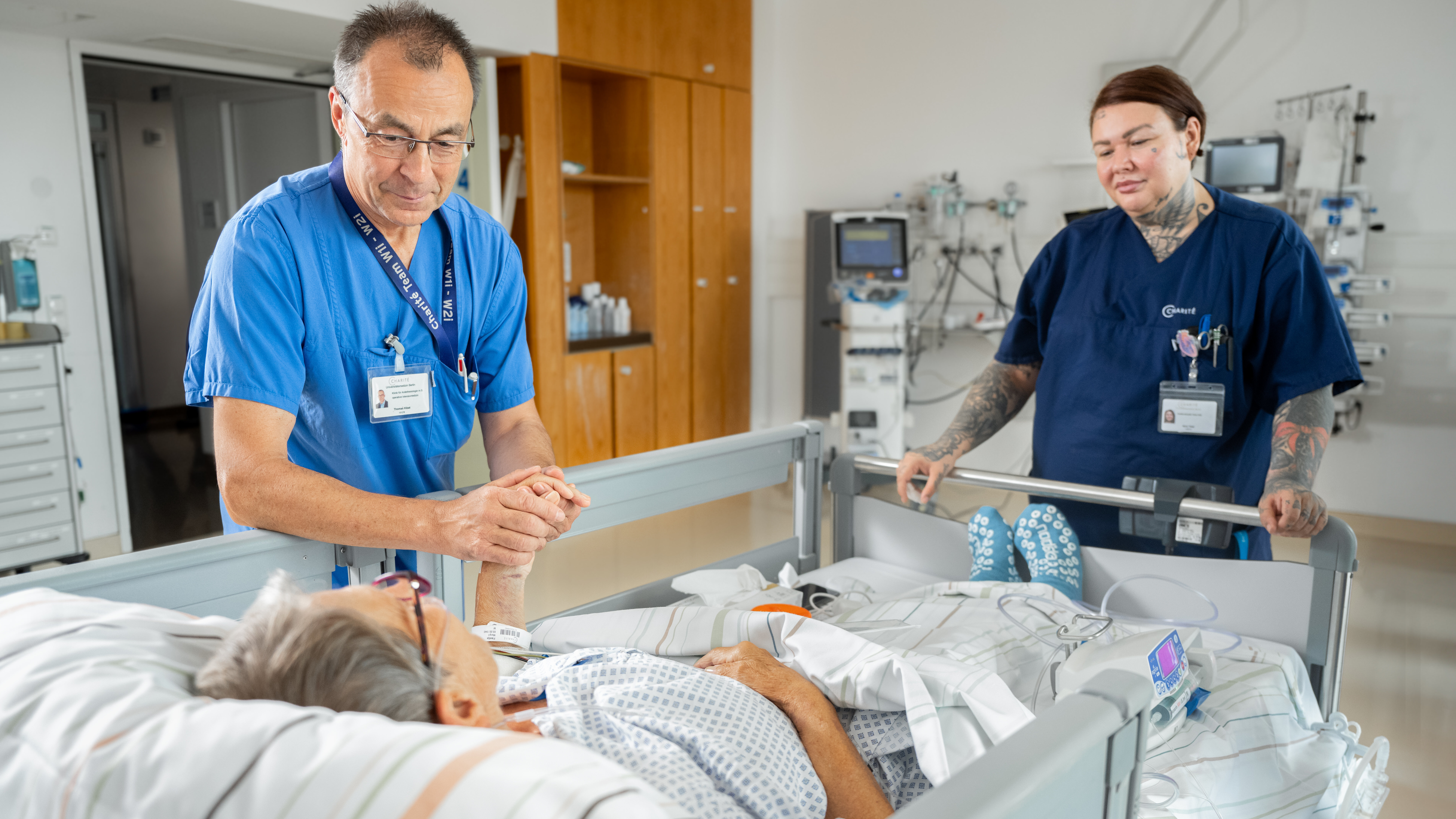
Compared to surgical aortic valve replacement, transcatheter aortic valve implantation (TAVI) is less risky and gentler for certain patient groups. Patients generally recover quickly after the procedure and can often leave the hospital after just a few days.
Possible risks
As with any medical procedure, complications cannot be completely ruled out. The following complications may occur during or after a TAVI:
- Bleeding or vascular injuries: These can occur especially if the catheter is inserted via the arteries.
- Cardiac arrhythmia: Some patients require a pacemaker after the procedure.
- Stroke: There is a small risk due to blood clots or calcium deposits.
- Prosthesis failure: The artificial valve may fail under certain circumstances, making a second procedure necessary. However, this happens very rarely.
The TAVI programme at the DHZC
The TAVI programme at the DHZC is one of the largest in the world. More than 1,300 TAVI procedures to replace the aortic valve are performed at the Deutsches Herzzentrum der Charité every year. These procedures are bundled in the ‘Structural Heart Interventions Programme’ (SHIP) unit at the DHZC and performed across all clinics. The interdisciplinary SHIP team plans and implements all catheter-based interventions for patients with heart valve defects.
TAVI procedures are always planned and performed jointly by experienced cardiologists and cardiac surgeons in the so-called ‘Heart Team’.
Three state-of-the-art hybrid operating theatres are available for this purpose, which also offer the facilities of a cardiac catheterisation laboratory (mobile X-ray system) and the equipment of an operating theatre. In the event of complications, immediate cardiac surgery can be performed in the hybrid operating theatre.
Transcatheter therapy of other heart valves
Auch die Therapie der anderen Herzklappen kann über einen Kathetereingriff erfolgen. Am DHZC führen wir im „Structural Heart Interventions Program” (SHIP) alle kathetergestützten Herzklappeneingriffe durch. Dazu zählen neben der TAVI unter anderem diese Behandlungen:
TMVI - Transcatheter mitral valve interventions
Our range of services includes edge-to-edge repair procedures, annuloplastiesand all options for transcatheter replacement of the mitral valve - both for native disease and after previous surgical reconstruction.
TTVI - transcatheter tricuspid valve interventions
All modern transcatheter procedures are also available at the DHZC for the reconstruction and replacement of the tricuspid valve.
Special indications
Thanks to our broad cardiac surgery and cardiological expertise, specialised transcatheter treatments are also possible at the DHZC, such as the temporary use of mechanical circulatory support, the percutaneous connection of a heart-lung machine and percutaneous heart valve interventions following heart transplantation or for patients with heart support systems.
In the TAVI procedure, a folded biological heart valve is placed in place of the old valve using a catheter.
(Image: DHZC/Külker)
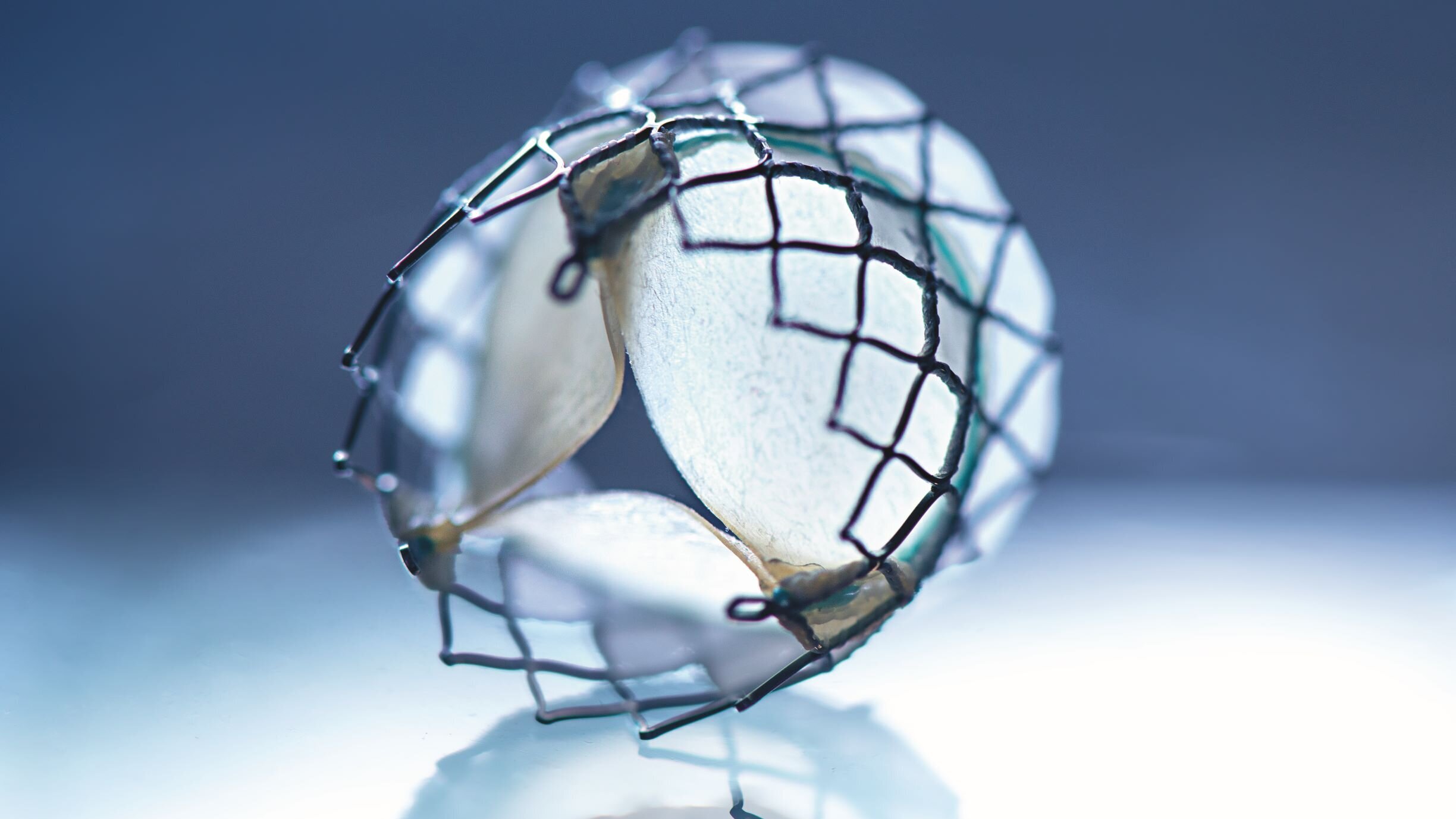
In the TAVI procedure, a folded biological heart valve is placed in place of the old valve using a catheter.
(Image: DHZC/Külker)
Questions and answers / FAQ
How long does a TAVI take?
The procedure usually takes less than an hour and is usually performed under local anaesthetic.
How long does a TAVI last?
Ten-year data show that TAVI prostheses last just as long as surgically implanted biological heart valves.
Who is TAVI suitable for?
The procedure is suitable for patients with a narrowed aortic valve (aortic valve stenosis) who are older than 75 years, have pre-existing conditions such as COPD, kidney failure or diabetes or are generally too weak for a surgical procedure. Conventional surgery would be too stressful and risky for these patients.
How dangerous is TAVI?
Compared to conventional surgery, TAVI is considered to be less risky as the chest does not need to be opened and no general anaesthetic is required. Nevertheless, complications such as bleeding, vascular injuries or, in rare cases, a stroke can occur after the procedure. Some patients are also dependent on a pacemaker in connection with TAVI treatment.
What does a TAVI cost?
TAVI treatment is more expensive than traditional aortic valve surgery because the material used is more expensive. However, since patients can leave the hospital more quickly after a TAVI than after a conventional operation, the operation-related costs are lower.
How long does recovery take after a TAVI?
After a catheter-based procedure, many patients can quickly return to doing everything they were able to do before the procedure, meaning the recovery period is usually short. However, cardiac rehabilitation is often recommended to strengthen heart function and promote recovery.
How long are patients hospitalised after a TAVI?
Patients can often leave the hospital after just a few days.
Do I need rehabilitation after a TAVI?
The type and extent of rehabilitation measures after a TAVI depend on the patient's individual state of health. Doctors therefore decide on a case-by-case basis whether inpatient or outpatient rehabilitation measures are appropriate.