Artificial hearts
The artificial heart programme at the DHZC
‘Mechanical circulatory support systems’ is a generic term for all systems that support or replace the blood circulation. A distinction is made between short-term and long-term systems. Short-term systems are devices that are located outside the body. If the heart cannot recover or recovery takes longer, ventricular assist devices - long-term systems - are used. They are usually calledventricular assist devices( VAD ) or artificial heart systems and consist of a small pump that the surgeon inserts directly into the patient's heart. The pump is connected by a cable to a control unit and batteries outside the body, which the patient carries with them in a small rucksack.
In rare cases, a complete heart replacement with an artificial heart is used. This applies to patients in whom both ventricles are severely damaged. In these cases, the heart must be completely replaced. In this case, the patient's own diseased heart is removed from the chest.
Most patients with a VAD can lead a largely normal life, pursue their profession and do sport. More than half of patients are on the waiting list for a donor heart. However, artificial heart systems are also increasingly becoming a permanent alternative to transplantation because there are not enough donors available or because the patient's condition does not allow for a transplant. In some cases, the patient's heart recovers while being relieved by the artificial pump so that it can be removed again. The Deutsches Herzzentrum der Charité operates the largest artificial heart programme in the world.
The ‘Heartmate 3’ is currently the most modern implantable circulatory pump (LVAD) on the market. The rotor of this pump system is not mechanically connected to the housing, but is levitated by magnetic forces. This is intended to prevent damage to the blood flowing through the pump.
(Image: DHZC)
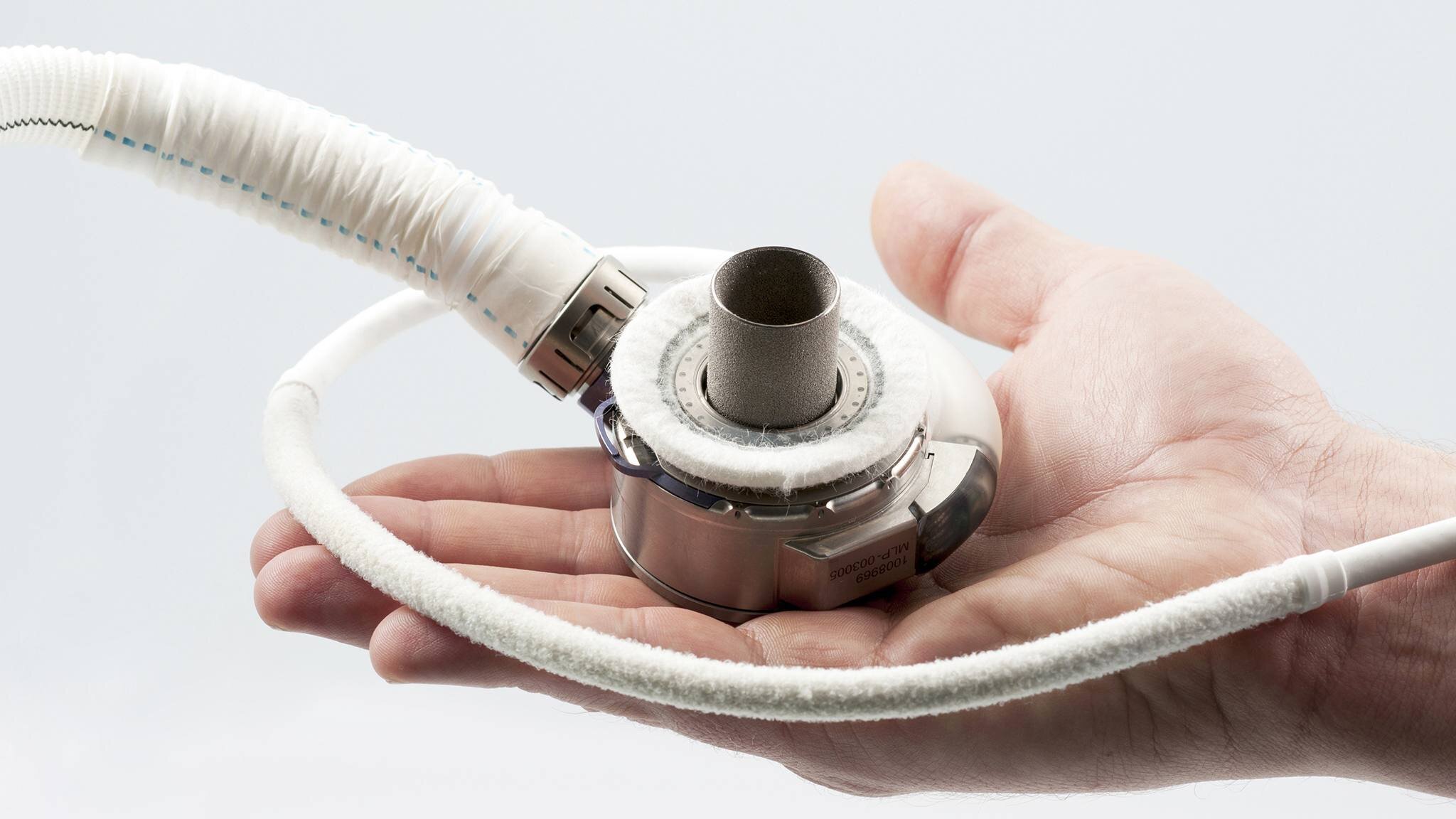
The ‘Heartmate 3’ is currently the most modern implantable circulatory pump (LVAD) on the market. The rotor of this pump system is not mechanically connected to the housing, but is levitated by magnetic forces. This is intended to prevent damage to the blood flowing through the pump.
(Image: DHZC)
Types of mechanical circuit support
Short-term systems are devices that are located outside the body, such as the ECLS or the Impella system.
The term ECLS stands for ‘extra-corporeal life support’ and refers to a procedure for short-term support or replacement of heart and lung function when other measures are ineffective and an undersupply of the brain - but also of all other organs - must be acutely prevented.
The ECLS device is connected to the patient's circulatory system via cannulas in two large blood vessels. It continuously pumps blood through an oxygenator, which replaces the gas exchange in the lungs: it removes carbon dioxide from the blood and enriches it with oxygen. The treated blood is then returned to the patient.
Impella is the trade name of a ‘microaxial pump system’, which is advanced into the heart via the blood vessels from the groin or via the aortic artery and can continuously pump up to six litres of blood per minute from the left ventricle via the aortic valve into the aorta. In this way, the heart is actively relieved, blood circulation is supported and the prerequisite for further cardiological or cardiac surgery emergency measures is created.
In some cases, especially in patients with severe cardiogenic shock, both systems are used simultaneously. Once the organs have recovered, the ECLS system is removed first. As the disease progresses - depending on the recovery of the heart muscle - the Impella system can either be removed or an implantable system can be used to support the heart permanently.
The LVAD is the most commonly used form of mechanical circulatory support. The pump is inserted into the left ventricle and connected to the aorta via a short tube.
An RVAD is implanted in the right ventricle or atrium and pumps the ‘used’, deoxygenated blood from the body into the pulmonary artery, through which it reaches the lungs.
It is also possible to use one pump on each side of the heart. This supports the entire heart function and thus the body and lung circulation.
The TAH replaces the human heart. In an operation, the patient's heart is completely removed and replaced by two mechanical pumps. This supports the small and large circulation. However, this procedure is rarely used.
Operation for using the system
The operation to insert the system is performed on the open heart with or without cutting through the sternum or minimally invasive. Which type of operation is suitable is decided on an individual basis by the attending physician together with the patient. In the standard operation, the patient's sternum is cut and the heart is exposed. In most cases, the patient is connected to the heart-lung machine, which takes over the function of these two organs. A holding device is attached to the left ventricle (LVAD) and right atrium (BVAD), the wall of the ventricle is punched out and the pump's inflow cannula is inserted into the ventricle. The holding device is used to fix it in the correct position. The pump's outflow cannula is connected to the aorta or pulmonary artery (BVAD).
At the DHZC, VADs can often also be inserted using a minimally invasive technique, which is much gentler on the patient. The procedure is performed via two small incisions on the left and right side of the chest. The sternum only needs to be partially cut through. A surgical method developed at the Deutsches Herzzentrum der Charité even makes it possible to insert the VAD without cutting through the sternum and without using a heart-lung machine.
Which method is suitable for which patient must be decided on an individual basis.
The DHZC is one of the world's first users of the HeartMate 3 VAD system and has extensive experience with this system.
(Image: Abbott)
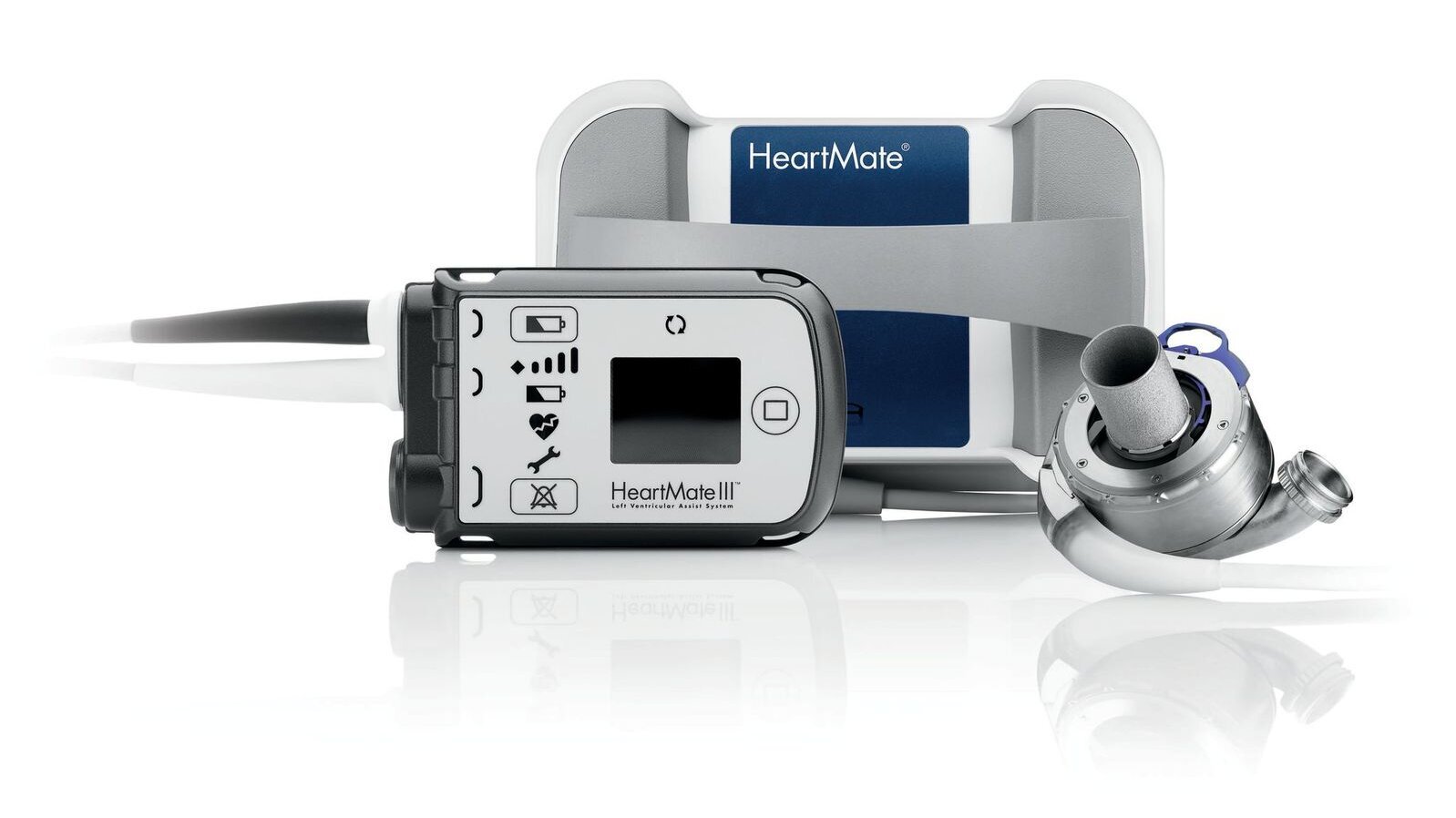
The DHZC is one of the world's first users of the HeartMate 3 VAD system and has extensive experience with this system.
(Image: Abbott)
VAD types
The VAD system most frequently used in the DHZC is the ‘Heartmate 3’ from Abbott. The "BerlinHeart EXCOR ’ system is used for small children or, in rare cases, adults. The surgeon decides together with the patient which system is most suitable.
The Heartmate 3 system is currently the most modern LVAD on the market. The rotor of this pump system is not mechanically connected to the housing, but is made to ‘float’ by magnetic forces. This is intended to prevent damage to the blood flowing through the pump. The Heartmate 3 generates an artificial pulse, which is intended to counteract complications such as the formation of thromboses within the device and bleeding complications in the gastrointestinal tract. The DHZC is one of the world's first users of this system and has extensive experience with the Heartmate 3.
This system has been implanted over 20,000 times worldwide since its approval. At the DHZC, the system had been implanted over 1,000 times by June 2021.
However, Medtronic has discontinued offering the system since June 2021. We will, of course, continue to provide full care to our patients who have had a Heartware HVAD implanted and are still living with it. There is no need to switch to another system.
Complications and long-term course
The most common complications during implantation are the formation of blood clots due to the artificial components of the system and infections at the exit point of the power and control cable. VAD patients must therefore take blood-thinning medication on a permanent basis and the dressing at the exit site must be changed regularly.
Many of our patients have been living with VAD systems for over five years, and some patients have been supported with a VAD system for over ten years. Research is currently being conducted into systems that transmit the current wirelessly inside the body and thus further reduce the risk of infection.
Prof. Dr Evgenij Potapov works as a Senior physician in the Department of Cardiothoracic and Vascular Surgery at the Deutsches Herzzentrum der Charité (DHZC), where he heads the programme for mechanical circulatory support.
(Image: DHZC)
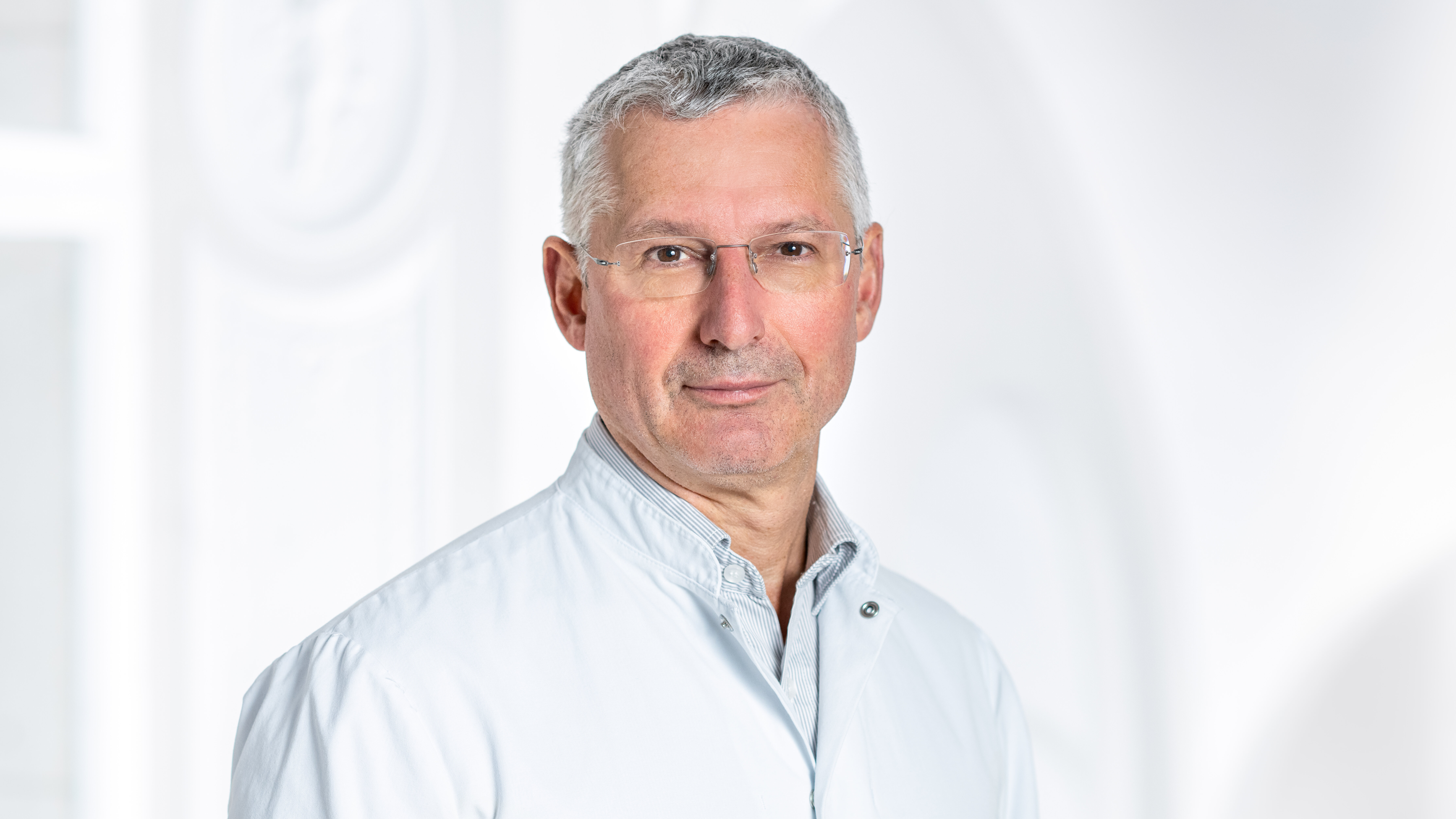
Prof. Dr Evgenij Potapov works as a Senior physician in the Department of Cardiothoracic and Vascular Surgery at the Deutsches Herzzentrum der Charité (DHZC), where he heads the programme for mechanical circulatory support.
(Image: DHZC)
The VAD programme at the DHZC
The success of a VAD implantation depends on timely surgery and, above all, continuous aftercare. The DHZC therefore has its own VAD outpatient clinic, where all VAD patients receive follow-up care. Our VAD hotline is also available to patients 24 hours a day to answer medical or technical questions at any time.
After 160 days of relief with an artificial heart, the critically ill heart of a 38-year-old man from Thuringia recovered so well that the artificial heart could be explanted at the Deutsches Herzzentrum der Charité in 1994 and the patient was spared a transplant. This was the first case worldwide. Since then, more than 100 left ventricular assist devices have been explanted at the DHZC because the patient's heart muscle has recovered.
Our clinic has a special programme to improve the recovery potential of the heart muscle tissue and has developed procedures with which the recovery of the heart muscle can be assessed. In order not to damage the myocardium too much during explantation of the VAD, a special closure system has been developed that is customised for each patient and makes explantation extremely easy.
The DHZC is a leading centre in the field of mechanical circulatory support (MCS) worldwide. For years, the DHZC has provided the world's largest number of patients per year with permanent LVADs. The members of the MCS team lead training seminars and are invited to clinics around the world to support surgeons during complex operations. The MCS team co-operates with German and international scientific institutions in the development of new MCS systems. The DHZC has developed numerous innovations in the field of mechanical circulatory support, such as modern, gentle surgical procedures or minimally invasive treatment of complications. The treatment methods developed as ‘DHZC guidelines’ are accepted internationally.