
Our range of services in vascular medicine (angiology)
Our Department of Angiology offers a broad spectrum of diagnostics and therapy for vascular diseases. Our focus here is on invasive diagnostics (angiography) and therapy (percutaneous transluminal angioplasty) of narrowed arteries (arteries).
In peripheral arterial occlusive disease (PAD), calcification leads to narrowing (stenosis) of the leg arteries. This results in reduced blood flow to the legs under stress and later even at rest. Pain occurs and the walking distance is reduced (‘intermittent claudication’). Similar symptoms can occur in the arms.
Narrowing of the renal arteries is also not uncommon. These result in a deterioration in kidney function and often therapy-resistant high blood pressure.
If stenoses form in the neck vessels, a lack of blood flow to the brain can occur. Symptoms such as dizziness or the threat of a stroke can be the result.
Team
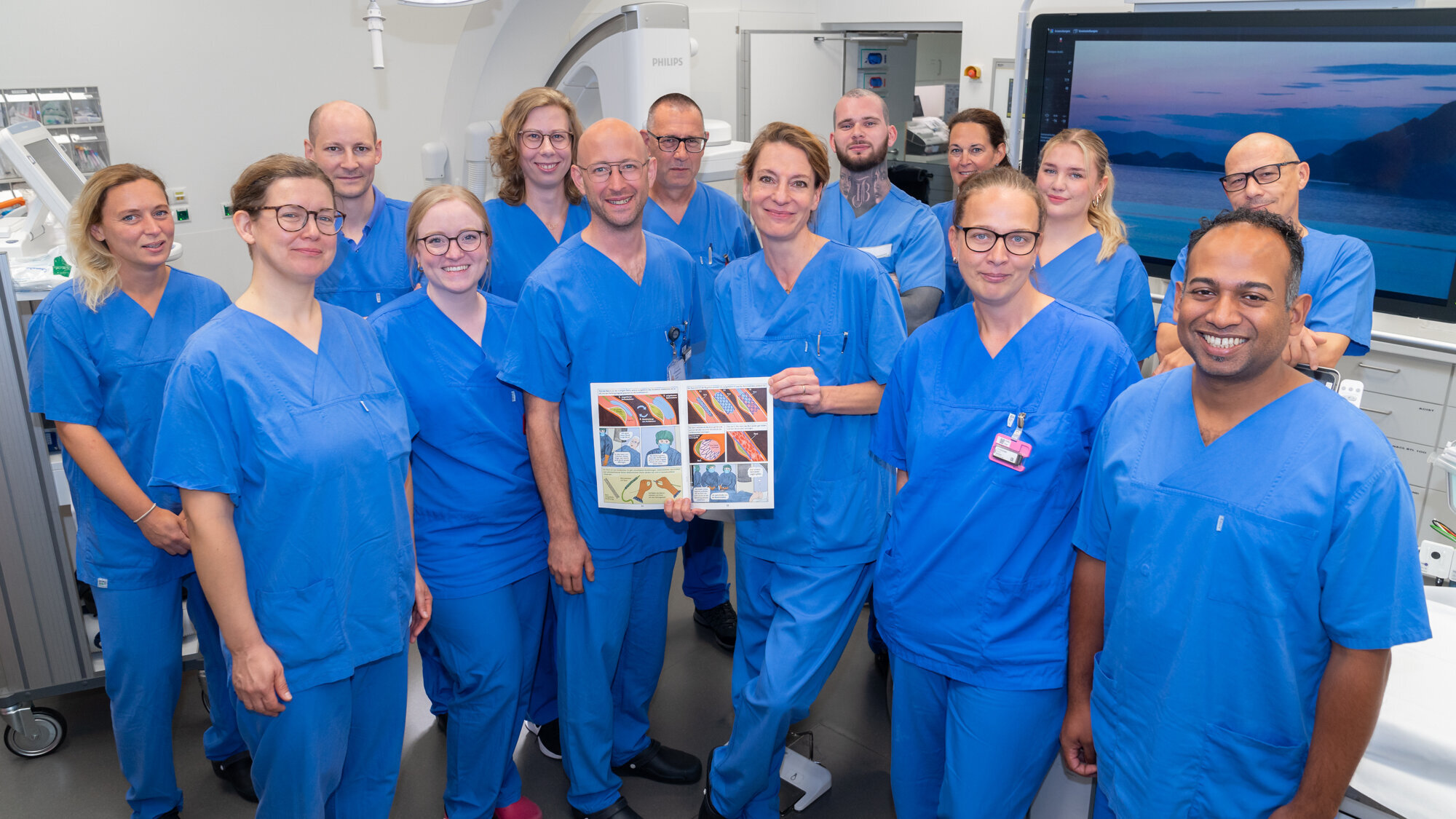
The invasive cardiology and angiology team at the Department of Cardiology, Angiology and Intensive Care Medicine at Campus Charité Mitte.
Team
The invasive cardiology and angiology team at the Department of Cardiology, Angiology and Intensive Care Medicine at Campus Charité Mitte.
The certificate ‘Additional qualification for interventional therapy of arterial vascular disease’ is awarded personally by the German Society of Cardiology (DGK) to the head or deputy head of the department.
Senior Physician Dr Surath Perera, Head of Interventional Angiology at the DHZC Department of Cardiology, Angiology and Intensive Care Medicine at Charité Mitte Campus, has been certified by the DGK with this additional qualification.
Duplex sonography combines ultrasound images of the tissue with a coloured representation of the blood flow in the vessels. It also measures the flow velocity of the blood.
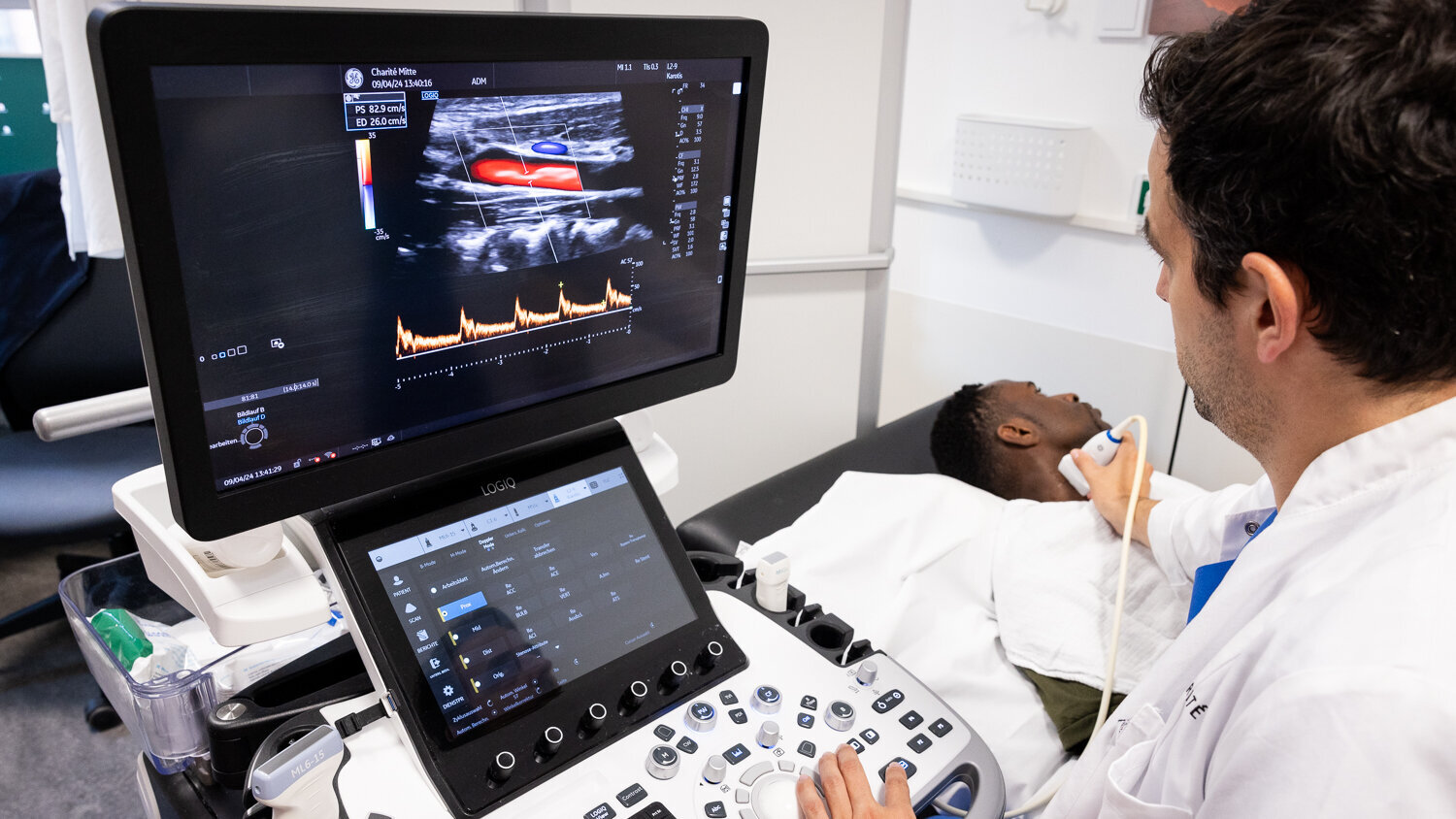
Duplex sonography combines ultrasound images of the tissue with a coloured representation of the blood flow in the vessels. It also measures the flow velocity of the blood.
Angiography
In angiography, the vessels are visualised using a catheter that is inserted into the diseased vessel. By administering a contrast agent via the catheter, the diseased vessel becomes visible in the X-ray system. In many cases, treatment can be administered immediately via the inserted catheter.
Therapy
If the angiography confirms that there are stenoses in the arteries that require treatment, these can usually be treated immediately by widening them with a balloon (dilatation) and, if necessary, implanting a stent (vascular support).
In the case of acute occlusions, the administration of clot-dissolving medication (lysis) is available as an alternative or in addition.
Angiology appointments
The angiology consultation, together with angiological functional diagnostics including Doppler sonography, is the point of contact for patients with vascular diseases, which we can treat comprehensively with both medication and interventions.
Appointments Mon - Fri: 9:00 - 15:00
Appointments between 13:00 and 14:00 h:
The team of the angiological function laboratory at the Department of Cardiology, Angiology and Intensive Care Medicine at the Charité Mitte campus.
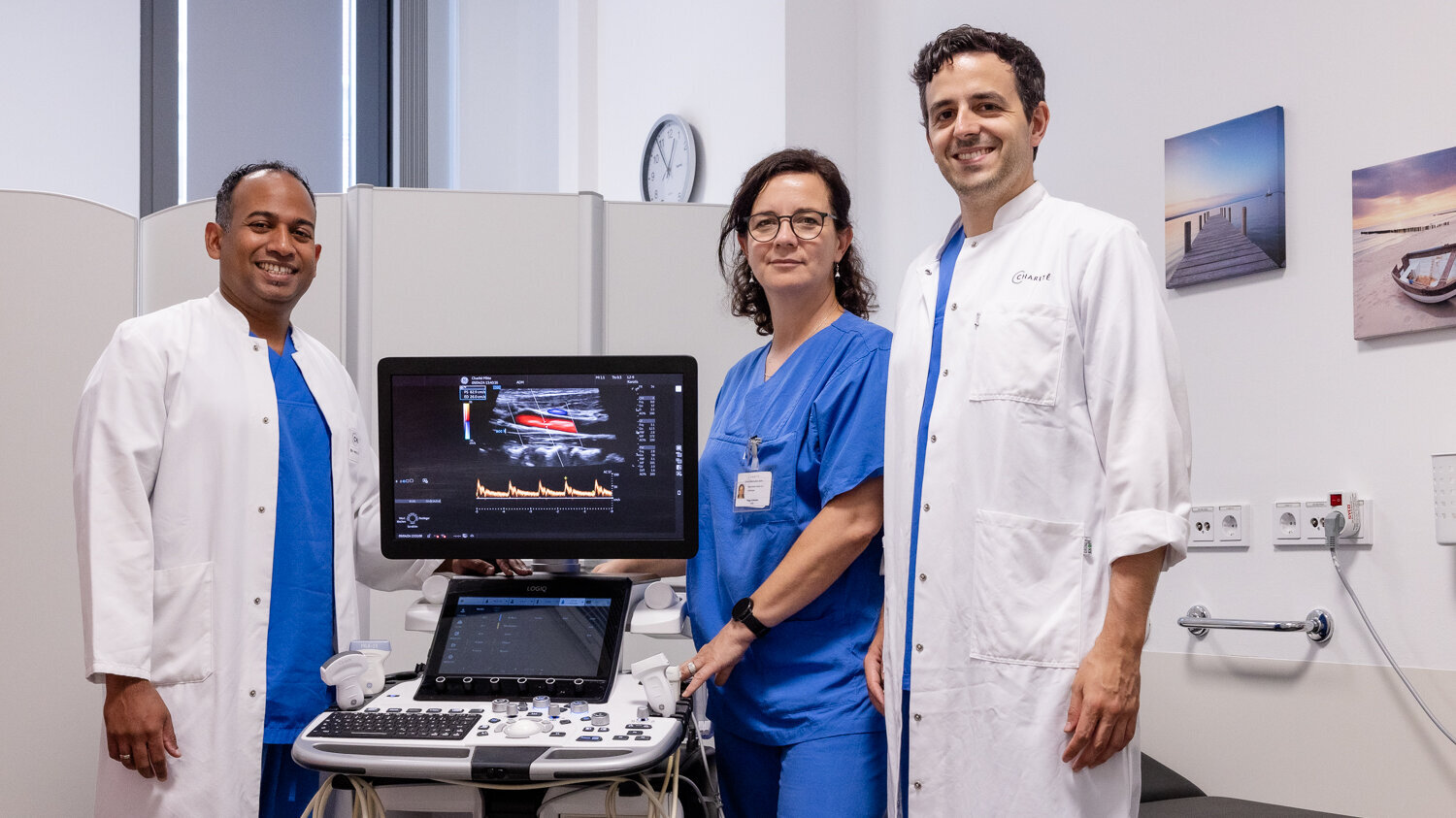
The team of the angiological function laboratory at the Department of Cardiology, Angiology and Intensive Care Medicine at the Charité Mitte campus.
Information for referring physicians and colleagues
We treat our patients in one of the most modern angiology laboratories in Berlin with the following highly specialised diagnostic and therapeutic procedures:
- Digital subtraction angiography (DSA) with high-resolution image quality and minimal radiation exposure
- Advanced vascular diagnostics using intravascular imaging (IVUS)
- Vascular dissection by means of
- Directional atherectomy
- Rotational atherectomy
- Lithotripsy
- Computer-assisted vacuum thrombectomy
- Local ultrasound-guided catheter-guided thrombolysis
- Therapy of the lesions by means of
- Plain balloon angioplasty (POBA)
- Drug-eluting balloons (DEB)
- Bare metal stents (BMS)
- Drug-eluting stents (DES)
- Covered stent prostheses
- Specialised venous stents
