
Surgery and anaesthesia
In close teamwork and on an equal footing with our doctors, the surgical technical assistant (STA) ensures that operations are prepared and carried out professionally and safely, even in the case of highly complex procedures.
The anaesthesia assistant takes care of patients of all age groups before and after operations at the highest level. The daily work includes the care of many interesting clinical pictures and emergencies. Safe anaesthesia is particularly important for complex heart surgery. This requires close cooperation between all teams involved, as well as extensive expertise, a great deal of experience and a high level of specialisation on the part of the anaesthesia team.
The tasks of the surgical function service
We work in a three-shift system supplemented by on-call services for acute emergency care. In addition to managing the surgical services, there are also two deputies and a main practice instructor with a team of practice instructors and mentors.
A typical working day begins with the daily early morning meeting of all surgical function services. These include health and nursing professionals with and without surgical specialist training, OTAs, MFAs and also health and paediatric nursing professionals. In each operating theatre, there is a sterile, instrumenting surgical function service and a non-sterile
Of course, there are also other professional groups in the operating theatre with whom the surgical function service works closely. In addition to the surgical medical service, we also work with the anaesthesia medical service, the anaesthesia function service, the storage nurses and other service staff.
After the morning briefing, all the materials needed for the operation are collected by the two surgical function services for their theatre and then prepared in a sterile manner for the operation.
The main task of the surgical support staff during the operation is to provide sterile assistance. The surgical support staff is responsible for documentation and supplying materials to the person performing the instrumentation.
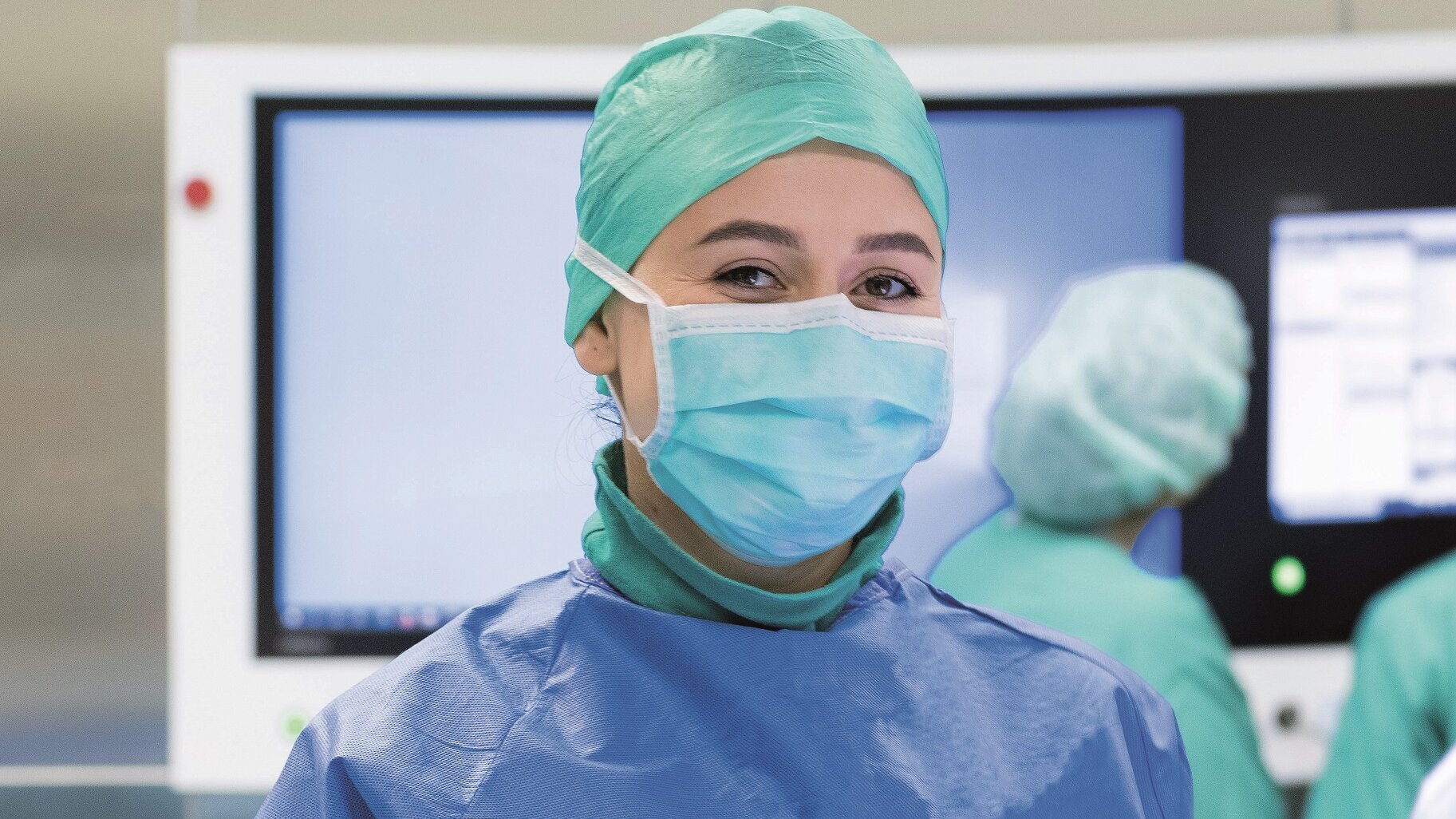
The main task of the surgical support staff during the operation is to provide sterile assistance. The surgical support staff is responsible for documentation and supplying materials to the person performing the instrumentation.
To do this, colleagues on the functional service team must know and adhere to the exact surgical procedures as well as all other processes in the operating theatre. This is the only way we can maintain the very high quality of our work here. Although we work in a total of 11 operating theatres, we have not lost our sense of family and team spirit. We work as a team at our location on the Campus Virchow Klinikum and three days a week we also operate in an operating theatre at the Paulinenkrankenhaus. We will move into our new building in about five years.
The tasks of the colleagues in the anaesthesia function service
In the anaesthesia department, we play a key role in perioperative patient care. Our responsibilities range from carefully preparing anaesthesia materials and medications to conscientiously checking the equipment needed for each operation.
The day begins with a warm welcome for our patients in the preparation room, a crucial moment to build trust and address any fears in a reassuring way. At the same time, we monitor clinical parameters such as blood pressure, pulse and ECG.
During induction of anaesthesia, we assist the anaesthetist with the administration of medication and support the insertion of all necessary catheters and examinations. Particularly in the case of patients with heart disease, continuous monitoring of vital parameters requires the utmost attention and care.
During surgery we are not only responsible for preparation and follow-up, but also take over the monitoring of the anaesthesia during the operation, always in close coordination with the doctors, to achieve the best results. After surgery, we accompany the patient to the recovery room or to the intensive care unit and ensure that the anaesthesia workstation is prepared for the next use.
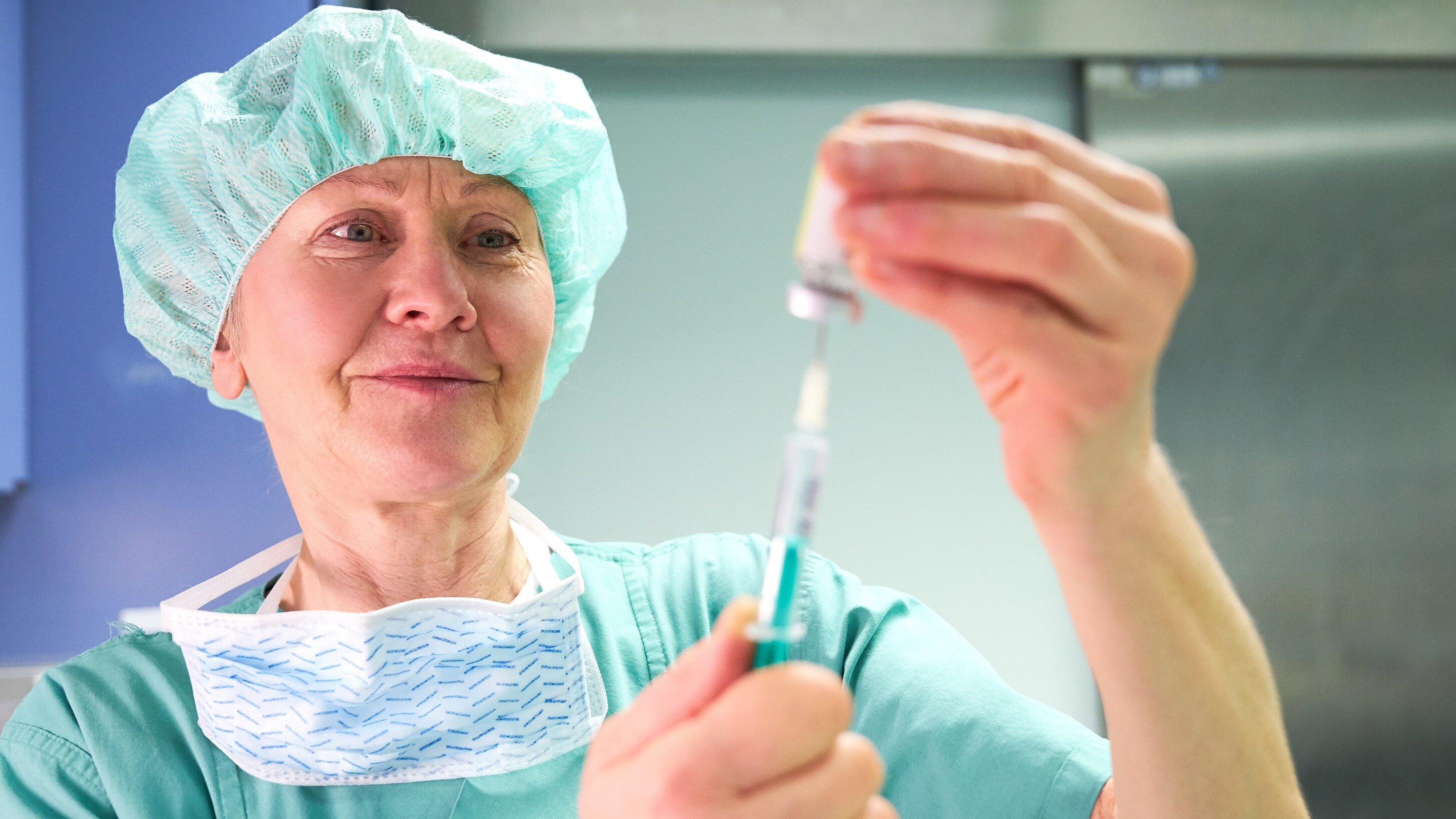
During surgery we are not only responsible for preparation and follow-up, but also take over the monitoring of the anaesthesia during the operation, always in close coordination with the doctors, to achieve the best results. After surgery, we accompany the patient to the recovery room or to the intensive care unit and ensure that the anaesthesia workstation is prepared for the next use.
In the PACU (Post Anesthesia Care Unit), we provide comprehensive care for patients after surgery, from awake patients to intensive care cases.
In cardiac medicine, we care for patients of all ages and degrees of severity, from premature infants with congenital heart defects to older people with cardiological problems. Our rapid assessment of situations and ability to respond are essential for effective interdisciplinary collaboration. With our expertise in handling various devices and medications, we are an indispensable part of patient care.
Our workplaces are diverse and exciting. They include eight cardiac surgery operating theatres, three hybrid theatres for combined procedures, and one operating theatre at the Paulinenkrankenhaus. Our locations also include the cardiac catheterisation laboratories.
Contact details for CISORM
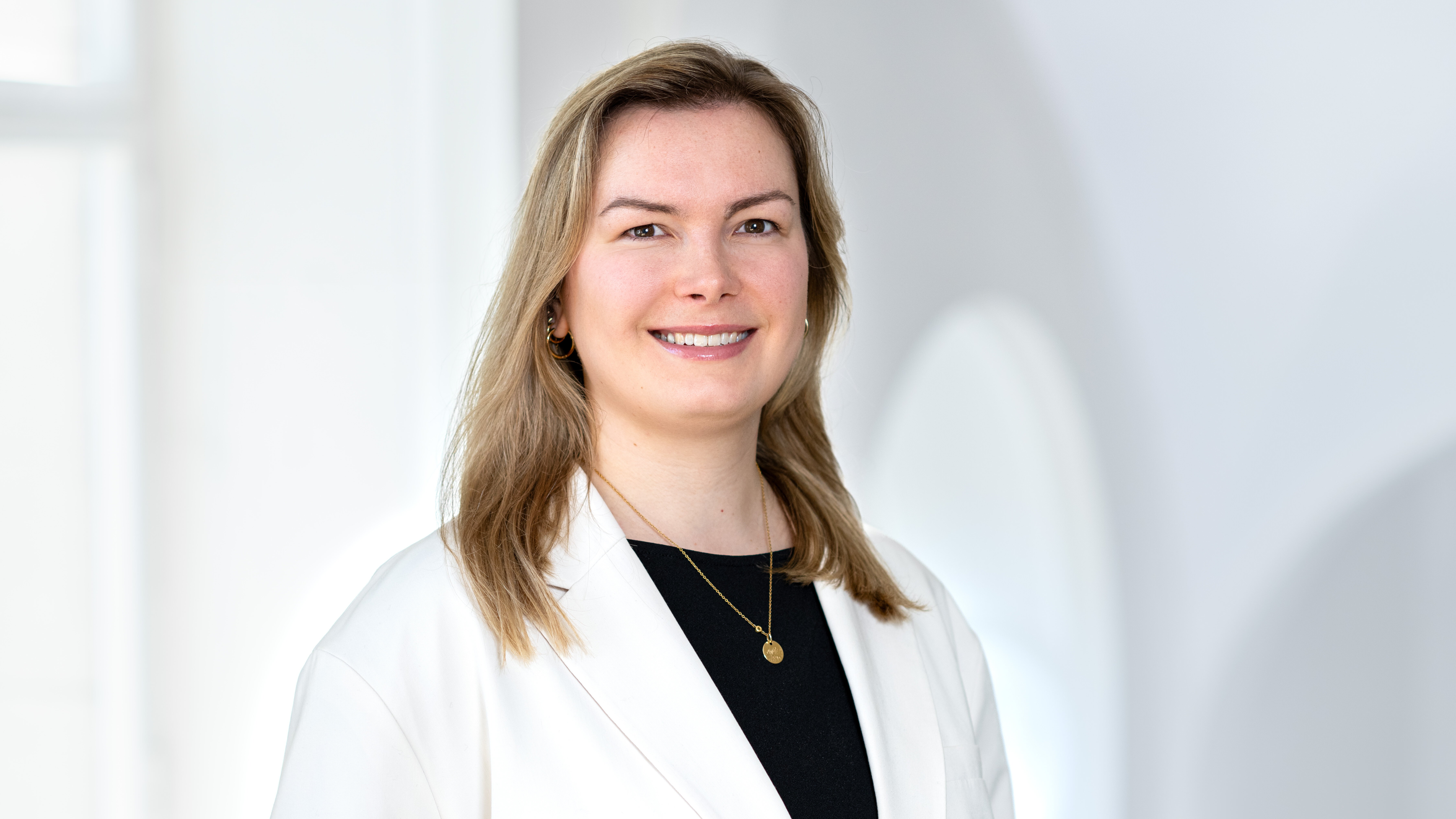
Do you have questions about our job offers, the application process, working in our team or training, further education and professional development at DHZC? Feel free to contact us! We are here for you.
Liesa Fichtner
T: +49 30 4593 2782
Liesa.fichtner@dhzc-charite.de
Do you have questions about our job offers, the application process, working in our team or training, further education and professional development at DHZC? Feel free to contact us! We are here for you.
Liesa Fichtner
T: +49 30 4593 2782
Liesa.fichtner@dhzc-charite.de
