The lung transplant
Patients who are on the waiting list for a donor lung are closely monitored by their transplant centre during the entire waiting period. Regular examinations are carried out to check the patient's state of health, and medication is adjusted if necessary. Patients also receive training on post-operative medication and hygiene measures. An important component is also physical preparation for the transplant through strength exercises and physiotherapy (so-called prehabilitation).
As soon as a suitable donor lung is available, the transplant centre informs the patient immediately. He or she is immediately prepared for the operation at the hospital. The transplant itself is a complex procedure lasting several hours. This is followed by post-operative care in hospital and finally aftercare.
Almost 5 years ago, our patient Carola M. had a donor lung transplant. We followed the nine-hour operation on camera and asked the surgeon, senior physician Prof Christoph Knosalla, to explain the procedure to us.
Prehabilitation
Physical fitness
The physical preparation for transplantation, also known as prehabilitation, is of crucial importance for the success of the treatment. The fitness of patients before the procedure has a direct influence on the post-operative prognosis. Physical fitness also plays a role in the urgency rating for a donor organ.
In many cases, inpatient pneumological rehabilitation is therefore also advisable during the evaluation process. It is recommended to participate in a pulmonary exercise group or, in the case of pulmonary hypertension, in a heart failure group and to take advantage of regular physiotherapy. The online lung exercise programme of the German Respiratory League can serve as a useful supplement to this.
In addition, several times a week strength exercises are recommended, which can be learnt through physiotherapy and then carried out independently. Muscle strength and mass in particular help to improve the prognosis after the operation.
Weight and nutrition
In the event of excessive weight loss and the development of underweight (pulmonary cachexia), nutritional therapy with counselling and high-calorie supplementary food may be recommended.
In the case of overweight, dietary or pharmacological treatment is recommended. Ideally, the body mass index (BMI) should be between 22 and 25 kg/m².
Respiratory insufficiency
Non-invasive mask ventilation with positive pressure should be considered for patients with chronic respiratory insufficiency in which breathing is permanently insufficient to keep the carbon dioxide (CO₂) content in the blood within the normal range. This NIV (non-invasive ventilation) relieves the respiratory pump and enables better daytime activity.
A NIV evaluation is usually carried out as an inpatient in pneumological clinics. NIV is also used temporarily after a transplant to keep the transplanted lung open and prevent adhesions. Prior familiarisation with NIV is advantageous for this.
Psyche
If patients suffer from panic attacks or develop an adjustment disorder (often with recurring shortness of breath and thus fear of death), they should receive psychological treatment. Fears often lead to withdrawal and therefore also to insufficient physical activity.
Admission and preparation for the operation
So that listed patients can be informed at any time as soon as a suitable donor lung is available, they should have a German residence and accessibility regulation. For stays outside Germany, patients must be temporarily NT-listed (not transplantable).
If a suitable organ is available, we will organise patient transport for you to the DHZC and provide further care until you are admitted to our transplantation ward WD3. At the same time, our removal team will travel to the city where the organ is available.
Once the team has arrived at the donor hospital, it takes over the removal of the organ. Now the so-called ischaemia period begins, during which the organ is not supplied with blood. This must be kept as short as possible to prevent damage to the organ. Ideally, it should be less than six hours for donor lungs.
At the same time as the organ is removed, the recipient is prepared for the transplant in the operating theatre and final preliminary examinations are carried out. When the removal team sets off on its return journey, the operation begins. This ensures that the ischaemia time can be kept as short as possible.
In rare cases, the patient's state of health deteriorates so quickly that a transplant is no longer possible under conventional conditions. ECMO (extracorporeal membrane oxygenation), a form of lung replacement therapy, is then necessary to bridge the time until transplantation.
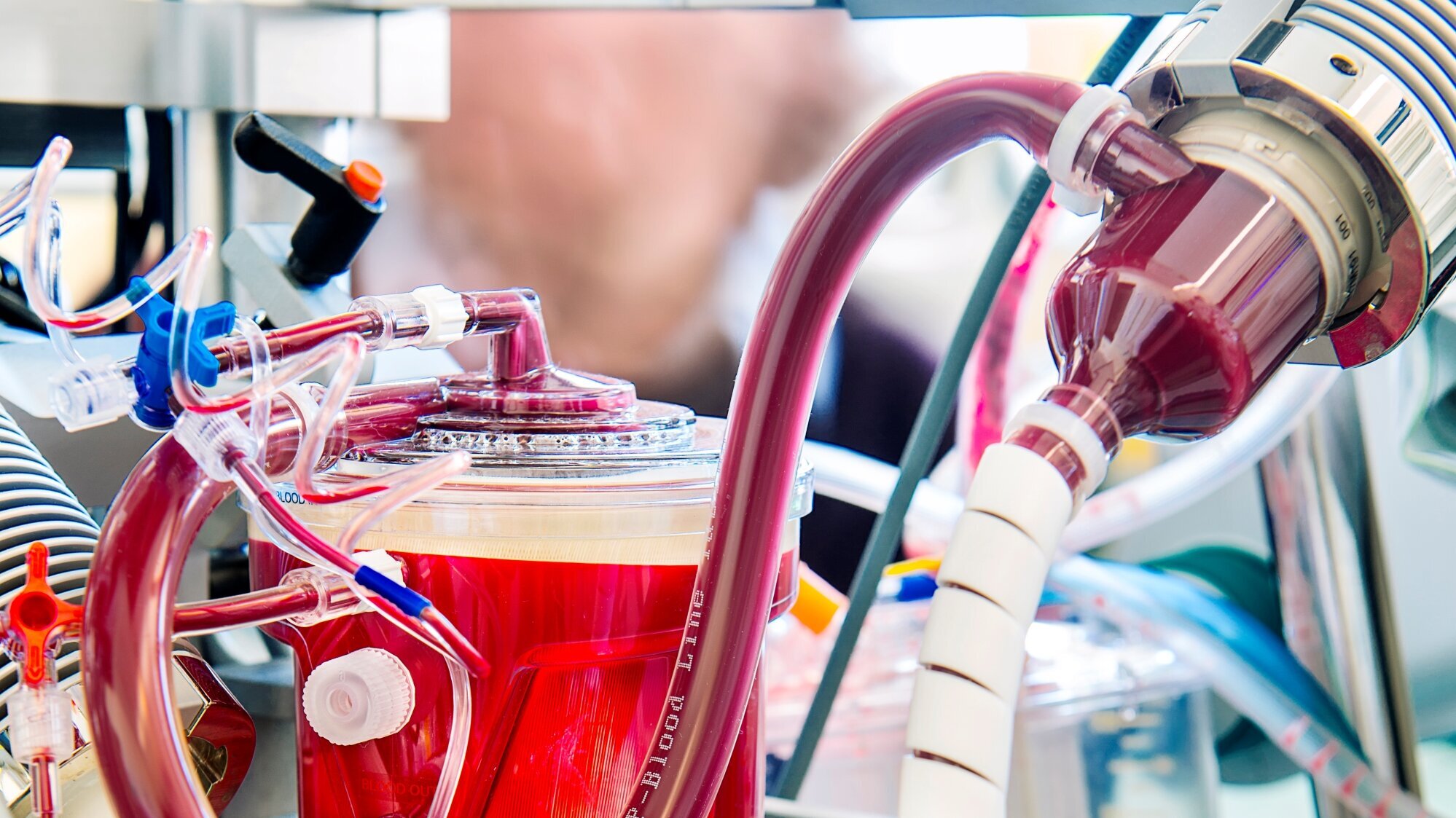
In rare cases, the patient's state of health deteriorates so quickly that a transplant is no longer possible under conventional conditions. ECMO (extracorporeal membrane oxygenation), a form of lung replacement therapy, is then necessary to bridge the time until transplantation.
Close cooperation with the Charité
The Charité Clinic for Pneumology, Respiratory Medicine and Intensive Care Medicine brings together a highly specialised team on the Intensive Care Unit 144i, which specialises in the treatment of acute respiratory failure and ECMO therapy. The experienced colleagues are well prepared for such intensive care emergencies.
In close cooperation with the DHZC, patients with terminal lung failure due to chronic lung diseases such as pulmonary fibrosis or heart failure due to pulmonary hypertension who are awaiting a lung transplant using ECMO are treated here.
The ward is part of the ARDS ECMO Centre at Charité. This centre specialises in the treatment of patients with severe acute respiratory failure. Ward 8i of the Clinic for Anaesthesiology and Intensive Care Medicine and Ward 43i of the Clinic for Nephrology and Internal Intensive Care Medicine are also part of the ARDS ECMO Centre.
From left to right: Prof. Christoph Knosalla (Surgical Director of the Transplant Programme at the DHZC), Dr Paul Schmidt-Hellinger (Senior Pulmonologist in the DHZC Lung Transplant Programme), Prof. Martin Witzenrath (Director of the Department of Pneumology at Charité) and Prof. Volkmar Falk (Medical Director of the DHZC).
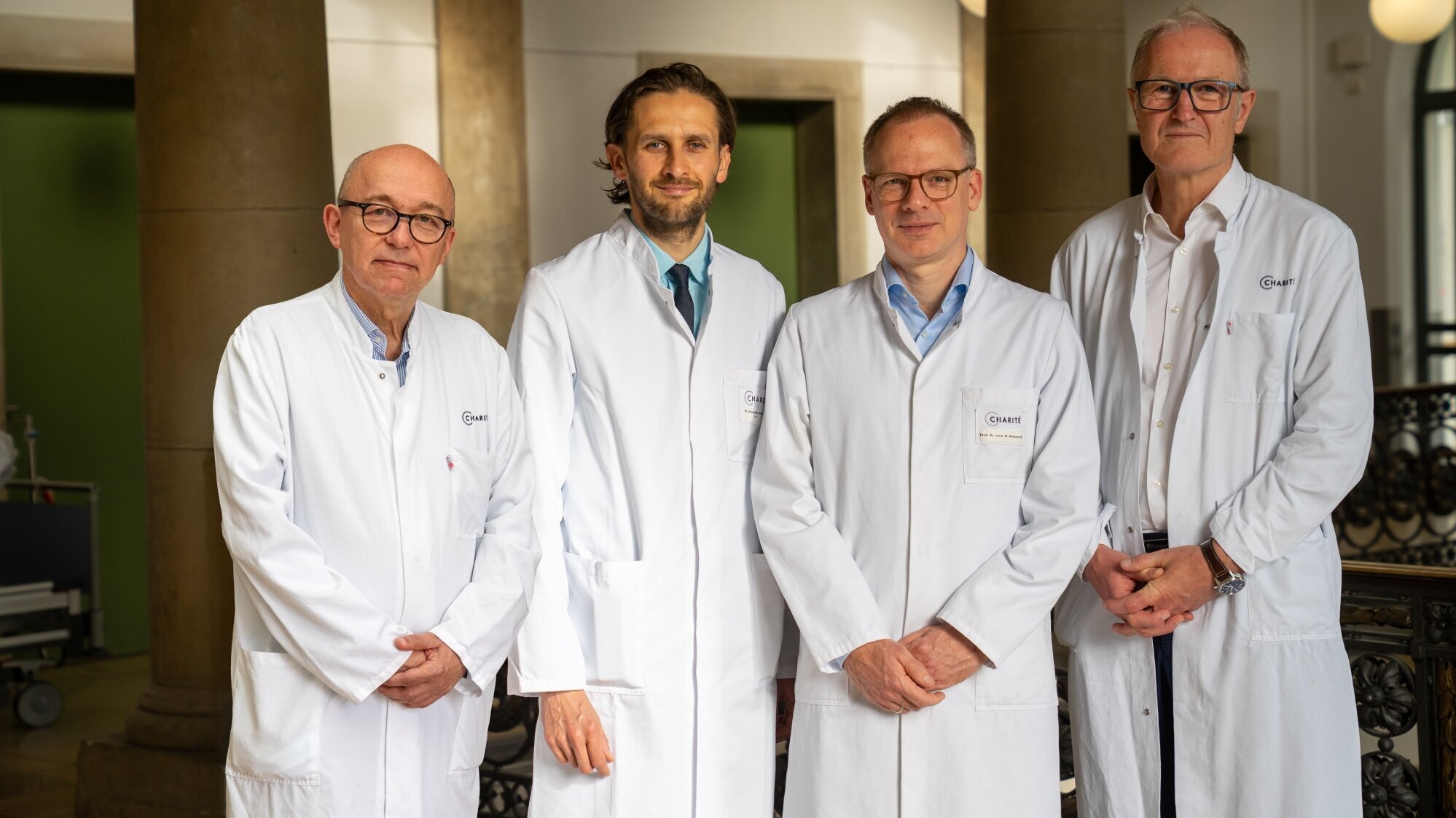
From left to right: Prof. Christoph Knosalla (Surgical Director of the Transplant Programme at the DHZC), Dr Paul Schmidt-Hellinger (Senior Pulmonologist in the DHZC Lung Transplant Programme), Prof. Martin Witzenrath (Director of the Department of Pneumology at Charité) and Prof. Volkmar Falk (Medical Director of the DHZC).
Procedure of the operation
First of all, our experienced anaesthesia team induces the patient's anaesthesia and places venous and urinary catheters, cannulas and drains. Blood pressure, heart function and oxygen saturation are continuously monitored;
Should the circulation or oxygen supply reach critical levels, the patient will also require an ECMO (extracorporeal membrane oxygenation).
The transplant itself is performed under general anaesthesia and can take up to twelve hours. Depending on the disease, a unilateral or bilateral double lung or lung transplant is performed. Nowadays, double lung transplants are mainly performed. The experienced surgical team works closely with the anaesthesiology and intensive care specialists.
Firstly, the chest is opened and the diseased lung is surgically removed. The donor lung is then inserted and connected to the main bronchi, the pulmonary veins and the pulmonary artery. Meanwhile, the body is ventilated via the second lung. In bilateral lung transplantation, one side is operated on first, then the other.
Once the donor lung has been inserted, the blood circulation and ventilation of the new lung is started. The doctors check the organ for leaks, possible bleeding and ventilation.
After the operation, the patients are first ventilated and anaesthetised in the intensive care unit WD1i. Here, lung function, the circulatory situation, the wake-up reaction and possible rejection reactions are closely monitored. Doctors and nurses work together to wean the transplant patients off ventilation as quickly as possible and allow the new lungs to work on their own. At the same time, the patients are mobilised;
The patients are then transferred to our transplant ward WD3. Here they spend the time until rehabilitation. Medication is regularly adjusted based on blood levels and optimal wound healing is monitored. In addition, regular bronchoscopies are performed to optimise internal wound healing at the bronchial sutures. Under careful medical and nursing supervision, you will be prepared for your discharge from our clinic. Physiotherapy to build up your muscles plays an important role here.
Risks and complications
Short-term complications
Like any other operation, a lung transplant is also associated with risks. These include bleeding and leaks at the suture sites.
The transplantation itself is now considered a established and safe procedure: more than 90 per cent of recipients survive the hospital stay after the operation.
The time after the lung transplant is more critical: according to statistics, around 30 per cent of transplant recipients experience rejection reactions in the first year after the transplant. This manifests itself in inflammation in and around the small blood vessels in the lungs. Fever, fatigue, dry cough, shortness of breath and impaired lung function can be signs of rejection. In most cases, the rejection reaction can be contained by individually tailored medication without damaging the lungs.
As the immune defence of transplant recipients is suppressed, infections with bacteria, viruses or fungi are also more common in the first year after transplantation. In addition, patients can develop respiratory complications, especially narrowing of the airways, which originate from the sutures where the donor lung is connected to the recipient's bronchial system.
In some cases, the major operation in the chest area can also temporarily damage nerves to the stomach and cause a significant delay in gastric emptying. This complication is treated with a gentle diet and - if necessary - treatment of the gastric pouch muscle;
The nerves of the larynx can also be damaged during the operation. In general, a tracheotomy and ventilation using a tracheal cannula may be necessary in the event of complications that require the airway to be secured in the medium term.
Due to the intensity of the operation and the side effects of medication, some patients may require dialysis temporarily and a few may require dialysis in the long term in the event of kidney failure;
In order to recognise and treat these early complications in lung transplant patients in good time, regular check-ups with blood tests, lung function tests and bronchoscopies are carried out at short intervals, especially in the first few months after the transplant.
Long-term complications
Chronic lung allograft dysfunction (CLAD) is the most important long-term complication that can occur after a lung transplant. 50 per cent of lung transplant patients are affected within the first five years after the operation. Ten years after the operation, according to study results, it was even 76 per cent.
In this chronic rejection, the lung tissue hardens and scars - with the result that lung function deteriorates. The small airways narrow and may close completely.
Exactly how chronic lung failure occurs has not yet been conclusively clarified, but is the subject of intensive research. The risk factors for CLAD are transplant-related tissue injuries and inflammations that occur in connection with acute rejection reactions after transplantation.
The aim of treatment for CLAD is to halt the progression of deteriorating lung function. If the progression of the disease cannot be halted, a new transplant may be necessary in the worst case.
Forecast
The average survival time after a lung transplant has risen continuously in recent years and will continue to rise in the future, primarily due to optimised treatment methods.
Currently, the average survival time after a lung transplant is six to seven years. However, this average value depends heavily onindividual factors . These include the underlying disease and possible secondary diseases, the age of the patient, the general state of health, possible complications after the transplant such as rejection reactions or infections and the course of aftercare.
Above all, graft function (i.e. the ‘performance’ of the donor organ and possible complications after transplantation) as well as secondary diseases and age influence the survival time.
For example, transplant recipients under 50 years of age have a significantly higher survival rate than people older than 50 years
The experience of the transplant centre also plays a role: experienced, highly specialised facilities often achieve better results. At the DHZC, the survival rate for patients three years after a lung transplant is 78 per cent. The national average is 73 per cent. 87 per cent survive the first year. For these patients, the average life expectancy (or the time until a re-transplantation) is eight to ten years. Around a quarter of patients survive for 20 years with a transplanted (double) lung;
Important to note: All figures are always statistically calculated averages. A lung transplant usually results in an enormous improvement in quality of life, often making work and sport possible again.
Detailed information on the prognosis can also be found at Lung Information Service.
Rehabilitation
Rehabilitation after a lung transplant is a key component of recovery and long-term treatment success. It often begins shortly after the operation in hospital and continues in specialist rehabilitation centres or on an outpatient basis.
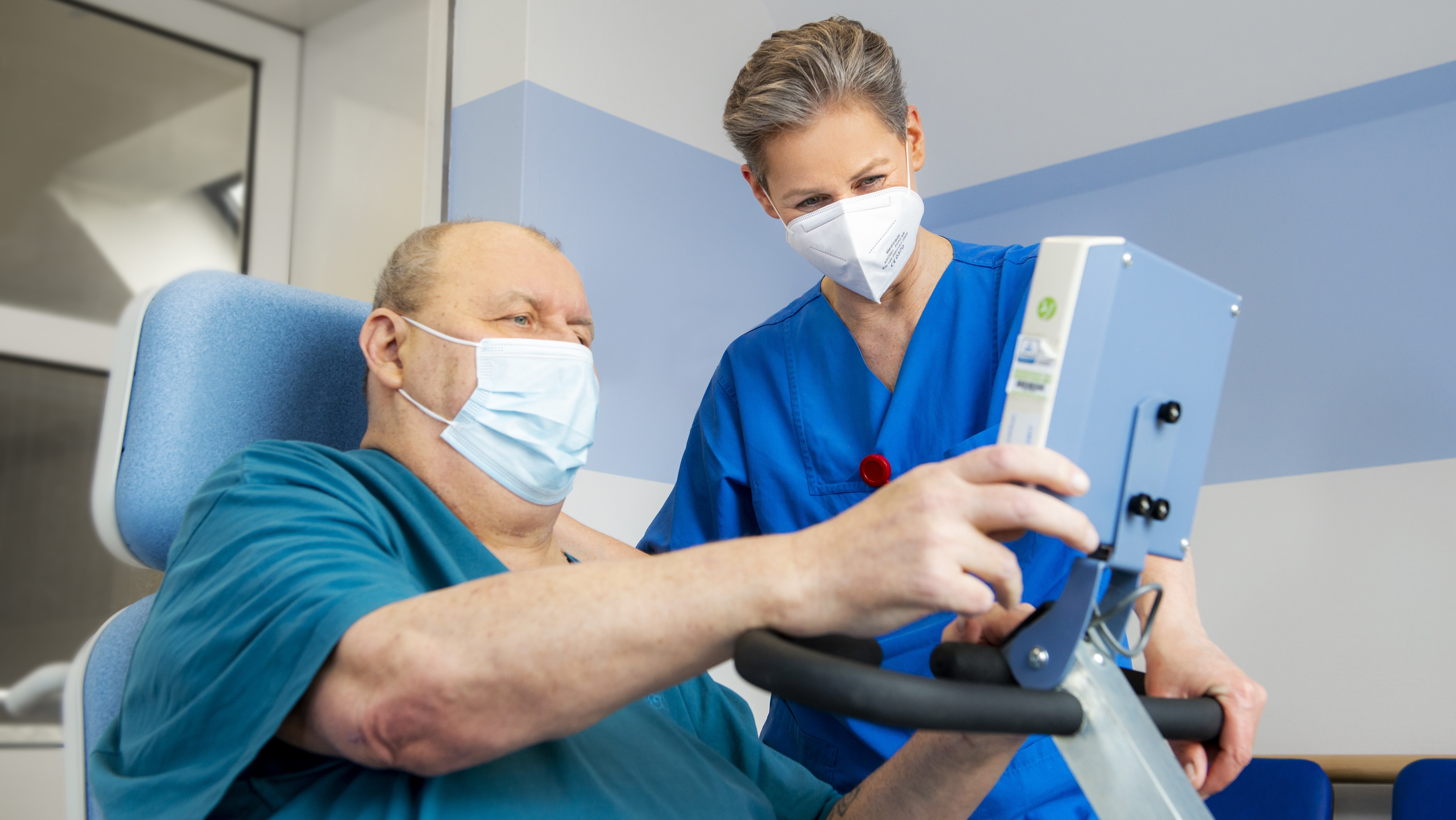
Rehabilitation after a lung transplant is a key component of recovery and long-term treatment success. It often begins shortly after the operation in hospital and continues in specialist rehabilitation centres or on an outpatient basis.
The aim is to improve physical performance, avoid complications and prepare the patient for an independent life.
Rehabilitation is the phase in which patients return to their private, social and professional lives as fully as possible. An important part of rehabilitation is targeted training to restore physical performance. But we also support our patients psychologically and emotionally during this time.
Specifically, rehabilitation includes
- Medical monitoring and treatment: regular lung function tests, monitoring of blood values and organ functions as well as infection prophylaxis
- Physio and exercise therapy, consisting of mobilisation after the operation, respiratory therapy and strength and endurance training
- Nutritional counselling and hygiene measures
- Psychological counselling to deal with anxiety, support in coping with the illness and reintegration into everyday life
- Training and education, for example on taking medication, self-monitoring and lifestyle
In detailed discussions, you will learn exactly
- what the health risk factors are and how you can avoid them,
- what the signs of organ rejection are,
- how you can protect yourself from infection,
- what social support options are available.
After discharge from hospital, a inpatient stay of several weeksin a rehabilitation clinic usually follows. Subsequently, transplant patients receive outpatient care for the rest of their lives.
When and where does rehabilitation take place?
Rehabilitation in the rehabilitation clinic can begin
- if there are no medical concerns against your transfer
- when you are able to look after yourself again (e.g. washing and dressing)
- when you only require a small amount of nursing care and are physically ready for recovery training.
Depending on the course of the disease, this is usually the case around six to eight weeks after the transplant. As a rule, our patients are transferred to the Reha Centre Seehof in Teltow on the southern outskirts of Berlin directly after their inpatient stay at the DHZC. The centre has over thirty years of experience with transplant patients from our clinic. It is located in a green, quiet neighbourhood. You will be given a single room and can receive visitors or go on excursions. The journey to the DHZC only takes about 30 minutes, so that you can be back at our clinic quickly in urgent cases.
How does the rehab stay work?
- Physical activity such as bicycle ergometer training, muscle building on equipment, gymnastics in a group or individually with exercise therapists
- Passive applications such as lectures, counselling, individual and group training
- Relaxation training and, if necessary, psychotherapeutic support
Medical rounds are carried out daily - including at weekends - so that complications can be recognised quickly and treated in consultation with the DHZC. Echocardiograms, ECGs and medication levels are also carried out regularly. The dosage of your medication will be adjusted if necessary. Invasive, stressful examinations are not usually necessary. During your stay, you will usually only need to visit the DHZC transplant outpatient clinic once.
Aftercare and support
We remain at your side even after the transplant. Long-term, lifelong aftercare includes:
- regular check-ups in our transplant outpatient clinic
- Lifelong medical treatment to prevent rejection reactions and infections
- support for reintegration into everyday life
- Training in dealing with the new organ, hygiene measures, etc.
- Nutritional counselling suitable for transplantation
- The advice and contact mediation for training programmes and physiotherapy
Detailed information on aftercare and support at the DHZC can be found on the page Care for lung transplant patients.
Your contact persons
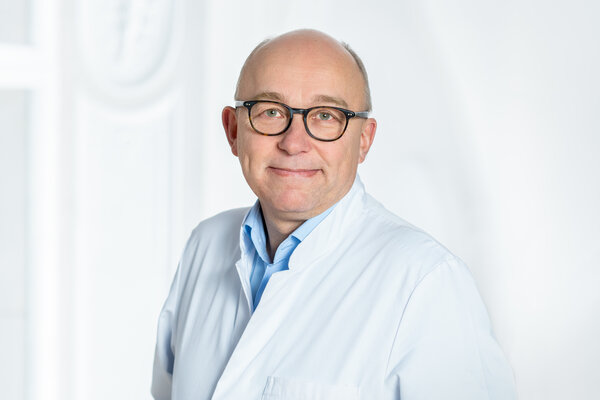
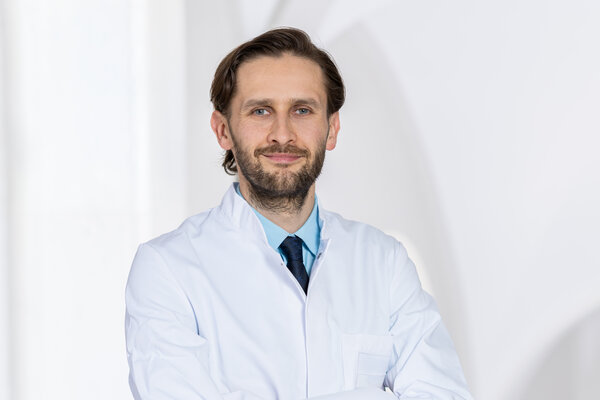
Dr Paul Schmidt-Hellinger is a specialist in internal medicine and pneumology. His clinical and scientific work focuses on stress management in extreme situations. As a senior physician in the lung transplant programme, he has extensive experience in caring for and preparing patients for transplantation.