Aortic aneurysm
An aortic aneurysm is a sack-like bulge in the vessel walls of the aorta. This occurs when there are weak points in the vessel walls and these react to the high pressure in the blood vessel by stretching in the area of the weak point. This causes bulges to form, which can become larger due to the constant pressure of the blood flow in the aorta.
Aortic aneurysm
In an aortic aneurysm, the vessel walls in the aorta are pathologically dilated. This dilation occurs when weak points in the vessel walls are stretched. This causes bulges to form, which can enlarge due to the sustained pressure of the blood flow in the aorta.
(Image: Adobe Stock)
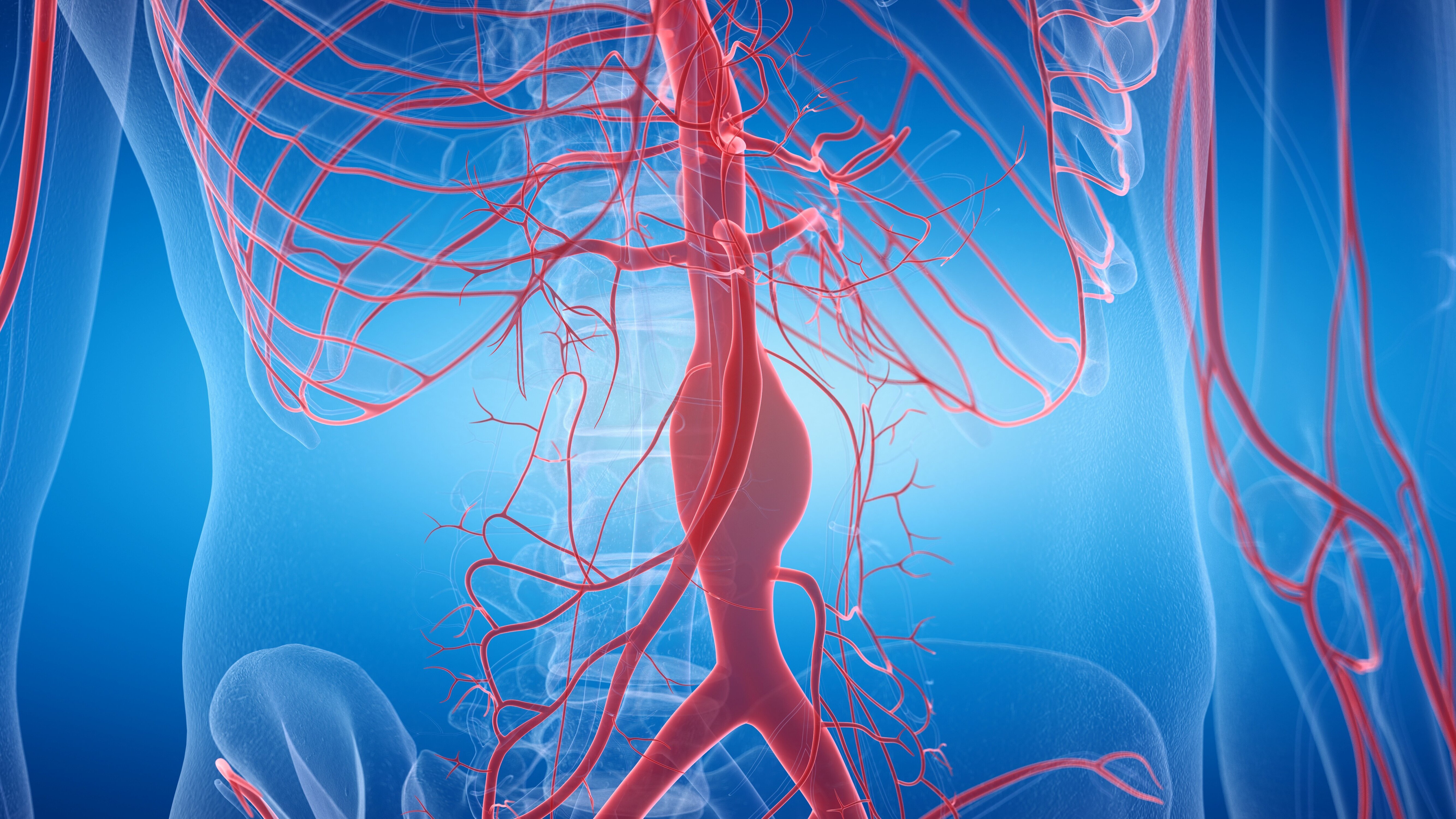
Aortic aneurysm
In an aortic aneurysm, the vessel walls in the aorta are pathologically dilated. This dilation occurs when weak points in the vessel walls are stretched. This causes bulges to form, which can enlarge due to the sustained pressure of the blood flow in the aorta.
(Image: Adobe Stock)
Ursache
The aorta is the largest blood vessel in the human body. Since every tissue in the body loses some of its firmness with age, the diameter of the aorta can increase by up to 35% by the age of 70. If the dilation of the aorta exceeds this degree, it is referred to as an aortic aneurysm.
The aorta has a multilayered vessel wall, which is subject to wear and tear with age and influenced by individual health. Based on this, and especially in the presence of pronounced arteriosclerosis and high blood pressure, an aneurysm can develop.
The causes of an aortic aneurysm include
- Arteriosclerosis (‘hardening of the arteries’)
- high blood pressure
- acquired and hereditary tissue weakness/connective tissue disorders (including Marfan syndrome, Ehlers-Danlos syndrome)
- bacterial infections (e.g. syphilis, tuberculosis)
- fungal infections
Risk factors
The risk of an aortic aneurysm increases with age. People aged 65 and over are most affected. Men are about five times more likely to develop an aortic aneurysm than women.
In general, any factors that affect vascular health can increase the risk of an aortic aneurysm. These include smoking and inadequate treatment of high blood pressure.
Old age is a risk factor
Men are five times more likely to develop an aortic aneurysm than women. Generally speaking, people aged 65 and over are most at risk.
(Image: pixabay)

Old age is a risk factor
Men are five times more likely to develop an aortic aneurysm than women. Generally speaking, people aged 65 and over are most at risk.
(Image: pixabay)
Symptoms
Most aneurysms initially remain asymptomatic and are only detected by chance during other examinations. In the case of a large aortic aneurysm, the symptoms are related to the location in the body. Aortic aneurysms can occur in the abdominal or thoracic area and express themselves in different symptoms:
- sharp, persistent pain in the lower abdomen
- back pain radiating into the legs
- palpable structure in the abdomen that occurs at the same time as the pulse
- occasional digestive problems
If the abdominal aorta ruptures or tears, the pain in the abdominal cavity and back suddenly becomes unbearable. This is often accompanied by nausea and vomiting. Even if the patient has no symptoms, but the aneurysm is at least 5.5 centimetres in diameter or is rapidly enlarging (within a year), surgery should be performed.
- Chest pain
- Abnormal breathing sound due to narrowing of the airways (stridor)
- Coughing and hoarseness
- Shortness of breath
An aneurysm of the aorta in the chest is called a thoracic aneurysm. If the aneurysm tears, it can cause sudden and severe chest pain similar to that of a heart attack. Even if there are no symptoms, an aneurysm in the chest area should be operated on if it exceeds 5.5 centimetres in diameter or if there is a rapid increase in diameter.
If an aortic aneurysm remains undetected for a long time, it can lead to the aorta tearing (rupture) or to a tear with bleeding between the layers of the wall (aortic dissection). To avoid complications in the case of an already diagnosed aortic aneurysm, patients are advised to have the aneurysm checked regularly, depending on its size.
Diagnostics
An aneurysm is often discovered during routine medical check-ups. If an aortic aneurysm is suspected, computed tomography (CT) or magnetic resonance imaging (MRI) can be used to measure the exact size of the aorta or aortic aneurysm.
Magnetic resonance imaging (MRI)
An MRI scan provides clarity about the size of the aorta or aortic aneurysm.
(Image: DHZC/Külker)
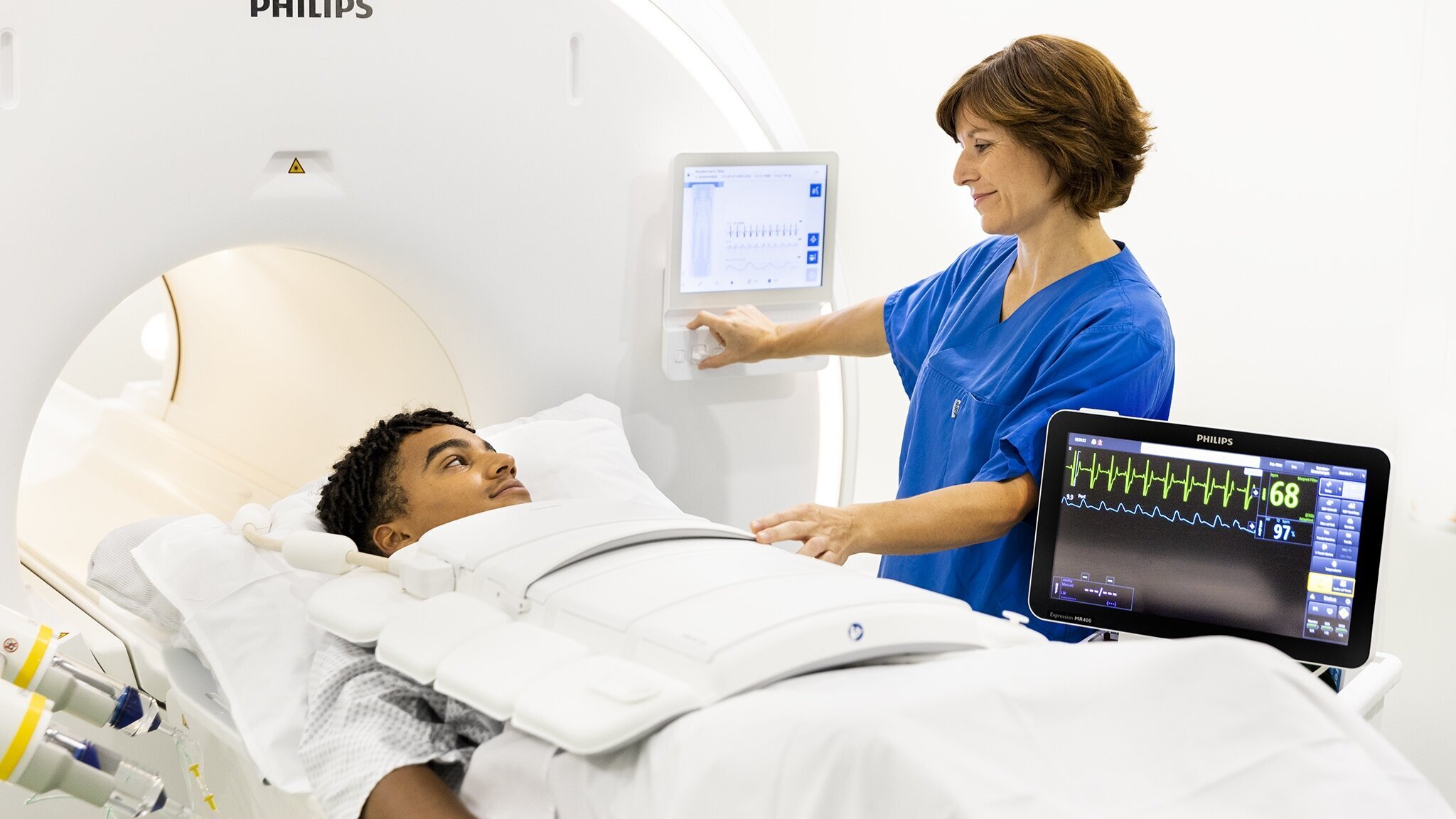
Magnetic resonance imaging (MRI)
An MRI scan provides clarity about the size of the aorta or aortic aneurysm.
(Image: DHZC/Külker)
Therapy
In many cases, immediate surgical treatment is required when an acute aortic disease is diagnosed. However, aortic diseases often develop slowly and even asymptomatically over a longer period of time and – once they have been detected – initially only require close monitoring and the avoidance and consistent treatment of risk factors (e.g.
As soon as a certain diameter is exceeded, depending on the location and risk factors, treatment of the aneurysm should be considered. While the ascending part of the aorta is only operated on ‘conventionally’ (open surgery), ‘interventional’ treatment using stent implantation (EVAR; endovascular
We have summarised a detailed description of the surgical techniques, the prerequisites for an operation, the aftercare and life after an operation under aortic surgery.
Regular check-ups for Marfan syndrome
Marfan syndrome is a genetic connective tissue disorder. Patients with this disease are at an above-average risk of developing aortic aneurysm. At DHZC, we support patients with Marfan syndrome by providing regular outpatient check-ups of their heart and blood vessels, as well as other health services. Our clinic has an experienced team of doctors and all the latest diagnostic methods available to examine patients with Marfan syndrome regularly and on an outpatient basis for typical changes in the heart and blood vessels. Our experience and the use of the latest medical technology enable us to detect complications early and operate on aortic aneurysms quickly.
Together with the Charité, the DHZC also runs the Marfan Centre. People with Marfan syndrome or aortic diseases caused by congenital connective tissue disorders are treated and counselled there in interdisciplinary consultations.
Contact person for the Marfan Centre:
Dr. med.
Specialist in heart surgery
Phone: +49 30 665-356
mail: marfan@charite.de