Care of lung transplant patients at the DHZC
Lung transplantation is often the best possible treatment alternative for very serious irreversible lung diseases, combined with the possibility of a high quality of life in the long term. At the same time, it is a serious operation that can lead to considerable physical and emotional stress and has a lasting impact on the patient's everyday life. Transplant patients must take medication for the rest of their lives and be closely monitored medically.
Our medical and nursing experts in the transplant outpatient clinic at the DHZC are permanent contacts for lung transplant patients at the DHZC - in addition to the care provided by general practitioners and specialists.
Transplant outpatient clinic
Patients from all over Germany who have received a donor lung and/or a donor heart at the DHZC are cared for in our university outpatient clinic for transplantation medicine. Even if you have been transplanted at another centre, you are welcome to contact us. We will contact you in consultation with your transplant centre.
The specialised doctors in our outpatient clinic will be happy to answer any questions you and your external doctors may have about transplantation.
We will arrange regular examination appointments with you in order to carefully monitor your state of health, in particular the function of the new organs. In addition to the consultation with the doctor, X-ray examinations and lung function tests as well as ECG and echocardiography examinations will be carried out if necessary. Your blood will also be tested for infections in the laboratory. Our experienced doctors will also check for possible concomitant diseases during the examinations.
Immediately after the transplant, patients are initially examined very frequently in the outpatient clinic. Over time, however, the likelihood of rejection reactions decreases. The doses of medication can be reduced and side effects occur less frequently. After one year, one visit per quarter is usually sufficient. In the meantime, you will be advised on the laboratory results by telephone.
Immunosuppression after transplantation
After transplantation, patients must take medication (known as immunosuppressants) for the rest of their lives to weaken their immune system in order to protect the transplanted organ from rejection. Correct intake is vital. That is why our transplant physicians regularly determine the blood levels of the immunosuppressants and analyse the results. On this basis, we can adjust the dosage of the medication if necessary.
The transplant outpatient clinic is also available to help you with acute problems. Please contact us if you have a fever, rashes or other intolerances or if you need an operation at short notice. You can also seek advice and support from the doctor on duty at the transplant centre outside of consultation hours in an emergency.
If you are admitted to another hospital after your transplant, the doctors treating you should contact us so that we can provide you with transplant-related medical support. The transplant outpatient clinic can be contacted as follows:
T: +49 30 4593 2141, +49 30 4593 2140
F: +49 30 4593 2143
Lung transplant outpatient clinics at the DHZC
If the lungs lose their function permanently, a lung transplant (LTX) can be the last and life-saving option. The German Heart Centre at Charité is one of the leading centres for lung transplants in Germany. In close cooperation with the Charité Clinic for Pneumology, we offer patients highly specialised, interdisciplinary care - from initial diagnostics to long-term aftercare.
Inquiries about lung transplantation
At the DHZC, patients receive comprehensive care before and after a lung transplant in our ‘University Outpatient Clinic for Transplantation Medicine’. The first contact with us is usually made by your attending physician. The listing process begins with the enquiry. After a detailed diagnosis, we plan a possible listing together. You can find out more about this on the page Before the lung transplant.
For the first step, we ask you to provide the following data, information and findings:
- Registration form
- Doctor's letter
- Details on the diagnosis
- Lung function
- Blood gases/oxygen demand
- Resilience
- Concomitant diseases
- Other relevant findings
This data is important for us to be able to assess the type and urgency of the transplant. If necessary, we will ask you for further information. The documents can be submitted by e-mail, fax or post.
We will then arrange an appointment with you for your first consultation. You will need the following documents for this outpatient appointment:
- Referral
- Health card (insurance card)
- Unnecessary: Your medication plan (standardised medication plan in accordance with § 31a of SGB V, available from your GP)
- CT on CD incl. written findings or via upload portal
- Vaccination card
- Requested documents (ultrasound of the abdomen and heart, findings of the dentist and gynaecologist, laboratory values)
- We do not issue transport vouchers, please bring one for the outward and return journey if required.
During this appointment we will carry out a selection of the following diagnostics:
- Recording of vital signs, blood pressure, pulse, height, weight
- Determination of current blood values
- Bodyplethysmography, blood gas analysis to check the oxygen requirement
- If necessary, diffusion measurement
- Measurement of respiratory muscle strength if necessary
- Six-minute walk test
- If applicable, 5 times sit to stand test (5STST)
- 12-lead ECG
- Echocardiography (if necessary supported by contrast agent administration)
At the same appointment, we will then discuss the results with you and our assessment of a possible inclusion on the Eurotransplant list.
The necessary evaluation diagnostics to be organised with your family doctor will then be discussed;
Contact
Telephone availability of the outpatient clinic:
We prefer contact by e-mail.
For patients and doctors:
T: +49 30 4593 2141, +49 30 4593 2140
F: +49 30 4593 2143
Patients who have been transplanted at the DHZC are automatically treated in our lung transplant outpatient clinic after being discharged from hospital. Our experienced team will contact you to arrange regular check-ups. Our doctors and nurses in the outpatient clinic will also be happy to answer any acute questions or problems you may have.
Patients who have received their donor lungs at another clinic and want to transfer to the DHZC transplant outpatient clinic are also welcome to contact us. We will check your documents and findings and will be happy to arrange an appointment with you after consultation with the transplant centre.
Checklist for your first appointment in our outpatient clinic
Various documents are required for registration at the outpatient clinic. Please bring these documents with you to your appointment at our outpatient clinic:
- Referral
- Health card (insurance card)
- Your medication plan (it is best to ask your family doctor beforehand)
- Your CT results including written findings (on a data carrier, alternatively we can enable you to upload them)
- Your vaccination card
- Further documents requested by us, such as ultrasound of the abdomen and heart, dentist's findings or laboratory results
Diagnostics
During your appointment in our outpatient clinic, we will carry out a selection of the following diagnostic tests in addition to the nursing admission:
- Recording of vital signs, blood pressure, pulse, height, weight
- Determination of specific blood values relating to the transplanted organ, the immunosuppressive therapy and possible effects on other organs in the body such as the liver and kidneys
- Bodyplethysmography, blood gas analysis to check the oxygen requirement
- Reading out the asthma monitor
- If necessary, diffusion measurement
- Measurement of respiratory muscle strength if necessary
- Six-minute walk test
- If applicable, 5 times sit to stand test (5STST)
- 12-lead ECG
- Echocardiography (if necessary supported by contrast agent administration)
Once a year, we will perform a chest X-ray on you. This is an examination of the chest using X-rays to visualise possible changes.
Contact us
Telephone availability of the outpatient clinic:
We prefer contact by e-mail.
For patients and doctors:
Helpful information for patients
Guide for patients
We have summarised everything patients need to know about the time after an organ transplant in an easy-to-understand guide:
Guide for patients after transplantation
Cystic Fibrosis Centre Charité
The Cystic Fibrosis Centre at Charité offers both many years of experience and extensive expertise in the care of patients with cystic fibrosis. Patients of all ages with cystic fibrosis are cared for in the outpatient clinic by paediatric and internal pneumologists. Children, adolescents and adults are treated in a certified dual centre. As a cooperation partner of the DHZC, we also provide counselling and care for patients before and after a lung transplant.
To the Cystic Fibrosis Centre Charité
Selbsthilfeverein transplantiert e.V.
The transplantiert e.V. association has been supporting people and their relatives who are waiting for a donor organ or living with a donor organ for many years. The volunteers live with transplanted organs themselves and are therefore able to provide experienced assistance and support in a special way. On the website of transplantiert e.V. you will find a wealth of information on the subject of organ transplantation and can contact the organisation.
Questions and answers for patients
Aftercare takes place in the DHZC's transplant outpatient clinic and with your family doctor. You will receive regular appointments at the DHZC. You should carry out your check-ups at home in a disciplined manner. If you have any problems or questions, you will always receive competent instructions and answers. It is important that you continue to exercise regularly and maintain an appropriate diet. It is also helpful and useful to socialise with other transplant patients in self-help groups.
Whether you can return to work depends on your professional activity and your wishes. You can usually resume light physical activities after around six to twelve months. However, there are major individual differences here. You will be given detailed advice on this during rehabilitation.
In the case of severe heart or lung disease, breathlessness under exertion leads to a sparing behaviour on the part of those affected. As a result, physical performance continues to decline and the muscles become weak. This condition initially persists even after the transplantation of a healthy heart or lung. Your muscles must first be slowly rebuilt. The physiotherapists will help you with this in the intensive care unit, then in the transplant ward at the DHZC, but especially during rehabilitation in Teltow. There you will train your stamina daily, for example with ergometer training, your muscle strength with strength training and your coordination with gymnastics. The training is tailored to your personal situation so that you don't have to worry about overstraining yourself. You can also learn relaxation techniques as part of your rehabilitation and become calmer and more relaxed through regular exercise.
You should also continue to exercise at home. This will help you to counteract the side effects of your medication, increase your performance and improve your quality of life.
Initially, you may still feel pain in your chest when lying down and coughing. After operations in the area of the rib cage, the corresponding stability must first be restored. This may take a few weeks. You should not lift any weights or put any strain on your shoulder girdle during this phase. However, you will soon be able to do cycle ergometer training and gymnastics under supervision. During strength training, the chest and shoulder girdle should be spared at first. The intensity depends on the condition of your muscles and is slowly increased. After three to four weeks of training, you will usually reach a level of resilience that is sufficient for domestic requirements.
The simplest recommendation for endurance training is: only move so intensively that you can still have a good conversation without ‘gasping for air’. There is also a scale that measures your own feeling of exertion (BORG scale). Here you should train in the range 12-14 out of a maximum of 20 (corresponds to light to moderate exertion). In an exercise test (e.g. as an exercise ECG or spiroergometry), your treating physicians can obtain information on your optimum training range.
However, it is important to remember that the aim is not to maximise your performance, but to keep your body organs healthy! Regular exercise will also help you to reduce risk factors such as obesity, high blood pressure and high cholesterol levels. Learn to pay more attention to your body. You should feel good both during and after your workout.
Once the training programme has been completed and there is no medical reason not to do so, you can and should return to sport. We recommend endurance sports such as walking, running (jogging), cycling, swimming and cross-country skiing. Contact sports are rather unsuitable as you are more likely to injure yourself. However, other sports are possible in principle.
The important thing is to find a type of exercise that you enjoy. However, you should protect yourself from infections and take a break if you have an infection, fever or other complications, e.g. if you suspect an organ rejection.
Your contact persons
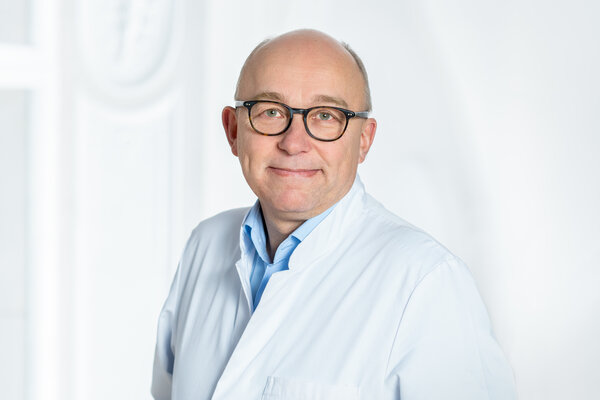
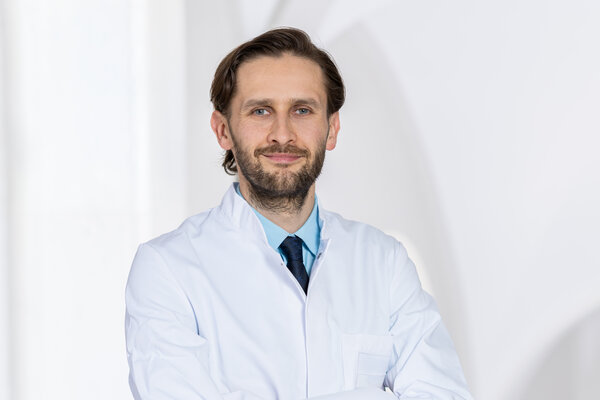
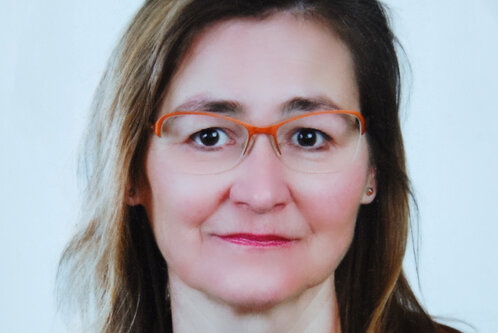
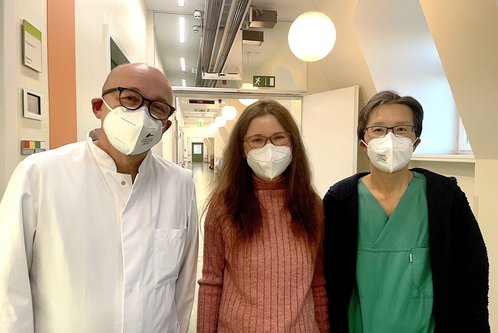
Dr Paul Schmidt-Hellinger is a specialist in internal medicine and pneumology. His clinical and scientific work focuses on stress management in extreme situations. As a senior physician in the lung transplant programme, he has extensive experience in caring for and preparing patients for transplantation.